August 2026 Reading Log
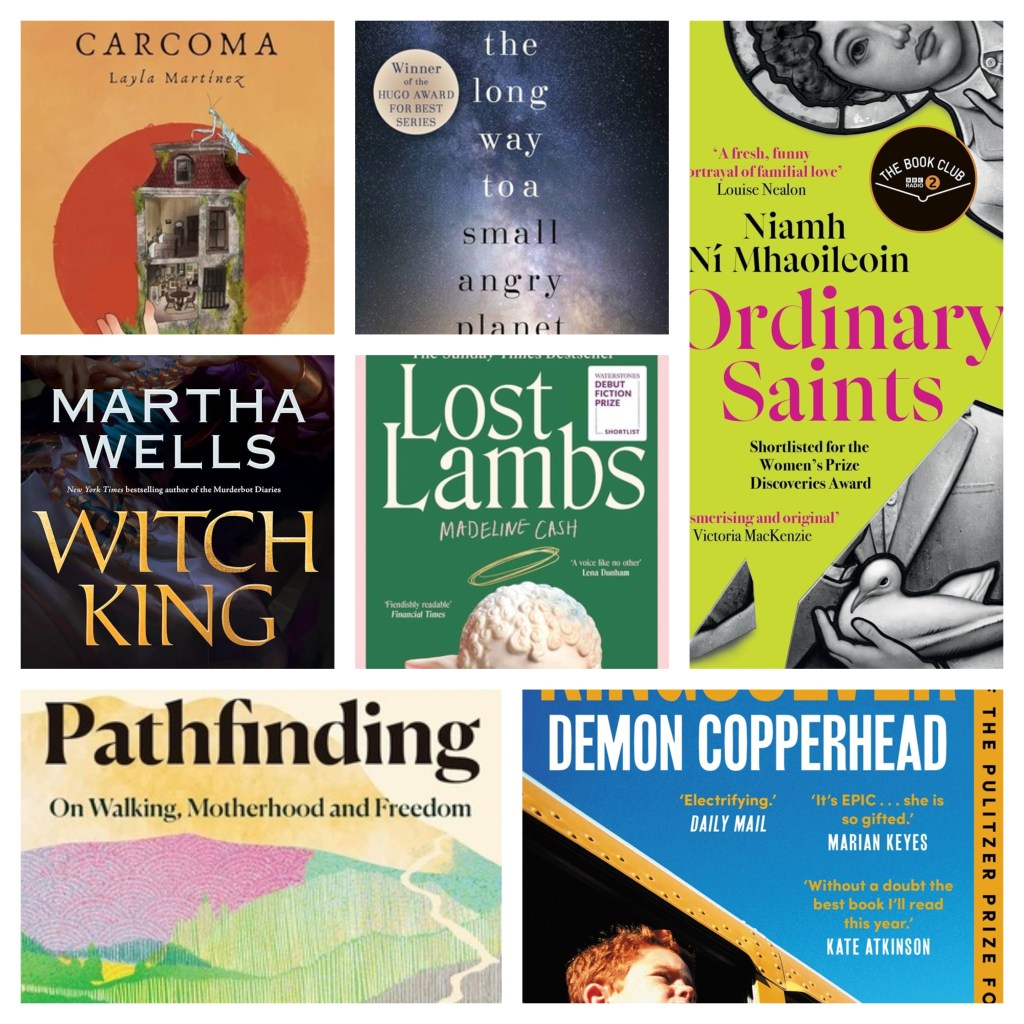
Witch King by Martha Wells
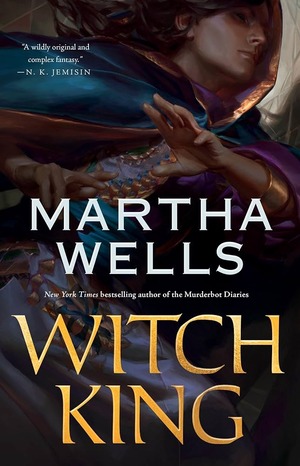
This book came recommended by a friend and since summer meant some extended period of vacation I was eager to get into a proper epic fantasy book. There were a lot of things in this novel that worked really well for me. First of all, the political focus of the plot: this is about a strange and diverse world in which humans co-exist with demons (who originate from the underworld but can take possession of human bodies), blessed ones (a sort of angel equivalent humanoids who derive their power from a common source) and witches (humans with special powers such as controlling the elements). This world is also actively being conquered by a different kind of war-obsessed humans who call themselves ‘The Hierarchs’. Forcing all the previously mentioned communities to work together to survive colonisation.
That said, something I constantly struggled with in this book was structure. It starts in media res with Kai, a demon sorcerer and our main character, who finds himself entombed against. In this present timeline Kai needs to discover who tried to kill him whilst trying to keep a key but fragile alliance between demons, humans, witches and blessed ones in place. In the past time line, we follow Kai as a young demon. Enslaved and tortured by The Hierarchs, Kai unwillingly became a hero of that first revolution against the colonisers. Having these two timelines added depth to the plot, as they explored not only how a revolution is created but also how it is sustained. However, I felt that a lot of fairly complex world-building was introduced rather fast in the first third of the novel. As I was reading, trying to make sense of all the new information, I felt like I needed to take notes to keep all facts and characters straight in my head. Only, that I was reading this book on the go as I was travelling so I wasn’t in the mood to do that. This has me thinking about how some books demand more attention and care than others and how different mindsets and circumstances affect our reading experience.
Because of the changing timelines, I also struggled to connect with Kai and all the other important secondary characters Kai has close relationships with. In a way, it felt that this was the second book in the trilogy instead of the first one – characters dynamics were not explored in detail, almost as if we were already meant to be familiar with them.
All this considered, I still enjoyed this book enough to feel curious about the second one in the series (although I feel like I need a bit of a rest before I embark on reading that one). Some brilliant scenes have stayed in my mind – for example, the convoy of refugees leaving The Hierarchs palace once these are initially defeated, Kai’s destruction of the bridge, how Kai and his companions manage to gain the support of the public opinion and end a authoritarian regime… I also particularly enjoyed the magic system – how the sorcerers in the book are known as ‘expositors’. To launch their spells expositors use the life force of others they hurt and kill. However, Kai can be an expositor who uses magic by hurting only himself (he can do this because, as a demon, he physically regenerates very fast which means he’s almost unkillable). This casts all sort of interesting ethical questions in the novel about the use and cost of magic.
I’d recommend to anyone who loves high fantasy – but be ready to take notes!
Lost Lambs by Madeline Cash
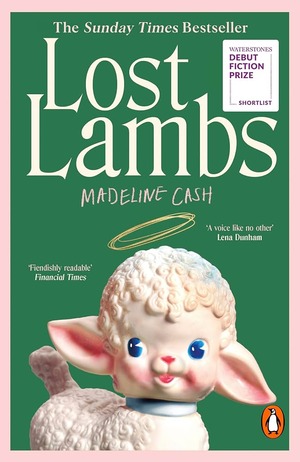
Ah, I was so hopeful after reading the blurb that this book would be about a polyamorous family… and it really wasn’t, which is a pity. But I’m getting ahead of myself.
This novel follows the Flynn – a classic American nuclear family composed by mum (Catherine), dad (Bud) and their three daughters: Abigail, Louise and Harper. The family enters a crisis once Catherine decides she wants to open her marriage and explore other relationships. Bud reluctantly agrees. At the same time, eldest daughter Abigail starts dating a former soldier who is many years her senior and whose nick-name is ‘War Crimes Wes’. Louise, the middle daughter, feels so lonely and alienated that she ends up in a predatory online relationship in which her online boyfriend, a Muslim extremist, convinces her to build a home-made bomb. Harper, the youngest child is incredibly gifted and speaks multiple languages – at the same time, she’s also witnessing the horrible acts perpetrated by a local millionaire – only that, because she’s so young, nobody takes her seriously.
Many of the plot points in the novel are absurd in a way that this feels very much like satire. I enjoyed some things (fore example, Bud’s unexpected love story) but others felt a tad too familiar or forced (the millionaires subplot could have had more nuance and depth; equally, Kate’s queer awakening could have had more of a development in the novel).
This is a quirky, well-written story that had some gloriously hilarious moments: for example, when Catherine is invited to her love interest’s basement to find… that he sculpts all the vaginas from all the women he has been with as a… hobby?
“This one is my favourite.” Jim Doherty selected another of the yonic sculptures. “This is my first wife’s pussy.”
“You were married more than once?”
“Three times, yeah. Don’t worry, she was deported after we split so she’s back in England now. This one’s a Bri’ish twat, innit.” Jim Doherty laughed, moving the sculpture side to side like it was talking, a contorted mouth. They all seemed to be talking, actually. All of the vaginas were telling Catherine to run, run while she could get out of this house and never return.
“So these are all the women you have…”
“They are less depictions of something than depictions about something. You know what I mean? These pussies are moments in time.”
(…)
“You know what,” said Catherine. “I think I’d better go now.”
That said, I wish this novel would have been more daring when it came to the exploration of family. For example, there was a lot of emphasis on showing the romantic interests of these characters but I wished that other kinds of relationships – that between the three sisters – had more space in the novel. The topic of polyamory and how this plays out in a family that has children could also been treated a bit more seriously instead of being used as funny gimmick in the book.
Demon Copperhead by Barbara Kingslover
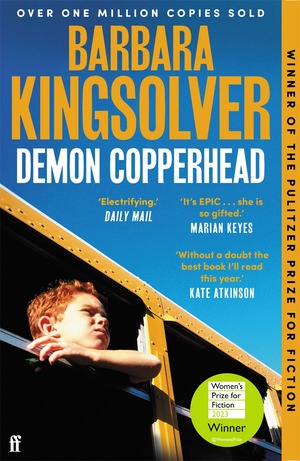
This was a beast of a book that I read for more than a month. Yet it was very entertaining (albeit exasperating for reasons I’ll explain down below). It’s based on Dickens’ novel David Copperfield – however, it’s set in the Appalachian mountains in the 90s. Now, I have to confess here that not only I haven’t read Dickens’ novel (which seems a bit strange since I studied English literature at university) but I actually don’t like Dickens very much. That said, I was ready to give this book a chance since it seemed to have resonated with a lot of people.
The narrator and main character is Demon Copperfield, who is looking back in his life, telling us his story from birth to adulthood. Demon start in life is a harsh one: he’s born to a nineteen-year-old drug addict who loves him dearly but can’t really parent him. His chaotic childhood is however enriched by the presence of his very kind neighbours, the Peggots, an elder couple raising their own grandson (his mother is in jail after stabbing her abusive partner). Yet, things start getting bad once Demon’s mother starts dating Stoner, a cruel man who is abusive and violent towards them both. And this is just the start of Demon’s miseries, as his life keeps taking turns to the worse, and then worse, and worse… and just when you think he can’t get it any worse he somehow does!
It’s so infuriating and exhausting to read about a child who is being treated so badly by those who are meant to protect him. Here the novel does an excellent job of showing the many failed-systems (in foster care, in education, at work, in healthcare) that impact so negatively the lives of many. Through characters and plot points this book shows how poverty can be inherited and perpetuated, specially in areas such as the Appalachian mountains. I feel that this book also taught me things about American culture I didn’t know. For example, a scene in the book describes the origins of the term ‘redneck’ as coming from unionised miners during the West Virginia Coal Wars. This is the story that Mr Amstrong, a Black secondary school teacher tells his pupils to encourage them to embrace the term ‘redneck’ not as a slur that’s applied to them by other Americans but as a sign of pride.
In a different scene towards the end of novel, one of the characters reflects on the hatred and scorn that people in the Appalachian mountains receive from the rest of the country – how they are often portrayed as ‘dumb’ and even as a lesser kind of humans. This character theorises that the centralised government has never been too fond of this community because of it’s preference for a bartering economy in which people grow their own food and make exchanges with neighbours – thus, making it difficult for the government to collect much money in taxes from them.
Many scenes of the book were dark and brutal and very sad to read – specially Demon’s struggles with drugs as a teenager and his toxic relationship with Dori, the girl who introduces him to painkillers and meth.
The ending was slow but beautifully cathartic. June, Demon’s friend and one of the Peggots’ daughters who has always acted as a parent to him, convinces him to surrender himself to a clinic so he can get clean from the drugs. She also advises him to leave the community and live faraway for a while – so he truly heals and learns to deal and process with the traumatic memories of his young life. At the beginning Demon is hurt – feeling expelled from the only place he knows. As he gets sober, however, he starts facing his past. He uses his artistic skills – he’s an illustrator and cartoonist – to start writing and drawing a comic about rednecks and Appalachian culture. At the end of the novel, he bravely comes back to his hometown (even though he’s still very much terrified of having to confront old ghosts). Very unexpectedly, he ends up finding love in what is (thank God!) a hopeful ending for this incredibly bleak novel. I felt quite moved by this conclusion.
Kingslover is an excellent writer – despite the very dark elements of this work there’s also lots of satire in the novel and very skilful character depictions.
Pathfinding by Kerri Andrews
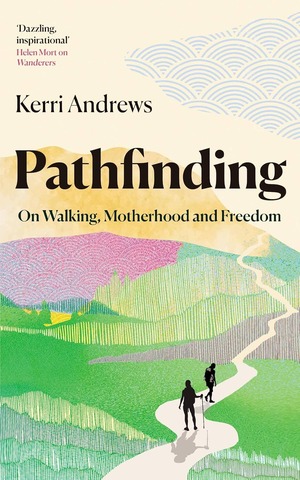
I read Wanderers: A History of Women Walking a few years ago and really enjoyed it – as it discovered me the history of UK-based women across the 19th and 20th century and their fondness with hiking in some of familiar landscapes. In this book, Andrews still writes about walking and hiking, but connects it to motherhood and all the difficult struggles that may come with it. It’s much more personal and raw than her previous book – and I found it even more accomplished, daring and complex in terms of research.
This book made me so angry. Andrews experience of motherhood is very personal, but overall it also points at some pretty abysmal systemic issues in healthcare in which women are often dismissed and treated like lumps of flesh. Her account of giving birth and having to stay alone with the baby that first night as she is recovering from a difficult delivery that has wrecked her body was so sad, specially because her partner wasn’t allowed to stay with her to tend to her and the baby. I just can’t understand why someone would leave a human who is physically injured and most likely also mentally traumatised after going through something that could have as well killed them to take care of a newborn baby during the night. It makes no sense to me. Newborn babies need a lot of care, yes, but so do the birthing parents. I don’t think is difficult to see why a person who is sick can’t be a carer of another vulnerable individual.
Because of her difficult delivery and the isolation that follows – Andrews is left alone in the house, on leave from her job, to take care of her baby full time – she develops postpartum depression. The medical system is not very helpful – and there’s a lot of judgement and internalised shame here about not being a good mother. But a women’s charity in which she gets assigned a buddy (a more experienced mother who also suffered from postpartum depression but has overcome it) proves to be life-saving. To recover, Andrews meets this woman and they both walk with their babies.
Throughout the book, it’s very clear that Andrews loves her children fiercely even when she’s trying to recover mentally from the ordeal of having them and the ways her life (and her identity) has changed. Every chapter features a different walk that she takes often accompanied by other friends who are also mothers. I was a bit shocked (but not really) to see that many of these women didn’t have as much help from their partners as one would expect. Sometimes it was because the partner spent most of the time outside in a day job. Other times because the mothers were breastfeeding so this made it difficult for them to have time away from the baby to do other things that were important to them.
I think it’s brave and very important to discuss postpartum depression – just as it is important to consider mental health in general. Andrews is not offering solutions here but I can see how her honesty could be very comforting for any other woman or parent who may have experienced similar things.
Towards the end of the book, there are two very touching chapters. The first one features Andrews’ attempt of completing the West Highland Way. This is a walking route I have always wanted to do myself, as it goes through some of my favourite places on this Earth (such as Glencoe). Because of her full-time job as an academic and the fact that she has to take care of two young children, she hasn’t had as much time to train for it (who can blame her!) As she walks, she gets inspired by the vast landscapes she discovers. She even meets a few friends who are happy to walk some of the sections of the walk with her and, in this way, she reconnects with her old self, the keen hiker and climber. But after a few days a knee injury proves quite tricky and that, paired with some pretty awful weather (trust me, you have to go to the Scottish Highlands to feel how bad the weather can be over there in the open) she decides to quit midway. Even though she’s disappointed she hasn’t managed to finish it, she’s also looking forward to seeing her family again a bit sooner than anticipated.
The next and final chapter features a walk that Andrews takes with her young son. This is an important moment to her – she is trying to see if walking is something she and her son can share as a common hobby. He does, and they both have fun as they stop to check interesting things throughout the hike such as plants, trees, or an old stone train bridge. It’s very moving to see them build these good memories together.
As with Wanderers, Andrews’ personal experience is presented alongside that of other women in history that also saw in walking and hiking a way to stay attuned with themselves. For example, it features the story of Dorothy Wordsworth, sister of the poet William Wordsworth, who would take extremely long walks with her brother’s wife carrying their baby (her nephew) with them as a baby – in her arms! (So, no fancy sling or special baby backpack).
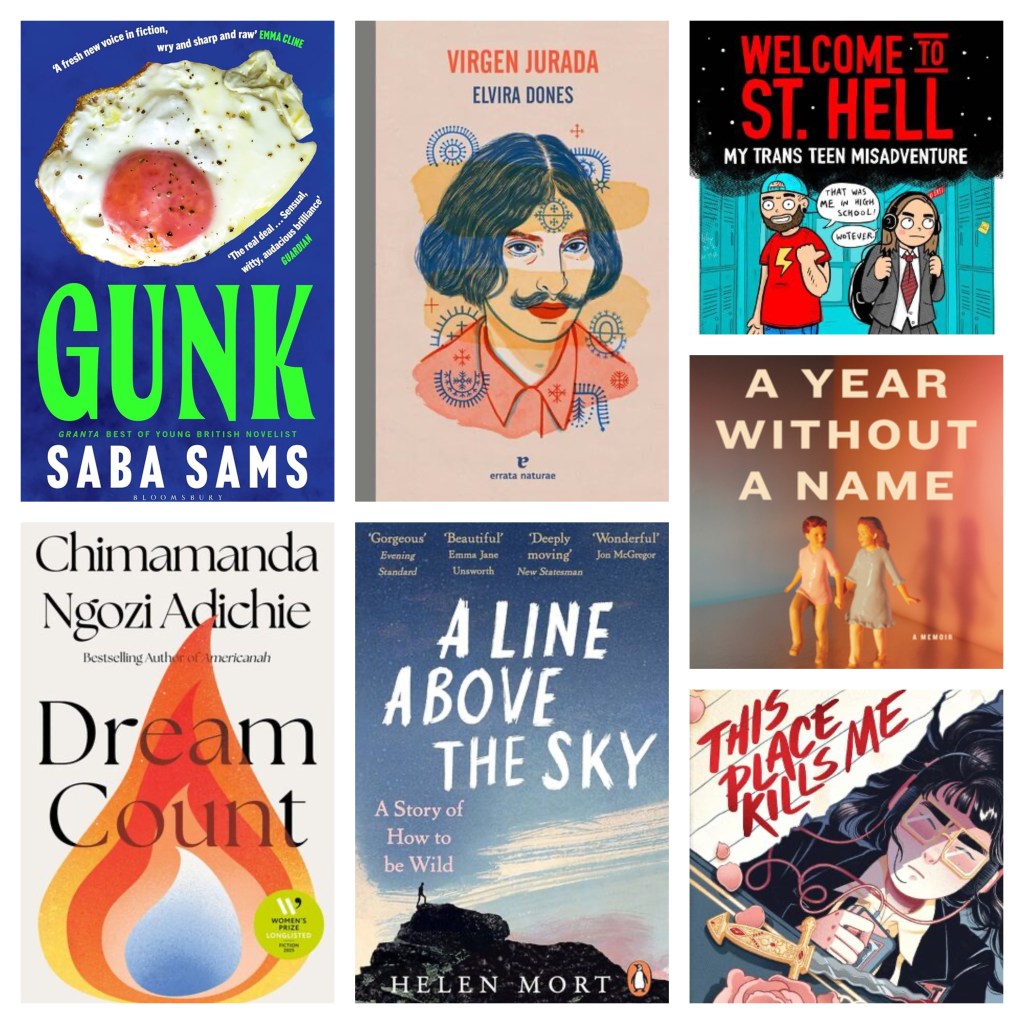
All in all, a very enjoyable read. If you liked books like Helen Mort’s A Line Above the Sky you will love this one too.
Ordinary Saints by Niamh Ni Mhaoileoin
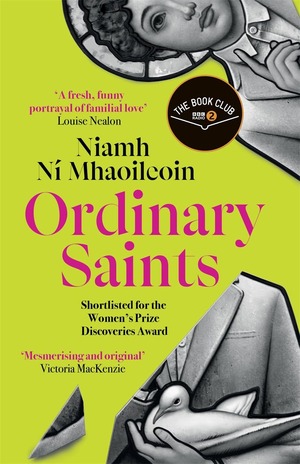
I was very intrigued by this book’s premise: the main character is a young Irish woman who lives in London. She comes from a very devoted Catholic family but is now pretty much estranged from them since she’s gay, something that her parent’s Catholicism doesn’t approve of. Her older brother died when she was only sixteen on an accident – and just as he was training in Rome to become a priest. Many years later, her father contacts her to tell her that the Catholic Church is considering to have her brother canonised as a saint – but to do so a very complex procedure needs to be in place and she, as the sister, may be asked to give a statement about her brother’s supposed ‘divine powers’.
This was a great book, one of the best I have read this year. Even though it’s character-focused – and follows the main character, Jay, pretty closely – is also very intriguing from the very first page. The Catholic Church’s history with saints is fascinating. As this book recounts, there are hundreds and hundreds of Catholic saints, each of them with a specific ‘power’ or ‘ability’. Some of these are pre-existent mythological figures that were then assimilated and transformed by the Church to make them fit their main beliefs. Others may have been real historical figures. What I didn’t know is that in recent years there has been an explosion of new Saints, and that the later popes have canonised more saints than all the other popes in previous centuries. In the novel, Jay wonders if perhaps this is how they plan to attract more people to the Church and keep the Catholic faith alive.
This novel is also about Jay’s small family: her father, her mother, her brother and herself. It’s a story about mental health: Jay’s mother wanted to become a nun originally but was forced to leave the convent she was training at after it was discovered she had some serious mental health issues. As a mother, she keeps struggling with depressive episodes that are never quite addressed by the family. She often fails to wake up early to prepare her children for school and take them there. Because of this, Ferdia, the older brother, has to parent Jay as a young child. And he also has struggles of his own: mainly his anxiety and his obsession with the Church and its rituals (obsession that is interpreted as a ‘divine sign’ by his parents and teachers). On the other hand, Jay’s energetic demeanour is seen by the family as disruptive. From the pair of them, Ferdia is definitely the golden child, specially as he makes it very clear as a young boy that he wants to become a priest (a great honour for his devoted family).
What I love about this book is its honesty when it comes to approaching the theme of family Nobody chooses their family, many of our lives choices can be traced back to them. Even Jay is stuck with a name that she despises – Jacinta – given to her by her brother because he was obsessed with the story of the Miracle of Fátima and Jacina was one of the children who claimed to have seen the Virgin Mary. Jay grows up with faith, inherited from her family. But when she starts feeling attracted to other women, she has to choose between seeing herself as a monster in the context of the faith she’s been brought up in or leaving that faith entirely to not have to repress essential parts of herself. Ultimately, there are more things that make Jay leave the faith after the death of her brother, things that perhaps would have also make Ferdia question his own beliefs if he had been alive then: these are all the allegations and investigations of child abuse from the Catholic Church in Ireland as well as the scandal of the Magdalene laundries.
Jay tries to create space between her parents and herself by moving to a different country – while also having to come to terms with her own mental health struggles which affect the way she relates to others, specially when it comes to establishing romantic relationships.
This is a moving depiction of a family marked by taboos around mental health and the untimely death of one of its members. It’s also a book about loving others even though they may not see the world the way we see it.
The Long Way to a Small Angry Planet by Becky Chambers
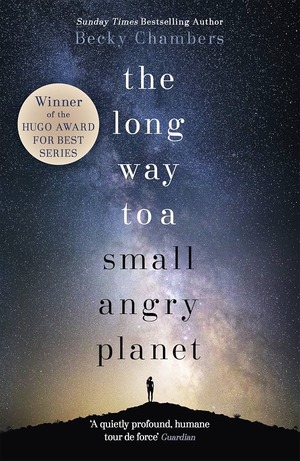
I had such an interesting experience with this book. I got it a couple of years ago but I only managed to read two or three chapters. I couldn’t get into the writing style, the pace was too slow and there wasn’t enough tension in the narrative for me at that time. And every character was so nice. So I decided to quit.
Fast-foward a few years and after an extremely stressful and devastating period I picked up this book again and took it with me on holidays. And this time, I really enjoyed it and willingly immersed myself in its cosy low-stakes atmosphere (because even at its darkest, this book is pretty low-stakes).
This is a space opera that follows Rosemary, a human who becomes part of the crew in an intergalactic ship known as The Wayfarer. What this sheep does is to create wormholes so goods can be shipped faster to different places in the known galaxies. The crew is composed by a very diverse kind of characters, some of them who are human and others who are from different alien spaces. The wonderful (and unexpected thing, at least to me) was that everyone gets along with each other. And even when there is conflict and tension it felt very punctual and things always got resolved more or less amicably. Which, if you are conflict averse in real life (as I am), can be quite comforting.
I specially enjoyed the non-human characters, with my favourite being Sissix (the reptilian Aandrisk pilot) as well as the novel’s focus on poliamory and chosen family which felt fresh and exciting to read.
Rosemary was a sweet character and an overall good protagonist, but in general I wish that her troubled family past would have been discussed with more nuance. I also thought that the book tackled the issue of diversity (social, cultural, biological) in a bit of a simplistic way sometimes. I think this book can be beautiful if it finds you at a time in your life when you need a story like this (and I certainly did, this August). I’m not sure, though, if this will be a book that I will revisit.
Talking about it with two other friends who also love sci-fi (and who read it and enjoyed when it came out) they suggested I read this article on the book and the series it belongs to (which again, I’m not sure I’ll read yet as all the books are standalone pieces anyways). I thought it was a very interesting critical view on some of the themes and issues this novel is concerned with. It goes into explaining why some readers may read this book as ‘plotless’ (its structure is actually more similar to a serialised novel or a TV series, with every chapter focusing specifically on a character having a ‘coming-out’ moment or an epiphany that ultimately brings them closer to the crew / their chosen family). The article also celebrates the fact that this soap opera is not just queer-coded but openly embraces characters from all sorts of different genders and sexualities. And it does also ponder about why some issues in the book are not discussed with the nuance they perhaps deserve (like the reviewer, I also read the character of Corbyn as neurodivergent, so I was quite surprised to find him so routinely vilified for most of the book).
All in all, I’m glad I finally got to read this novel (who routinely keeps being mentioned by my Creative Writing students as a favourite!)
Carcoma (Wood Worm) by Layla Martínez
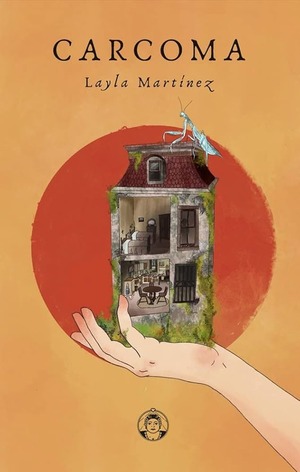
I knew this book had received international acclaim (despite its start as a horror novella with an indie Spanish publisher) and I bought a copy ages ago. It took me years to get around to read it though. I actually started right after The Long Way to a Small Angry Planet and oh boy. These books couldn’t be more different. The first one was a sweet delight of a read. This one disturbed me so much that I had to finish it in the same day because I didn’t want to inhabit this terrifying, bleak world a second longer. (But I loved it, of course I did, because I’m very fond of horror, you see).
This is the story of a house built in the bleak landscape of La Alcarria in La Mancha, a region nearby Madrid. It follows the main character, a woman in her twenties, who lives alone with her grandmother. She’s been accused of murdering a young child she used to babysit but because nobody can find the actual child’s body (and she maintains her innocence, saying that the child ran off from the house when she was in the kitchen preparing food for him) they have to let her go.
From there on, the book splits in two different timelines – giving space to the main character’s familial history, how the house came to be and who are the ghosts who still inhabit it.
This is a story about class and gender violence. The family ‘patriarch’ (really, the women in this family are more central to the book), the main character’s great-grandfather, is born in total and complete poverty, in a family who doesn’t even have a home – so they live in caves instead. He naturally wants to improve his social standing and is ready to do whatever takes. He considers getting a job, but he doesn’t fancy the idea of working for a patron. So instead he… becomes a pimp. This was a chilling moment in the story – in which this character looks around and realises it’d be quite easy for him to ‘own’ women and make money through them. He starts with one, he pretends to court her but then sells her. He keeps her in a barn, and because this woman is as poor as he is, nobody comes looking for her. She effectively becomes his prisoner. From then on, he finds other women that he lures in and then makes part of his business. Eventually, he finds himself a ‘proper’ wife who belongs to a slightly better social class, because at that point he has money enough to build her a house and buy her beautiful things for it. All the while he keeps the other women in the barn.
Eventually, the Civil War starts, and this man doesn’t want to get conscripted, so he convinces his wife to build a fake wall in the bedroom with only a small hole from which he’ll be able to get food. He then effectively walls himself up in there so nobody can find him.
Which works. But also, doesn’t quite go as he expects.
These part of the novel was absolutely brilliant and chilling – specially considering that the author has said she got inspiration to write this story after learning that an ancestor of hers used to do something similar.
The story continues – with the most interesting character being this terrible man’s daughter (and the grandmother of the protagonist). She prays to some twisted Catholic Saints. She cooks truly disgusting food. She knows how to perform magic and even though every other neighbour in the village avoids her (likely as well because there is no ‘man’ in her house) they all go to her when they need something they can’t get by themselves.
The central mystery of the novel also kept me guessing (did the main character kill the child she was taking care of, the child of the richest family in the community who of course had gained their status by oppressing the rest of them?) You could argue this novel uses very common horror tropes (haunted houses, ghosts of past tragedies and so on) but to me there was something truly delicious and disturbing in the writing style and the imagery the author made me see as I was reading these pages. At its core, this story felt raw and true. This is probably also one of the most intense books I’ve read this year, and has also become a horror favorite.