Academic hell, money issues and some self-help: March 2026 Reads

Book Review, Creative Non Fiction, Fantasy, Horror, Speculative Fiction

The Harder I Fight the More I Love You: a memoir by Neko Case
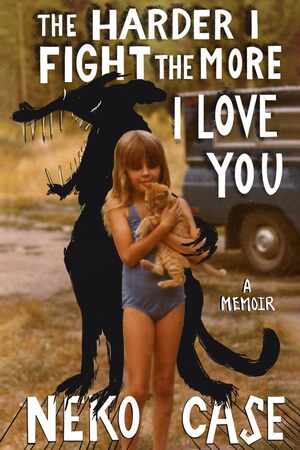
I love Case’s music, which I discovered by chance around 2023 after listening to her being interviewed in The Witch Wave podcast with Pam Grossman. I’m specially fascinated by her mysterious lyrics, often based on her own personal life, so I was intrigued to read this. Interestingly enough, Case has admitted that she was more interested in writing fiction (I would actually be curious to read a novel by her!) but during the Covid-19 pandemic she, like many other musicians, found herself struggling financially because she couldn’t tour and so getting commissioned to write this memoir really helped her.

Case definitely has a story to tell that goes way beyond her experience as a musician, though. In fact, most of this memoir focuses on her unusual (and disturbing) childhood. Her parents who had her in their teens, were not prepared for children at all, which sadly meant they were not only neglectful but also abusive to her only child. For example, when Case is really young, her mother leaves the family and to do so fakes her own death. In a bizarre turn of events, her father goes along with this lie, gathering the family to have a wake for his wife who has presumably died of cancer. Case goes through mourning just to get her mother ‘back’ a year or so after the event. I mean, that alone would had made me go mad as a child.

Yet there are even more disturbing moments here. Later on, still as a child, Case is sent to spent the summer with her mother and her mother’s new husband, who works as an archeologist on a remote excavation. Case is fascinated by this and envisions her whole summer in this exciting place. However, it turns out that her mother has something else in mind. Instead of taking Case with them to work, she leaves her alone in a house in the middle of the wild to spend her days alone. Her only company are the dogs and the cat they have there, plus all the other animals around. Case’s description of solitude as an amputation and her real yearning for the physical touch of another human being during those days, is truly chilling. At some point, she’s so frustrated and angry that she takes her on her dog and hits her. Right away, she feels terrible, and starts crying. To hurt so much inside that you have to hurt someone else. That’s so horrible to read, but so human. It almost made me cry, to think of this little child alone in the middle of nowhere, longing for the most basic forms of human connection. Also, it’s worth noting here that this scene is hard to read because pretty early in the book – and all throughout it – it is clear that Neko Case loves animals, and has devoted much of her life to care for them.

As you can already see, this book is a pretty dark read – even though now and again Case finds people who take care of her, such as a neighbour who has a daughter her age and who becomes her best friend. One of Case’s most precious memories is riding horses with this family and even winning a little horse competition with them. Another memory involves going to car races with her grandparents and her extended family.

In a way, it is nothing short of a miracle that Case ended up being an empathetic human being with a fierce love for nature and animals – and of course, and incredible artist – instead of something truly terrible considering all she had to deal with during her most formative years. Because as a teenager things don’t become any easier. At some point, her father’s brother in-law – a tyrannical bully who has recently become a born again Christian – moves in to the house forcing them all to behave according to his new religious code – and even insisting that many of Case’s behaviours are inspired by the Devil himself. At other point, Case describes an experience of sexual abuse that she didn’t even register as such at that moment because she didn’t have anyone to go to and confide with after it happened. A few years after, it is her mother – by then a ramping alcoholic – the ones who suffers from sexual assault. Case wants to denounce this to the police and get his mother’s abuser in jail but she refuses in which is another heartbreaking scene – where we realise Case’s mother could never protect her child, but she couldn’t protect herself either.

After reading such dark memories for at least the two thirds of the book, the last third is definitely most optimistic. It follows Case’s life as an independent woman. She goes to university in Canada (I’m not surprised she tries to get as far away from her family as possible), connects with a different array of friends and starts making music for the first time. This is not a fairytale story in which she suddenly becomes a rock start the moment she gets this independence. Her career could be seen as ‘slow’ – yet I’m convinced this allowed her to develop her truly original voice.

Margo’s Got Money Troubles by Rufi Thorpe

I saw this book was going to become a series (I haven’t watched the series yet) and because it was about a young woman struggling to make ends meet (ah, lovely late-sate capitalism, I’ve been there) I was pretty curious. This was a surprising book in that it had an element of experimentation that I’m not sure I liked but I certainly found fascinating. Let me discuss this for a moment. The author narrates Margo’s (the main character) story in two ways: some chapters are written in a first person point of view, whereas others are written in third person point of view. This is not completely random: Margo is actually (amongst other things) a Literature student taking Creative Writing courses, and a lot of her musings throughout the book have to do with storytelling – who gets to tell a story, how this affects how the story is perceived by others, how we can use stories to connect and so on.

I have to say I have some qualms with this book, but overall I really enjoyed it. It follows the story of young Margo, who sees herself as ‘white trash’. She is from California and at nineteen she gets pregnant by her Creative Writing teacher at the community college where she goes to. Everyone (including her mum and her best friend, who has money and has ended in a fancy university in New York) thinks she should have an abortion instead of having a baby so young and ‘ruining her life’. Yet, even though Margot sees nothing wrong with the idea of abortion itself, she can’t bring herself to do it. She thinks that the right thing to do is to keep the baby, and that by doing so, she’s a good person. So she has the baby. Now, all of this happens in the first few pages of the book. The author is much more interested in Margo’s life after the baby.

As you can imagine, having a baby is not what Margo imagined, and soon she finds herself busy and overwhelmed as a single parent. She’s not able to keep her job as a waitress since the randomness of the shifts and her inability to have enough money to pay for childcare make this impossible. When she pleads to her manager to let her bring the baby, she’s not sympathetic at all to her and promptly fires her. From then on, Margo finds it impossible to get job compatible with early motherhood (a state she can’t really get out of). I mean, I’m not surprised. Even with a full-time, technically permanent job I’m also not sure I can afford to care for a baby and pay for it. So, after trials and tribulations, and somehow inspired by her father – who is an ex Pro-wrestler – she decides to open an OnlyFans account where it turns out her youth (and her ability to write genuinely entertaining erotica) make her a pretty penny. All good if it wasn’t because her old Creative Writing professor suddenly decides he wants to actually be involved in the baby’s life and threatens to use her job against her in a cruel custody battle.

This book was long, yet it kept me on edge. Every time that Margo thought her life was going to improve and then it didn’t… I felt for her, because life can be so relentless. In fact, characters in this novel are not what I’d consider likeable (including Margo) yet that was precisely what made me feel so connected to them (and what made the novel so entertaining to read). We have Margo, taking one wrong decision after another (decisions that put her in pretty nasty situations) while she tells herself this is what a ‘good person’ would do. Or her mother, who is more concerned about marrying a rich guy and finally improving on her social status than maintaining a good relationship with her only daughter. Or Margo’s father, who is caring, and creative, and supportive of her endeavours, but also… a heroine addict.

The only thing I didn’t quite like (and there’s a big spoiler here) was the romance plot. I spent a lot of the book thinking that the man Margo was having private conversations with through OnlyFans was a catfishing her. Or that he had bad intentions. Which in the end he didn’t, he was an average, normal human being. Which perhaps is the point of it – to show that he can be a OnlyFans user too, and that’s fine, not all the users need to be creeps (maybe most aren’t, I really know nothing about OnlyFans). When she finally revealed her real identity to him (and also admitted to having invented a character to interact with him) I thought their relationship was doomed. So I didn’t quite buy that at the end, after they meet in real life, they quickly become business partners and this relationship (which ends up being a financial one but with clear romantic potential) is what seems to finally give Margo’s life a break. This just seemed too much like Deus Ex Machina, which is a plot device I really dislike. Although, to be fair with the author, Margo had a pretty awful time for most of the novel, so it’s true that the ending balances things somehow (even though I wish this was how life worked sometimes… wouldn’t it be nice?)

Katabasis by Rebecca F Kuang

Another R F Kuang on my list! A book about a PhD student who has to go to Hell to rescue her supervisor – as she won’t be able to finish her own PhD otherwise – only to discover that Hell is… a version of academia? Of course I had to read this, I mean, the premise alone is brilliant.

There were a lot of things I enjoyed about this book – things that I think you would only truly understand if you have done a PhD and worked a few years in academia to have your soul broken. The fact that I was also reading this book through a pretty intense period of academic burnout and general desolation made it even more poignant. It is clear that Kuang, who, unlike me, has gone to the ‘best’ universities out there (Yale, Cambridge and Oxford) has felt the same kind of pain, which is very well reflected through the experiences of three of her characters: Alice, Peter and Elspeth.

Particularly poignant are the descriptions of academic burnout, isolation and doom that Alice feels as a female PhD student in Cambridge. There’s a lot of misogyny and racism she has to fight against – which is specially hurtful in academia, a world in which you are meant to be brilliant because of your intellect, which, of course, has nothing to do with gender, race or culture, but at the same time it does, because traditionally men have had women alongside (i.e. wives) taking care of their households so they could dedicate themselves exclusively to their intellectual ambitions. This novel is set in the 80s – I think because Kwang didn’t want to include things like mobile phones and the internet – but a lot of these struggles are still the same in this day and age, which is really sad.

Then there’s also the experience of those of us who have to battle with chronic illnesses in a setting which is so competitive and relentless that there is no space for care, slowness, nurturing. I thought it was very interesting than in this novel Peter was the one suffering from a physical chronic condition which hugely affected his academic life – Crohn’s disease. I have someone very dear and close to me who also works in academia and suffers from this debilitating condition (which, sadly, is not very well researched or understood at all) so this plot line really struck a chord in me. Then we have Elspeth, who tries to be the perfect student to her tyrannical supervisor who is always asking more, more, more. Whereas I didn’t have the experience of having this kind of toxicity during my PhD, I think in general academia is that toxic influence always asking you give it more and be better (again, with no regards to care, community and real social impact). When the plot show how this often unfair and sick system has her considering suicide (the same happens to Alice, who shares the same supervisor) I felt chills. Because, again, this system will truly break your soul if you let it, and how would you not when it demands all you have to even gain a place in it. And this is in a university like Cambridge – which is well established and, in the book, has plenty of funding and resources. I won’t even get into my experience of working at post-92 universities while higher education gets defunded and you can add the ‘I may lose my job at any point’ pressure to all the other things I’ve just mentioned.

So for this very raw, real core, I think Katabasis is an splendid novel.

Now, the things I didn’t like… As always, I think Kuang’s characterisation is not her strongest skill. Even though Alice, Peter and Elspeth are interesting and have lots of potential, I wish she would have developed them much more. And also, I didn’t really buy or felt moved by (spoiler!!) Alice’s and Peter’s love story. I don’t know why, it just felt forced to me. I’d have preferred it if they were only friends. When he ‘died’ I knew he was going to be back, and I didn’t quite like that at the end romantic love was what redeemed them both. It felt a bit too predictable and soppy for my taste. The villains of the story – the Kripkes – also seemed too much like caricatures – and such a wasted opportunity to explore another interesting side of academia. The nine circles of hell/academia could have been much more distinct and developed – although I did laugh at some of the scenes set there. All in all, it felt as if this novel had been written a bit too fast, or was in need of a couple of extra draft.

That said, I do enjoy Kuangs’ writing, and I will be reading whatever she comes up with next.

Slow Productivity by Cal Newport

I was so stressed and burnout at work last March so of course I grabbed this book thinking that maybe it could save me? Ha! It didn’t. To be frank, I don’t even remember much of it by now. I have to say that I found bits of it truly annoying (like, I could feel this book is written by a privileged white male academic who is in a very different position to my own, with much more freedom around workload and how he chooses to spend his time). On the other hand, I thought there was genuine good advice in this book. Nothing too shocking (a lot of it is common sense) but it’s good to be reminded.

The thing I loved the most is when Newport reminds you that to be productive in a sustainable way you can, at the very most, focus on two, maybe three things. And on of those is probably your day job because you need it to pay bills. And the other one is perhaps exercise or whatever else you do to keep physically and mentally healthy. So that leaves you with a third thing, really, and that’s it. In my case, that third thing is my writing. I think this book reminded me that I need to accept that I’m going to have to let other things go.

Other interesting advice: blocking your time to be more efficient. That is, having times blocked off every week for tasks at work that need to be done no matter what (for me that’d be teaching prep during term time) but you don’t want to spend all your time doing them. Sure.

Another one – resting and having long periods ‘off’ is very much key to creativity – and here Newport goes to remind us that is cool to go on holidays for a month or two to chill in nature and just, say, read, instead of being always grinding on our writing, research… etc. Which, sure, I agree with this – even though I can’t afford to take as much holiday on one go.

Finally, this book also defends the idea that good work can take a long time to produce. I don’t know why so many of us feel like we need to write say a novel every three years (and I’m saying three years because I’m assuming we already have a day job) – what if a novel takes thirteen years? Or two decades? (Which again, sounds great but also unrealistic if you work in academia where you are meant to be publishing relatively frequently, or you life from your writing and your publisher wants you to have a novel out every year…)

Some of the examples in the book made me laugh bitterly. Such as the story of a certain scholar (a man, of course, I was kind of hoping he was a woman but alas, no) who maintained that to do good research and deep, significant work, you just have to be an asshole to your colleagues and basically be known in your department as someone who doesn’t do admin tasks and other ‘fluff’ very well so they end up not bothering you with that (and so you can focus on your research instead and become a genius on your chosen field so the big bosses don’t want to fire you). Sure, sure, buddy. Now come to work at a post-92, defunded university. And be a woman as well, why not. And maybe be an immigrant. See how that strategy plays in this scenario. (Also, a friend reminded that when this scholar is ‘bad’ at admin and other ‘fluff’ for the sake of his own brilliance, that work still needs to get done, and it will fall on people like her, or myself, who don’t have the privilege of placing such boundaries but also, are never allowed the time to become ‘geniuses’, so the cycle of abuses perpetuates itself).