New Ideas: January 2026 Reading Log

Book Review, Books, Creative Non Fiction, Fantasy, Graphic Novels, Historical Fiction, Literary Fiction, Queer Literature, Thrutopia

Spent by Alison Bechdel
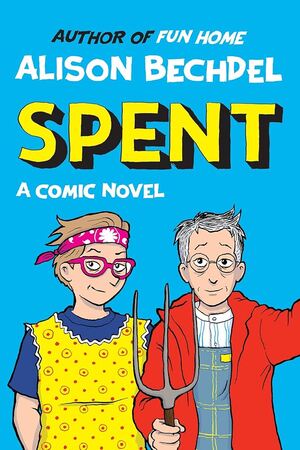
I love Bechdel’s work so I saved this book as a treat and I read it all on one go during New Year. It didn’t disappoint. The art is incredible detailed as always (specially the cats, look for the cheeky cats in almost every frame!). Also, this time Bechdel treats us to a fully-coloured work which makes the small community she portrays here all the more vibrant.

There’s something distinctive about this book. Whereas a lot of Bechdel’s work is autobiographical (i.e. Fun Home, Are You My Mother? and The Secret to Superhuman Strength) what Bechdel does here is something different. The main character is called Alison and looks exactly like her. Her partner is called Holly and looks exactly like the Holly from her other works who we know is the author’s partner. However, Bechdel classifies this work as fiction from the get go. For example, the Alison of this work became famous after publishing a graphic novel titled Death and Taxidermy about her father who was a taxidermist artist (so, no Fun Home and no father working in the funeral business). She doesn’t have two younger brothers but an older sister called Sheila. And this graphic novel is not written in the first person but in the third person.

I’m intrigued but also excited – and creatively stimulated – by observing these approaches. Coincidentally, I also read another book this month that plays with the boundaries between fiction and non-fiction, Soldiers of Salamis, which I discuss below. But let’s go back to Bechdel’s new work. Spent tells the story of a small community in Vermont in which established graphic novelist Alison and her partner Holly have decided to start a pigmy goat sanctuary. Alison’s work has recently been adapted into a very popular TV series. However, life is not as easy as her friends think: it’s actually excruciating for Alison to see her own life adapted into TV. Also, the publisher who has made an offer for her new work is also involved with some far-right politics that go against everything Alison believes in so she has to decide between her career and her ideals on this next step of her professional journey.

Reading in transit: April 2025 Reading Log

Book Review, Books, Creative Non Fiction, Fantasy, Graphic Novels, Queer Literature, Spanish

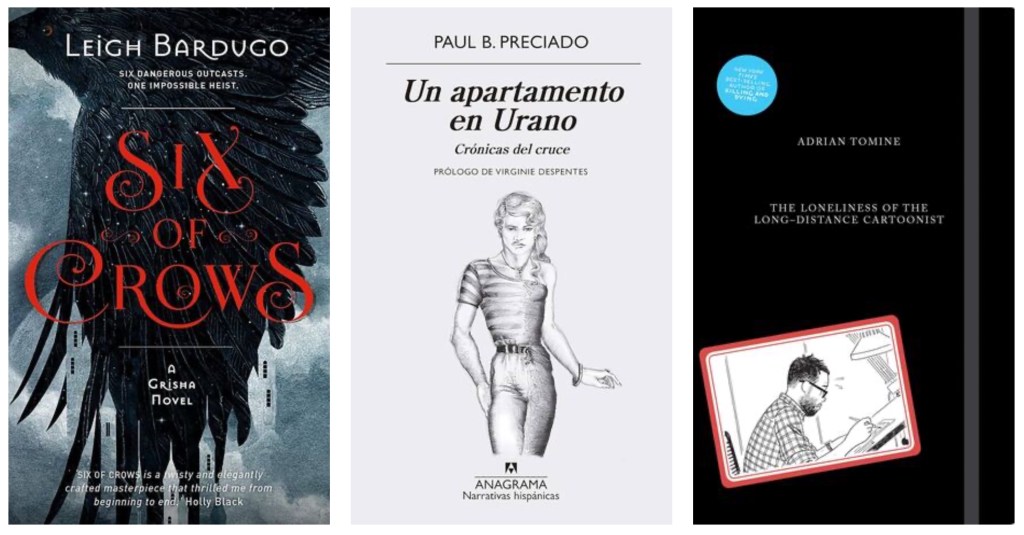
Un Apartamento en Urano (An Apartment in Urano) by Paul B Preciado

Since last year, it seems that I’ve been on a self-imposed quest to read Preciado’s entire backlist, and what can I say? I’m loving the journey, and I can’t stop talking about how great he is as a writer and philosopher. This book is a special one, as it’s a collection of short articles that Preciado originally published in French in the newspaper Libération from 2013 to 2018. This is, coincidentally, the time when Preciado decided to transition and started using a male name and male pronouns, so many of these articles – which he refers to as ‘crónicas del cruce’ (‘chronics of a crossing’) – document it. But Preciado is not only experiencing a gender transition – as he writes, he goes through an important romantic break-up, he travels from France to Spain to Greece and many other countries in between. He reflects deeply on the idea of belonging to a place (and a gender).

Provocateurs, agitators and change-makers: March 2025 Reading Long

Book Review, Books, Creative Non Fiction, Crime Fiction, Graphic Novels, Horror, Literary Fiction, Queer Literature, Science-Fiction, Speculative Fiction

Overwork by Brigid Schulte

I found this book in the ‘highlights’ section of my local library, and it came at the right time. Since suffering from academic burnout (and depression and anxiety) during my PhD (while having six other part-time jobs to make a living, because my studentships weren’t really enough), I became interested in work and all the social and legal implications around it. I consider myself an artist first (a writer, primarily). Still, I’ve also had a series of jobs to make a living because the money I make from my writing is pitiful and doesn’t even remotely get close to minimum wage. I know this is the case for many of my writer friends (actually, all of them). I’m pretty fine with it. I mean, I know writing as a profession is extremely devalued, and I’d like to fight to change things in that regard. But I also enjoy having other occupations – I’m a social creature by nature and an extrovert. When I was working in retail, for example, I really thrived by serving other people and aiming to make their days better through our short interactions. It not only made me feel useful, but it also made me feel closer to my community. (For context, I worked as a bookseller for a few years.) Now, I despise some jobs I’ve done (ahem, marketing is pretty up on the list, it was too soul crushing) and loved others (being an academic, teaching and researching Creative Writing). But the constant of my job life has been marked by overwork, uncertainty, precariousness, and generally feeling dehumanised by the businesses I have been part of as an employee. Sometimes I’ve wondered if that’s my fault (am I too sensitive, like my grandmother used to say? Am I just weak? Am I just too much of an idealist?) But also, slowly but surely, I come to realise that a lot of systems we are part of are not designed to make us feel cherished, or to make us feel like our development matters or that we are important. On the contrary, we are treated as liabilities, as highly disposable parts.

Mouthwatering food, time-travelling and the craft: January 2025 Reading Log

Book Review, Books, Creative Non Fiction, Crime Fiction, Fantasy, French, Graphic Novels, Horror, Literary Fiction, Science-Fiction

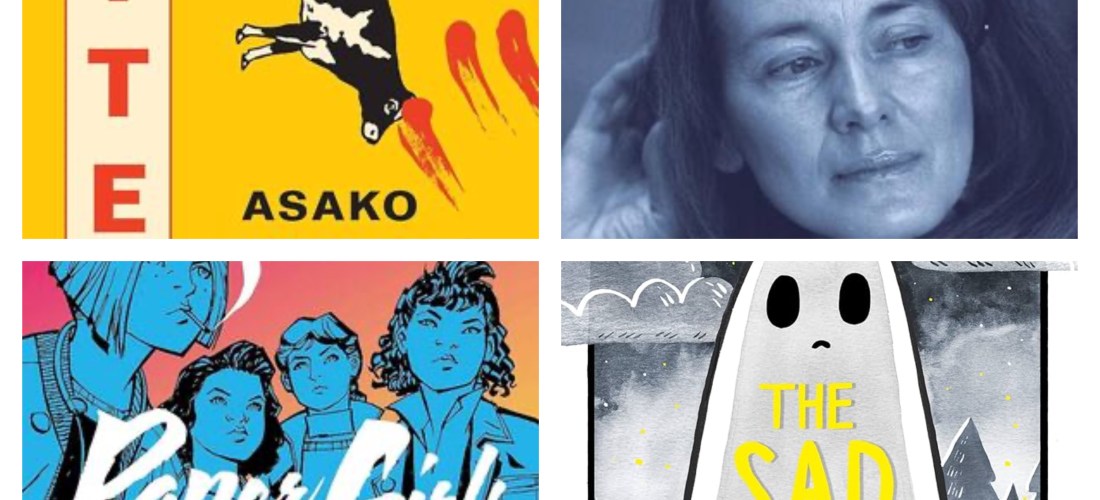
Butter by Asako Yuzuki

I read this while on holiday and loved every page. Not only is this an engaging thriller, but also an interesting social critique of the relationship many women and femmes have with food and their own bodies. Even though the story is set in Japan, I could still relate to it even from my European experience. The obsession with eating as little as possible to fit into the smallest clothing sizes, for example, rang very true for me, especially as someone born and raised in Spain. (I may be wrong here, but I find the female beauty standards in the UK a tad more relaxed, which I appreciate.)

An interesting thing about this story is that it is based on a real criminal case in Japan where a woman was accused of killing (probably by poisoning them) her much older lovers. Apparently, this was a case that shocked the nation because the woman in question turned out to be ‘not beautiful’ (meaning, she was seen as fat by others) – so everyone wondered, how could she have been desirable for those men who ended up being her victims?