All fours by Miranda July
I read this book to see what all the hype was about after seeing lots of enthusiastic reviews last year. This is autofiction – meaning, it’s heavily inspired by the author’s own personal experience but it contains elements of fiction. I think I liked it. Or did I?
Let’s start with the premise. Our unnamed protagonist (which of course I immediately imagined looking exactly like Miranda July) is in her forties, married and with a young child living in LA. She’s a writer with an established career. When she gets $20,000 unexpectedly (from a sentence that she once wrote to be used in a marketing campaign for a whiskey brand) she decides to spend this money on a luxurious stay on one of the best hotels in NYC. She’ll get to see her friends there and enjoy the cultural life of the city. Then, she also decides that instead of taking the plane there (as she normally does) she’ll drive across the country to enjoy this experience on her own. OK. At this point in the plot I was hoping to read a cross country road trip. I was ready for it. But alas, this is not where the novel goes. Oh, no. Instead, she drives barely twenty minutes away from her house and stops at a small and non-descriptive Californian town. She decides to check in to a motel there… and ends up spending the three weeks she’d allocated to this big road trip there. But why? Well, several reasons. First she meets an attractive man in his early thirties, Davey. They both start flirting and she’s immediately obsessed with him (he’s also kind of obsessed with her, since he recognised her immediately as a famous writer). The thing is, she has been having some issues with her husband. He’s still a very lovely person, the two of them are great friends and they enjoy parenting together. However, their sex life has become stale, at least for the narrator. This new man, however, awakens in her a desire she didn’t even know was there. So she stays, and not only that, but she hires this man’s wife, who is an interior designer, to completely redesign the motel room she’s staying in. All of this without telling her that she and her husband are kind of seeing each other as friends. This was a bizarre part of the argument – the fact that someone would happily spend $20,000 on a whim to have a room they don’t even own redesigned to be as luxurious and beautiful as possible. The idea is that the narrator, who has never owned a house all by herself, gets to decide precisely what this place looks like. It’s catered to satisfy every single whim she’s ever had about a space. Egyptian cotton towels, lush curtains, an antique vintage bedspread… you name it. When the three weeks pass she simply goes back home to her husband and her child. She lies to them and tells them she’s been across the country. She only confides the truth to her friends. Even so, pretty soon her marriage and her family life start to disintegrate as she starts experiencing her first menopause symptoms which include a rather unexpected sexual awakening.
This book was very well written. From the very first page, I was intrigued by the story. July writes in a way that I find very ‘American’ – the writing is simple, devoid of unnecessary detail, yet it has a quirkiness to it and a great eye for character. It reminded me of the work of other of her fellow American writers such as Curtis Sittenfeld.
I was also very intrigued by the way this book questions the institution of marriage and the nuclear family through the experiences and feelings of the main character. A character who is also going through the menopause – something that half of the human population will experience during their life time but I have very rarely found in fiction.
Now, I didn’t really enjoy how the artist life was portrayed here. This may be a pet peeve of mine but seriously – the narrator’s career as an artist seems incredibly well established. She never worries about having to get a day job or some annoying freelance gigs to pay the bills. She’s just there, enjoying the money it brings and deciding to randomly spend $20,000. Not even when she decides (spoiler!) that she will divorce her husband and go live somewhere else does she worry about her financial situation (which is a bit strange, considering she also has a kid she has to provide for). I was confused because you don’t really see her work much throughout the months this story covers. At the beginning, I assumed perhaps her husband was taking care of most of the finances – since he’s very successful at his job as a music composer for famous pop stars. But the fact that money doesn’t factor at all in her decision to separate from him suggests otherwise. As an artist myself, this unnerves me slightly because the experience I have of the artists’ life is that of having to handle always way too many plates at the same time to make things barely work And this is the experience of many of my peers too.
Also, the main character is really annoying and self-centred. Even when she chats to her friends, she’s usually only talking about herself. At times while reading this I wanted to scream at her. And I’m not sure I’d have enjoyed being her friend in real life. However, in retrospective, I have to say that a lot of novels have been written about very annoying self-centred men, so why not have women in that position? And certainly there’s a raw honesty to the way this character is portrayed. She knows she’s annoying. She self-analyses herself constantly and recognises at least some her flaws.
One of the funniest scenes in this novel comes towards the end. The narrator has spent many months (years even?) trying to organise a meeting with a very famous pop star who initially reached out to her to collaborate on a project (I imagined a star such as Beyoncé or Rihanna here). However, the star keeps postponing the meeting. We know, as readers, the meeting is not going to happen. The main character, or at least a side of her, knows this too. But she keeps trying and she makes space in her diary for said meeting all while lamenting that this is star is oh so famous that she obviously doesn’t want to mingle with her, a writer who is just ‘semi-famous’ (I mean, sure, obsessing with shades of fame is very human). Eventually, the meeting does happen. But it turns out this pop star never wanted to collaborate with the main character on anything (this was something the main character’s personal assistant wrongly assumed). It turns out that when the main character gave birth, her child was affected by a very strange and unusual condition which put their life in danger for the first months of their life. This was such an extreme condition that for many months the main character was told that her baby wouldn’t make it. She still experiences PTSD symptoms about it. Well, as it turns out, the same thing happened to this very famous pop star, and she just wanted to reach out to the narrator to connect with someone who had gone through the same traumatic experience. On the one hand, the narrator is happy to help. On the other hand, she’s absolutely mortified.
All in all, this was an entertaining book that I’ll be happy to recommend. You spend most of it hoping the narrator and Davey will finally have sex. Does it happen in the end? Well, you’ll have to read it to discover it for yourself. (Also, if you are interested in Miranda July’s process when writing auto fiction, you can check this interview or this other interview).
Alien Clay by Adrien Tchaikovsky

I absolutely adored Tchaikovsky’s book Children of Time (one of my favourite books of 2025) so I was happy to receive a copy of this newer novel for my birthday last year. And I have to say that I’m definitely a Tchaikovsky fan after reading this (I need to finish his Children of Time series).
Alien Clay follows Arton Daghdev, a Biology university professor and political dissident who is sent to a forced labour camp on a distant planet named Kiln (I couldn’t avoid chuckling a bit at this given the novel’s title). There is a fascist government on Earth, The Mandate, who considers that humans are the pinnacle of biological evolution – something that Daghdev doesn’t really agree with.
Kiln is one of the grimmest places you will ever read about. Basically, people sent there are forced to work until they die. As it turns out, this is a planet that could potentially be terraformed since it has lots of sentient life. The issue is, evolution in this planet is driven by extreme parasitism – animals join other animals, who join other animals to create a sort of ‘animal compounds’. It’s a fascinating idea – it basically imagines the theory that evolution is driven by collaboration. For example, when Daghdev is given the chance to dissect one of the animals from Kiln, he keeps finding different animals inside the first one (an animal that allows other animals to breathe, an animal that brings extra eyes, or extra limbs and so on). Just think on how we are all also composed by bacteria that allow us to be alive… and imagine they were way bigger.
There’s something else in Kiln The Mandate is interested in: all throughout the planet there are large structures made of clay and decorated with an array of symbols which resemble writing (but that nobody to this date has been able to decipher). This suggests to The Mandate and their followers that there is a superior intelligence in Kiln – maybe even some humans? But they can’t find them anywhere.
In Kiln, Daghdev is introduced to Commandant Terolan, who supervises the work on the planet. Terolan is a control freak, fervent supporter of The Mandate and also a wannabe scientist obsessed with being the one who finally discovers Kiln’s humans. To this purpose, Terolan intends to use Daghdev’s expertise as a scientist. However, as soon as he arrives to the planet Daghdev starts plotting with his fellow inmates to escape their very dire conditions.
I won’t reveal the ending – which, for such a bleak and horrific book was somehow joyfully hopeful – but I thoroughly enjoyed the book. There’s a lot here about the idea of purity and cleanness – for example, humans need to have protective gear every time they leave the base camp and they venture through Kiln’s ecosystem. Without it, they would be infected by the multitude of parasitic organisms living in that environment. Everyone on camp lives with this extreme fear of infection – and they are all regularly cleaned with poisonous disinfectants that are so toxic to life (any life, including human) that they routinely kill prisoners. The Mandate is also obsessed with a metaphorical kind of cleanness, of course, as they will prosecute and get rid of every individual who doesn’t comply with all their values.
This is also a book about community and activism. The Mandate is focused on creating an environment of scarcity and fear in society so no one feels like they can resist its laws. Organising is very difficult as people keep betraying each other – often under threat of death itself. It seems that taking down The Mandate is impossible. And yet, this book suggests that if we could truly find a way to absolutely trust each other (or if there was something in our biology that facilitated this) – it would be very difficult for a single institution to raise and dominate over all of us.
The Practice of Attention by Cody Cook-Parrott
Another self-help adjacent book I read in my (perhaps futile?) quest of improving my health. It basically focuses on ways in which you can regain attention and focus – that so many of us have lost due to the stress of current life as well as the constant bombarding of news and social media. Nothing in here was revolutionary or mind-blowing, but I generally enjoyed reading this nonetheless. There is a welcomed gentleness in the way this book is written – an acknowledgement of the fact that many of us need to have very demanding and stressful lives to pay our bills.
The most interesting chapters to me were those dedicated to having a hobby, to faith and to contributing to our community. Having a hobby and doing something just for the pleasure of it is so important. Yet, many of us obsessed with productivity (I count myself in this category), tend to think that if we give our time to something ‘unproductive’ we are merely losing a precious resource. I don’t know how I developed that core belief but it is certainly ingrained in me. Perhaps it was after many years of having different part-time jobs alongside my PhD, permanently doing, doing, doing, just to survive. This book made me realise that I want to dedicate more time to playing video games, to crocheting and even to improve on my Japanese, a language I learned during my undergraduate years but that I have barely touched since.
The chapter on faith was also very interesting. Cody defines themself as someone spiritual but not following a specific religious denomination. They discussed the habit of praying and how when they find something overwhelming in their life they pray to ‘leave it with God’ – admitting they have no control over it but also releasing a sense of responsibility over it, trusting that God will take care of it. Is this the same as being an optimist? Perhaps this is a familiar idea for those who are more religiously inclined but it was quite inspiring to me. It was also useful to think about the idea of devotion – which to me means seeing beyond the goals I have (self-imposed goals or goals imposed to me by others) beyond the painful chaos of every day life, beyond the self even, if that is possible.
Finally, Cody also included a chapter on being of service to others. On how releasing time from things which damage our focus (hello again social media and the infinite trap of comparison) can then in turn afford us time to be of service to our community. I realise this every time I make a yearly reflection in late December or early January. It all seems to be about goals, things that I want to accomplish, things I want to be known for… all centred around myself. Pretty egocentric, huh? But how about being there to serve others? Of giving back to communities? I think the issue for many of us here is that we are so overwhelmed by our day jobs and the toll they take that the spare energy we have left from them really just goes to sleep and maybe try to keep our bodies healthy or maintain a social life. And yet, being able to give back always makes me feel so rich and purposeful.
Desperdigados por el mundo (Scattered all over the Earth) by Yoko Tawada
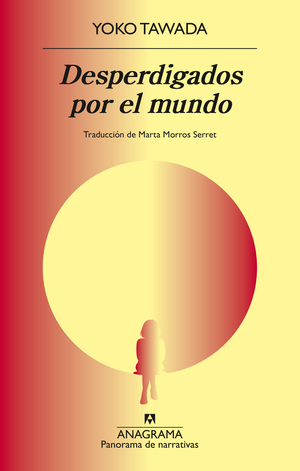
I saw a copy of this book translated into Spanish when I was in Madrid. I was very curious about the plot: it follows a cast of characters all over Europe in a near speculative future. One them, a Japanese woman who is a refugee in Denmark, has invented her own language, panska, an amalgamation of Scandinavian languages which allows her to communicate with people in this area and that she’s happy to teach to those who, like her, have lost their native country forever. I was also interested in the author herself – Tawada is Japanese but she emigrated to Germany when she was twenty-two (I emigrated to the UK when I was twenty-one!) She writes and publishes in both German and Japanese. This novel has been written in Japanese originally and my copy was translated by Marta Morros Serret. If you are curious about her process translating this book (I was) there is a video here where she explains how she managed some of the linguistic challenges she encountered along the way (there are English subtitles available).
I enjoyed this book even though I found the writing style and the plot had a strange rhythm: short sentences that sometimes stop quite abruptly and lots of charged pauses and gaps. I wondered if this was a symptom of the translation. But after listening to the Spanish translator talk about Tawada’s ‘staccato’ writing style in this particular novel, I was left thinking that maybe this is what the author intended.
The plot had many points of necessary randomness that annoyed me a bit – that is, there are characters here looking for other characters all across Europe and they manage to find each other… in a matter of days? You would think it’d take you much longer if you were looking for someone who didn’t want to be found all across Europe. And yet, there is some poetry in this forced symmetries. Because a lot in this book is about being lost and not having a place to go back to, as well as suffering an irremediable homesickness. The main character, Hiruko, was born in Japan, but in the reality of the book this country has disappeared, ravaged by natural disasters and the ever rising sea levels. Now Hiruko has become a refugee in Europe, making Denmark her home (until they decide to kick her out, at least), but always feeling like a stranger because nobody can relate to the culture she comes from. Hiruko is also the main driving force in the plot: all the other characters join her in quest of finding another Japanese native speaker.
Another character, Knut, is a Danish linguist with mummy issues who becomes intrigued by Hiruko’s panska and wants to study it. They both become friends (maybe something else?) united by their common obsession with languages.
We also have Akash, an Indian transgender woman living in Luxemburg who, like Hiruko, has to navigate the often confusing and constricting immigration laws in Europe.
Then there is Nanuk, a young man from Greenland, who travels to Denmark after a Danish woman (and also Knut’s mother) agrees to pay for his studies there. He ends up leaving the country to travel all over Europe. When a few people start believing, due to his appearance, that he is Japanese, he doesn’t contradict them and instead starts learning to cook Japanese food so he can work at sushi restaurants (popular all across Europe). Committed to maintaining this façade, he even studies Japanese language.
Finally, there’s Susanoo, a Japanese man who left the country many years before it disappeared for good. His story is dark, funny, slightly disturbing. He’s the elusive person Hiruko is looking for from the beginning of the novel.
I enjoyed the meditations on migrant life, of feeling like you don’t belong to the country were you were born up and grew up in but you don’t belong to the country you emigrated to either – a discombobulating experience, difficult to explain to others. It was also very refreshing to see a cast of characters from different cultures trying to communicate with each other using any language available, going back to their own experiences trying to find a detail, anything – trying to tend a bridge and connect with the person in front of them.
Palaver by Bryan Washington
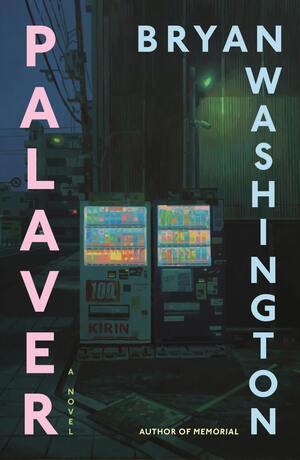
I reserved this book at my local library after seeing it that it had a) a queer protagonist b) tricky family relationships c) it was set in Japan. I haven’t read anything by Bryan Washington before, so I didn’t know what to expect. Immediately, the extremely simple style devoid of much description and with very short and precise dialogue, drew me in. I found it eerily similar to Haruki Murakami’s writing, for one (even though I haven’t read a Murakami novel in many years now). It’s the kind of style that works almost like a drug – it’s so easy to get through every page, every short chapter, that you find yourself glued to the book.
The writing style is so austere that the main character is simply referred as ‘the son’ and the other main character as ‘the mother’. The son is in his thirties living in Tokyo. He’s original from Texas but has an strained relationship with his mother and his older brother. In Japan, he has learned the language and works as a private English tutor, teaching Japanese adults who want to gain more competence in this language. Surprisingly, it is also in Tokyo – specifically in a teeny tiny bar in Shinjuku – where he’s able to find his own queer family – a bunch of gay men and a transgender bartender with whom he hangs out regularly. One day, the mother shows up, pretty much unannounced (and suspecting his son is going through a mental health crisis). Now the son has to have her in his apartment for three weeks even though they haven’t lived together in many years and they don’t have much to say to each other.
Also (and this was a nice touch for me) at the end of every chapter you find a collection of black and white photographs of the streets of Tokyo, presumably of the area of Ōkubo near Shinjuku which is where the son lives. There are also detailed descriptions of what the son and the mother eat and drink. Mainly it’s Japanese food – but also, occasionally, the mother cooks Jamaican food for her son. It was all mouthwatering to me.
I’m going to be explaining what I liked and didn’t like from this book by giving lots of spoilers, because it would be difficult not to discuss special parts of the plot to make my points.
I enjoyed the style and I read this book very fast. Yet, somehow it felt underdeveloped for me. I know that the point of the style is that it feels austere and simple but somehow that also meant that, to me, the emotionally complexity of the characters was a bit lost. For example, even if the son has been living in Japan for many years as an immigrant, and has a freelancing job, at any point in the book he seems at all bothered by the immigration laws in the country he’s living on and there’s no sense that he may as well be financially struggling. I have been a freelancer and an immigrant and I think having those two conditions happen in your life at the same time can be quite a lot. I know I have a similar critique for All Fours which I just reviewed this month – but what’s up with all this character-centred books in which finances and the struggles of having to make ends meet are never acknowledged?
I was very interested in the character of the mother, actually. She is an immigrant like her son (so, that’s a potentially point of connection between them). She’s born in Jamaica but as a young woman she emigrates to Canada with two friends, and then she makes it to the US. There was a bit of the book that covered her backstory, but the sections were just too short and I wanted more. That said, the few sections towards the end of the book narrated from her point of view were very interesting – a welcomed new voice in the novel.
Equally, there’s no much focus on the son’s own backstory with his family. It’s implied that his mother hasn’t been accepting of his sexuality before – in part because her own brother was gay and died of AIDS in Jamaica – although it’s not clear if she has revealed this to the son. Equally, it’s also implied that the son’s older brother is suffering from PTSD after working for the US military – a choice the son was very critical of to start with. His brother’s PTSD has made him dangerous to live with and potentially landed him in prison. At some point, in a flashback, we see the son having to threaten his own brother with calling the police – after his brother has had an outburst and hurt their mother.
There are also a few convenient things (perhaps too convenient?) happening in the story. Right after the arrives to Tokyo the mother meets Ben, a Japanese man who owns a little restaurant; he starts flirting with her and becomes a love interest. The son also starts a new relationship with another man as his previous lover can’t commit too much time to him because he and his wife (with whom she has an open marriage) have just had a baby. At some point, they both invite the son for dinner and suggest an interesting arrangement: they want the son to be part of the family, to still be the husband’s lover and even potentially be involved in the baby’s life. Again, another interesting aspect of the story (this reflections of what families can also look like) that could have been expanded much more.
Overall, I think this is the sort of book you’d like if you also enjoyed The Emperor of Gladness by Ocean Vuong (which is much darker and bleaker, but has a few similar themes and a character-driven plot). By the end of it, I was rooting for the son and the mother and even though I wish that their characterisation had been taken further.
Together We Fall Apart by Sophie Matthieson
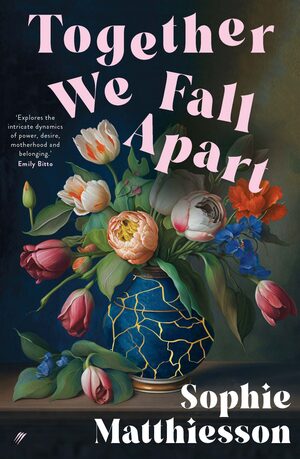
Yes, I literally picked this book because I liked the title and the cover, how shallow of me. I didn’t know what it was about – and oh boy, was I in for a ride. It follows the story of Clare, a queer woman, and how she’s affected throughout her life by her brother Max’s addiction to heroine (which, as you can imagine, has caused a lot of grief to their small family). The novel combines two different timelines – in one we see Clare at thirty-one. She lives in London (basically, as far away as she could get from her family, who lives in Melbourne, Australia). She is in a relationship of many years with Miriam and they both have a four year old child, Rupert. When Clare’s father’s cancer takes a turn for the worse, she gets permission from her job as a lawyer assistant to a judge to travel back to Australia.
The other timeline covers Clare’s life as a teenager and as a young adult from the day Max’s started experimenting with hard drugs. His addiction soon takes a hold over his life and he refuses to get help. Her mother is unable to kick him out of the house so she, supported by Clare’s father, decides to live around her son’s addiction. Basically, they give money to Max so he doesn’t have to steal to get his drugs, and they allow him to use in the house because they don’t want him to become homeless or be involved with any criminal activities. Clare suffers – she doesn’t want to see her brother like this. Also, because of his illness, his brother has become the family’s main focus and concern, so Clare finds herself pressured to be a perfect daughter, a daughter who doesn’t have any issues, who doesn’t require anything from her parents.
This was an interesting exploration of addiction from the point of view of a relative. So many times throughout the book Clare argues with her parents, begs them to kick Max out so he’s forced to actually stay in rehab, but they refuse. Eventually, when she has her own child, she starts realising that this is not such an easy decision. And even though she runs away from a complicated family life and tries to establish her own family in London, this is not a smooth experience for her either. She’s already carrying much more baggage than your average human.
I found her relationship with Miriam very interesting. Miriam is an older woman with whom Clare gets immediately infatuated to the point of obsession. At the beginning, it seems that Clare is way more into the relationship that Miriam is. But, eventually, they start living together, and when Miriam decides to try for a baby (since she’s older, she feels more pressured) Clare agrees even though, really, she knows that she’s not ready for parenthood yet. When they have a son Clare gets easily frustrated by the overwhelming responsibility of having to take care of a baby, by the boredom of having to accompany her toddler later on to playdates and birthday parties.
Like Max, Clare is trapped in some questionably toxic dynamics. She struggles to voice what she needs and place boundaries – but she also doesn’t really allow herself time or space to explore what she really wants, so keen she is to show to everyone how ‘perfect’ and ‘reliable’ she is. As you can imagine, and after her father dies, things start falling apart for her.
I resonated with a lot here. Specially to finding yourself trapped in a life that you built through years of effort, too terrified to quit because you have invested so much in it already. There were also the struggles of perfectionism and using people-pleasing as a way to try and control others. Natural fears and anxieties I think many of us feel around companionship and parenthood. And, finally, there is the migrant struggle to decide if you want to live abroad forever or if you actually want to come back home, to what feels familiar, to what you know since you were little.
I enjoyed this book a lot, much more than I imagined. I didn’t know what was going to happen at the end – when Clare had to choose between staying in Australia or going back to London, and both choices felt equally terrible, harrowing and impossible. Ultimately, this book was about empathy within your family circle – about trying to understand and potentially forgive those who have hurt us.

