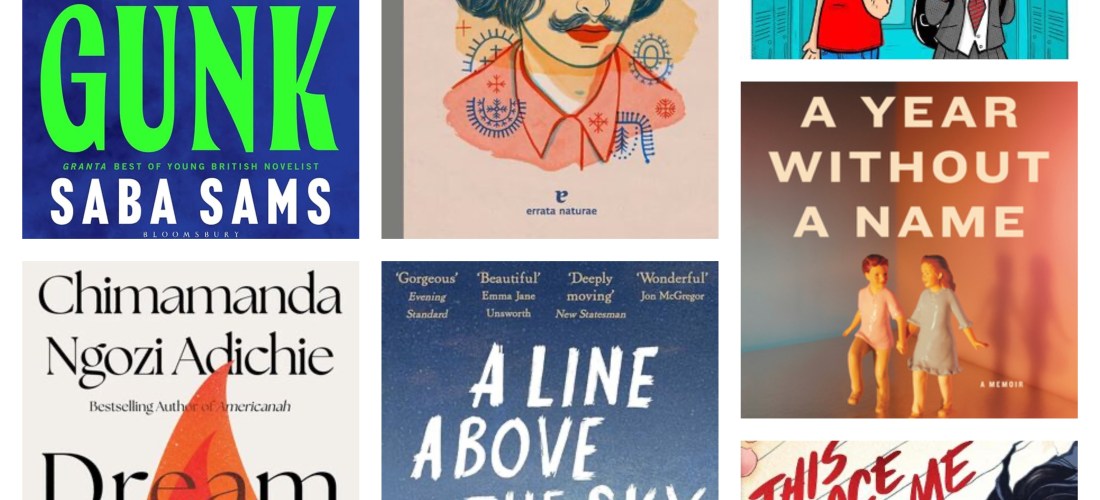
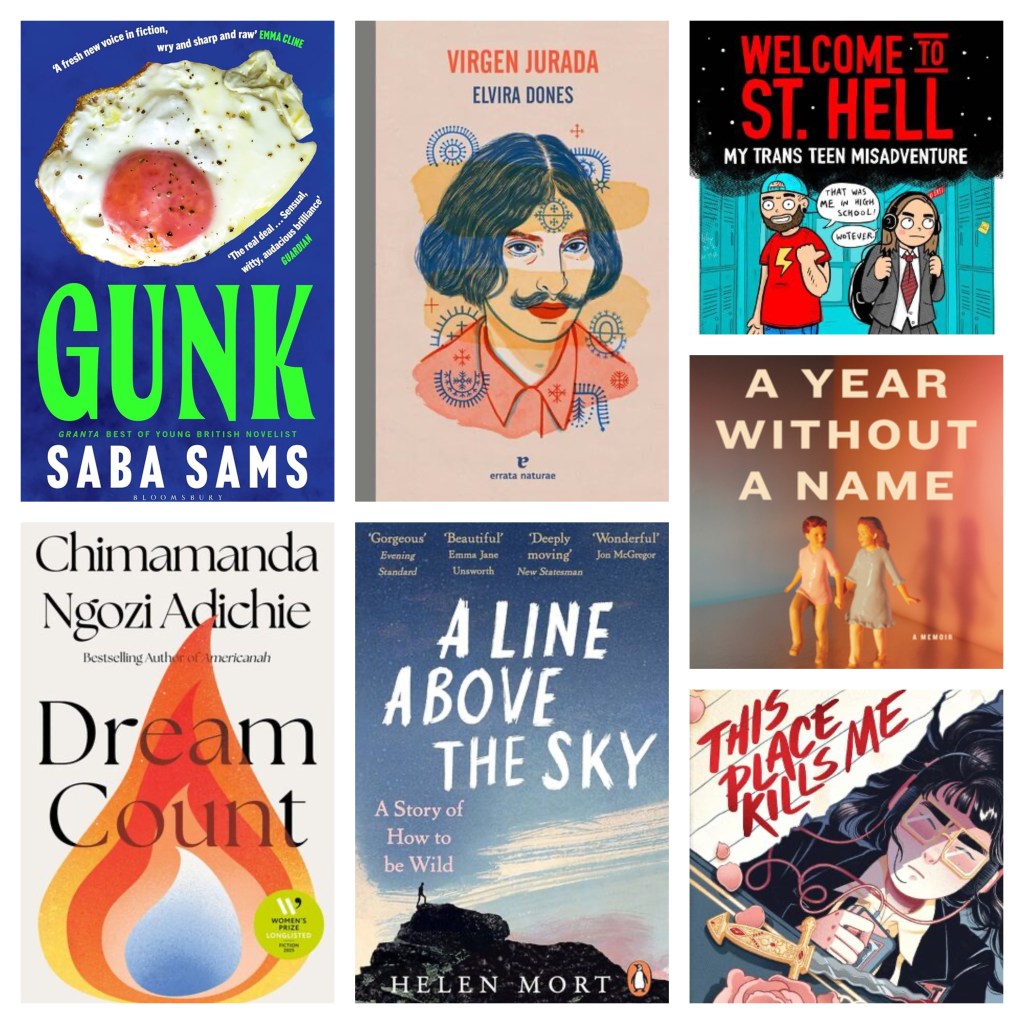
Gunk by Saba Sams

This is the first book I read by Saba Sams. I was very curious about the premise – a story about unconventional families and unconventional mothers (or shall I say, ways of ‘mothering’ which is a word that, to me, goes beyond genders). As soon as I started, I immediately loved the prose. Sams is well-known as a short story writer – having won the prestigious BBC Short Story Award in 2022 – and you can tell. Her attention to detail is superb, as well as her ability to create short, pacy scenes.
However, this was one of these books I really wanted to adore and somehow that didn’t happen. To me, it read as if it would have been an excellent short story, but as a novel, it let me feeling wanting more from both the characters and the plot. To discuss more of the nuances in this book I will be (inevitably) revealing some spoilers, so be aware.
First of all, I really, really wanted to believe and be moved by the relationship between Nim and Jules and yet – it never quite clicked for me. For example, how could Jules be so oblivious to Nim’s affections? And if she is, could there be more than about Jules character (who I read as neurodivergent, although perhaps that was never the author’s intention) and her feelings about romantic relationships? (Jules also gave me aromantic and probably asexual vibes, which would have been very interesting to see featured more overtly in the plot). The quick deus ex machina at the end was also a bit too much for me. So we have these two women – Nim and Jules – who haven’t been able to communicate successfully for the whole plot not even once – then suddenly decide they completely agree on starting a family together (baby included)? Not even mentioning that Nim had a baby to start with just to please Jules (who yearned to become a mother but couldn’t do so physically). Am I the only one that doesn’t read this as romantic but absolutely terrifying?
To sum up, character concepts were great, they just needed to be fully developed. The writing never went too deep into this, which in a short story would be perfectly fine because that’s how the form works, just in glimpses. Equally the plot seemed too fast and the resolution too quick to arrive.
And yet, I enjoyed this thoroughly because Sams is a wonderful writer, so despite my own qualms I can still recommend it.
A Year Without A Name by Cyrus Grace Dunham
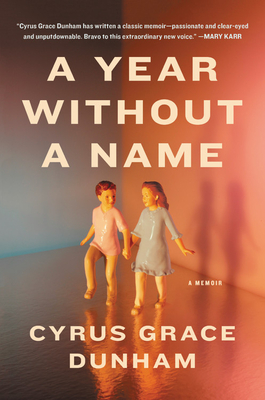
This is a short creative non-fiction book about Cyrus Grace Dunham – brother of writer and creator Lena Dunham –. It focuses mainly on his twenties as he becomes and adult and realises he is trans – and goes through how this affects his perception of himself and his relationship with close friends, lovers and family members.
There’s a beautiful urgency in Dunham’s writing – and I really enjoyed how he openly discussed sex, mental health and relationships. His account of his exploration of gender is moving, raw and honest. There were also chapters with a strong sense of setting – for example, those about his travels through India, or his time living in California.
Dunham also briefly goes into his relationship with his very famous sister Lena Dunham here – and reflects on how her fame (which she acquired in a very short space of time, when she was a twenty-four-yearl-old writing, directing and acting in the show Girls) – affected her and also their whole family.
I specially enjoyed the last section, when Dunham explains how his life changed when he started being perceived as a ‘man’. The freedoms this afforded him, but also the unexpected (and often terrifying) downsides, such as being chased by a man who saw him as gay and threatened him violently, or how he suddenly lost the ‘trust’ of random women in the street, having to force himself to, for example, not smile at them or be overly friendship because he knew they could misunderstand these behaviours as unwanted attention (ugh, the patriarchy…)
All in all, a good book, written in a raw, lyrical style.
This Place Kills Me by Mariko Tamaki and Nicole Goux
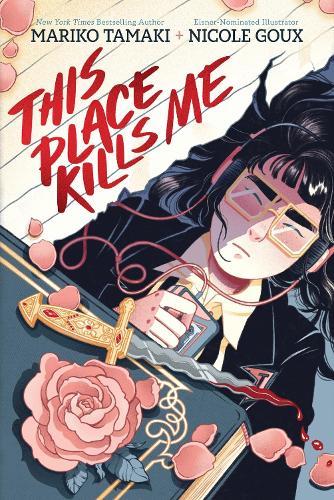
I was so excited to read Mariko Tamaki’s new graphic novel, a YA queer crime fiction piece in which the main character is a teenage amateur detective in an all-girls boarding school in the eighties. I actually didn’t know this was what the novel was about (I hadn’t read the reviews or the blurb at the back). So when at the beginning of the story a teenage student is found dead in the woods near the school I was a bit shocked (and thought oh, right, so this is where it’s going!)
This was an interesting read. The art is gorgeous and detailed – Nicole Goux is an amazing illustrator who will make you pause your reading pretty much on every page to absorb all the detail. The crime storyline I found a tad unoriginal (from the very beginning I already suspected who the perpetrator was and what was their motif, and I was right in the end). What I thought was fascinating was how Tamaki portrayed the historical setting of the eighties. On the one hand, this decade is still close enough to us that we find a lot of elements familiar. On the other hand, this was also a time when being gay was much more difficult. It was heart-breaking to see how the main character – transfer student Abby Kita – suffers from homophobia and rejection from her fellow students who seem to think Abby will suddenly assault them just because she happens to be gay. It was actually – and sadly – quite relatable. I reminded me of my own high-school years – where being gay was being perceived by many as a sort of illness – and it was definitely not cool, specially when it came to women.
All in all, a good read, but not my favourite by the author.
Vírgen Jurada (Sworn Virgin) by Elvira Dones

I’ve never read anything by an Albanian author – so when I saw this in a bookshop in Madrid I was very curious and picked it up. Actually, the book wasn’t written in Albanian but in Italian. Elvira Dones is a multilingual author who has lived in the States and Switzerland and writes and publishes in both Albanian and Italian. This book in particular came out in 2007 but was just recently translated into Spanish (you can also read it in English as it’s been published by And Other stories).
Before I start to even discuss this book I have to say it made a huge impression on me. To the point when I still find myself thinking about it, weeks after finishing it. I was particularly struck by Albanian culture and history which again, I knew nothing about, but this book discovered me pieces of.
The main character of this book is Hana, a sworn virgin. This is a very particular role in Albanian culture – sworn virgins are women who assume a male identity when there are no male relatives in the family that can take responsibility for it. This is allowed by the Kanun, an ancient law text from the 16th century that was still observed in the Balkan region at the beginning of the century. For example, in Hana’s case, she’s lost her parents in a bus accident when she was only ten. Her only living relatives are her aunt and uncle. When they also die, their family’s lineage is all but lost as Hana, a woman, can’t inherit it. To avoid the family’s erasure (and to please her uncle, who she adores) she becomes a sworn virgin.
The story is presented in a fragmented way: on the one hand we have Hana – after living as a man for fifteen years, she decides to emigrate to the States. Her cousin sponsors her visa and convinces her to move there so she can be near family and start over. Up until that point, Hana still goes by Mark. As she starts a new life in Washington DC, she slowly goes back to living as a woman and reconnects with literature – her passion when she was a student, right before she had to abandon her university studies to take care of her sick uncle.
The other storyline focuses on past Hana as a university student: a young woman full of dreams who is studying literature at the University of Tirana. Women from her village don’t go to university – least of all to study ‘books’ – but her uncle loves her fiercely and is happy to support her in this endeavour. In the capital, Hana has friends and falls in love with a classmate. Her hopes to stay there and become an independent woman are truncated when his uncle falls seriously ill and she has to go back to take care of him – and ultimately, become a sworn virgin once he dies and there’s no one else to take care of her or carry the family’s name. She decides to do so instead of marrying a man.
This book seems to be about someone rediscovering a gender they abandoned out of necessity. In the States, Hana years to have sex with a man and stop being a ‘virgin’ in that sense – so the last part of the book follows her own sexual awakening in a honest, touching way.
Sworn Virgin left me wondering about lots of things. I wondered about Hana’s experience living as a man in Albania – the book primarily focuses in the before and after and we only get a few glimpses of how it was while she was actually experiencing this. I kept wondering if being a sworn virgin would bring her some sense of power (beyond allowing her to survive in an environment that is definitely hostile to women) but the book didn’t really go there. I also wondered about the research the author did into sworn virgins – I assume she may have talked to them because I believe she was involved in a documentary of the same topic, and a film inspired on the book.
All in all, an eerie read – I can’t describe it any other way.
A Line Above the Sky by Helen Mort
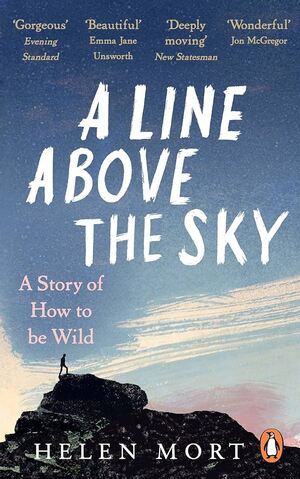
I adored this memoir – a very captivating read, and so gorgeously written. It’s about mountains (I’m obsessed with mountains), climbing and motherhood. Helen Mort writes about how her attitude towards danger changed after becoming a mother. She also writes closely about Alison Hargreaves, the first English woman to climb Everest in 1995. That same year, she died in a tragic accident in the infamous and dangerous K2 mountain. Decades later, her son, Tom Ballard, also a climber, would also died tragically when descending Nanga Parbat, the world’s ninth highest mountain.
Mort is really big into sports, specially running and climbing (which I also adore).
I quickly connected with Mort through her obsession with physical sports, specially running and climbing (which also happen to be my favourite). Mort’s introduction to climbing is through her father, and this is activity that she continues on engaging through her life with friends and partners. She notes how climbing is an overwhelmingly male world and yet it’s also an environment where she’s often felt welcomed and encouraged. There is a shift, however, when she gives birth to her first child, a son. Her partner worries about her sanity when she insists on taking the baby strapped to her on a long climb. Something similar happened with Alison Hargreaves – to whom Mort pays beautiful tribute with this book. Even though she was a human being able of truly magnificent physical feats – very few human beings can climb a mountain like Everest without assistance and supplementary oxygen – people was quick to judge her for being a mother and ‘leaving her children home while she was engaging in such dangerous activities’. Obviously, no male climbers who are also fathers or have others depending on them have ever been asked these questions.
Mort’s account of pregnancy and the first year of motherhood is not sugarcoated. She describes a difficult labour experience, her decision to stop breastfeeding when the time felt right to her but not to others, even her experience with postpartum depression. She struggles with losing control over her body and with negotiating new attitudes towards danger. She does worry about her baby son when she thinks of Hargreaves’ own son – who lost his mother so young and who also ended up dying in oddly similar (and tragic) circumstances. And yet, she is brave. She keeps running and climbing because these activities help her feel connected to her own body. She takes her toddler to climbing classes for small children (how cute is that!) accepting she won’t always be able to protect him from all danger.
I really enjoyed this book. I loved learning about the life of Alison Hargreaves (who I knew of, but barely) and her son. I found Mort’s perspective on motherhood invigorating and fresh. All in all, a firm recommend, and I will be reading more from this author.
Welcome to St Hell by Lewis Hancox
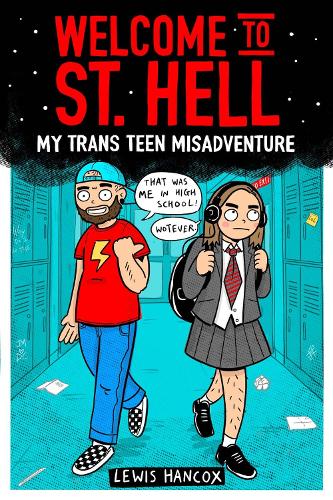
A fun graphic novel memoir from an author who is also from the North of England about his experience growing up trans. I loved this, it made me laugh, it made me sad, and overall felt touching and honest. Lewis Hancox is from St Helens (which he and his friends refer to as ‘St Hell’). I’ve been living in the north of England for most of adult life too – actually, not that far from St Helens – so it was sweet to read a story set in this environment.
This is a candid graphic novel in which Hancox shows how, as a teenager, he didn’t have the vocabulary to even talk about his own gender struggles. He always identified as a tomboy, later as a lesbian, but it wasn’t until his late teens that he realised he was trans. This was also the moment he decided he was ready to start living as a man and chose to start taking hormones. This story has all the common challenges of adolescence – fitting in, finding friends, having one’s first romantic relationships – but on top of this Hancox has to deal with gender dysphoria and transphobia. The book focuses on this difficult phase pre-transition through his secondary school years and finishes when he starts taking testosterone before going to university. The drawing style is fun and unique. After reading the book I discovered that Lewis Hancox also has a YouTube channel with really fun videos with his experience living as a young trans man in the early 2000s – you can watch those here. (Plus he’s a very proud cat dad as well, and his animations of his cats are absolutely priceless!)
Dream Count by Chimamanda Ngozi Adichie
This was a beast of a book in terms of length. I was in a very busy marking period when I grabbed it, not sure if it’d maintain my attention even though, of course, is written by Chimamanda Ngozi Adichie (her previous novel, Americanah, is one of my all time favourites). So I was really surprised when I got really into it – so into it that at some point the four main characters – Chiamaka (Chia), Zikora, Kadiatou and Omelogor – felt like friends. Every time I went back to the book I felt like was checking on them and their lives!
Even though this book is published as a single novel, it could also be considered as a collection of four novels as each of the novel’s ‘parts’ has a different narrator and a distinctive atmosphere. We start with the story of Chiamaka, the only daughter of a wealthy Nigerian family whose dream is to become a famous travel writer. The problem is, publishers – specially American ones – don’t think there is a market for rich black women who are travelling around the world experiencing all the beautiful luxuries it can offer. So, even though she is wealthy, she struggles to find an outlet to her writing. Her love life is also not what she would want it too, as she dates many men but fails to find in them a partner to share her life with. Something clear through this novel is that there is a lot of societal and cultural pressure for all these adult women to find a husbands and become mothers – almost as if their families couldn’t understand that a woman can indeed exist without these. Extreme? I don’t think so, as I’ve also experienced similar pressures myself even though my own context couldn’t be more different.
One of the longest relationships Chia has is with a Black man from the States, a scholar and university professor who is very critical of her wealth and complains when she buys him first class tickets on the plane or gifts him expensive tech (and yet, he happily enjoys and uses all of this while she’s with her). He likes to remind her often that her ancestors enslaved his ancestors and that’s where her wealth is coming from – one of the most interesting scenes in the novel involves a Chia and her partner having dinner with Chia’s best friends, Zikora and Omelogor – and then this topic is brought up.
Zikora is very different. She is not as wealthy as Chiamaka and has a very tight – if problematic – relationship with her mother. Both their lives are marked by Zikora’s father decision of marrying a second wife when it becomes clearer that Zikora’s mother won’t be physically able to give him the son he needs to make sure he can pass down the family lineage. Not wanting to suffer her mother’s shame, Zikora becomes an independent woman – a lawyer – and emigrates to live in the States. Her dream (unlike Chia’s) is to marry and have a family of her own. Sadly, the men who she dates are not up to the task for an array of reasons. One of the most harrowing scenes shows Zikora in hospital giving birth after her partner ghosted her when she told him she was pregnant (claiming he never wanted to become a father). She’s alone there in a vulnerable position with only her mother by her side, who admonishes when she screams too loudly because she is in pain. Even while in labour, her mother, obsessed with keeping appearances, wants her to be ‘proper’ and ‘modest’. And yet, it’s at this very difficult moment that these two women, mother and daughter, who couldn’t be more different, strengthen her bond. Ultimately, Zikora’s life is nothing like she envisioned (she ends living in the States, and she becomes a single mother).
Kadiatou’s story seems quite different from all the others in terms of tone. Kadiatou is born in Guinea, not Nigeria, from an impoverished family. After many struggles, which include losing a beloved sister and having to marry a man she doesn’t love – she manages to emigrate to the States with the help of an old friend who has managed to start a life there. Before she claims for asylum in the States, her friend convinces her that her own real story (which includes genital mutilation and sexual assault) won’t impress the American embassy enough; instead, he convinces her to prepare an elaborate tale of being raped by a gang of soldiers. Even though she passes her interview before having to tell this lie, Kadiatou still feels bothered by this, which doesn’t sit right with her. In the States, her life thrives. Her young daughter adapts well and Kadiatou becomes a cleaner, a job that she enjoys. When her friend (now partner) ends up in jail for a small crime, she patiently waits for him, dreaming of the life they’ll have together once he’s out. However, one day, her own life takes a swift and unfair turn to the worse. While cleaning in a hotel, she is sexually assaulted by one of the VIP guests, a white French man. Her manager convinces her to go to the police about this, and she does. What happens next was even harder to read as her story implodes in the media in all the worst obnoxious ways. From people who doesn’t believe she could ever get sexually assaulted (implying that she doesn’t fit some twisted idea of what they define as beauty) to those who think she’s staged the whole thing to ‘ruin a poor man’s life’ and get money out of it. When it’s discovered that Kadiatou did prepare a lie for her interview at the embassy she immediately loses all credibility in the media’s eyes. And yet, her story has a surprising ending that I won’t reveal here. It’s also worth mentioning that Adiche based this character and this story on a real person’s case (which she acknowledges and explains at length in an author’s note at the end of the book).
Omelogor is the forth and last character – another independent woman from Nigeria and Chia’s cousin. She works as a banker – and through her we get a good insight into the industry, which includes the many forms of discrimination she has to face as woman (for example, a colleague of hers who, after she refuses his romantic advances, decides to badmouth her to all their clients to damage her career). Even though she’s making a lot of money at her job she’s not fulfilled. She has intellectual ambitions which take her to apply to study a masters in the States on cultural studies on the topic of pornography. It is through this character that Adichie explores topics around feminism and gender in a more theoretical way- While Omelogor is studying, she also writes a hilarious blog titled ‘Dear Men’ where she answers anonymous questions sent in by men who are too ashamed or reticent to ask these to the women they know. Some of my favourite scenes here were Omelogor’s experience as a postgraduate student in an American university – how she doesn’t quite fit in the image of a Black woman from Africa most of her peers have. Like Chia and Zikora, Omelogor is also pressured by her family to marry and have children but she’s never interested in this – she finds fulfilment in her friendships. The dinner conversations she has while she’s hosting at her house were, again, some of my favourite parts in this book.


2 thoughts on “Mountains, the trans experience and a Nigerian friendship saga: May 2026 Reading Log”