

The Mars House by Natasha Pulley
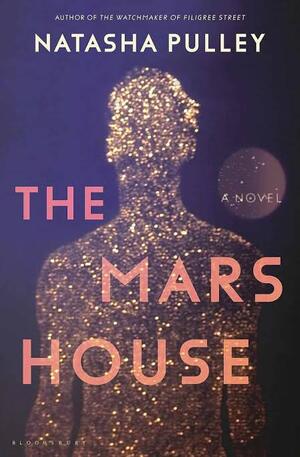
The start of this book is absolutely fantastic and it had me hooked in from page one. In a near future of climate collapse, January, a ballet dancer in his early thirties, is forced to leave London and his job after a terrible flood that renders the city impossible to live in. By force, he becomes a climate refugee from an Earth that is becoming too hot to be habitable. He ends up as a refugee in Mars’ only human colony: the city of Tharsis.
Tharsis has existed for generations on the red planet, initially supported by China but now mostly as an independent state. Now, here I became fascinated with the author’s research on what human life in Mars could be like. Because gravity works different in Mars, Pulley’s characters have evolved to be much taller but also incredibly fragile when compared to the Earthborn humans. Which means that when an Earth dweller as much as pushes a Mars dweller the Mars dweller may end up with broken bones or even dead. (I have read in other reviews such as this one that this is not how it would work exactly if we were following the laws of physics; but for someone who has no knowledge of physics all of these ideas seemed believable plot-wise!)
This creates an interesting dilemma. As a refugee in Mars, January is seen as a threat to the people native to the planet. He’s forced to wear a ‘cage’ (a metal device which is a sort of external skeleton attached to his body) which makes him slower and less likely to hit someone by mistake. On top of this, the Mars government offers refugees a process to get ‘naturalised’ which includes surgery and other invasive methods that have very negative health impacts and leave people from Earth physically disabled.
 Inés G. Labarta