
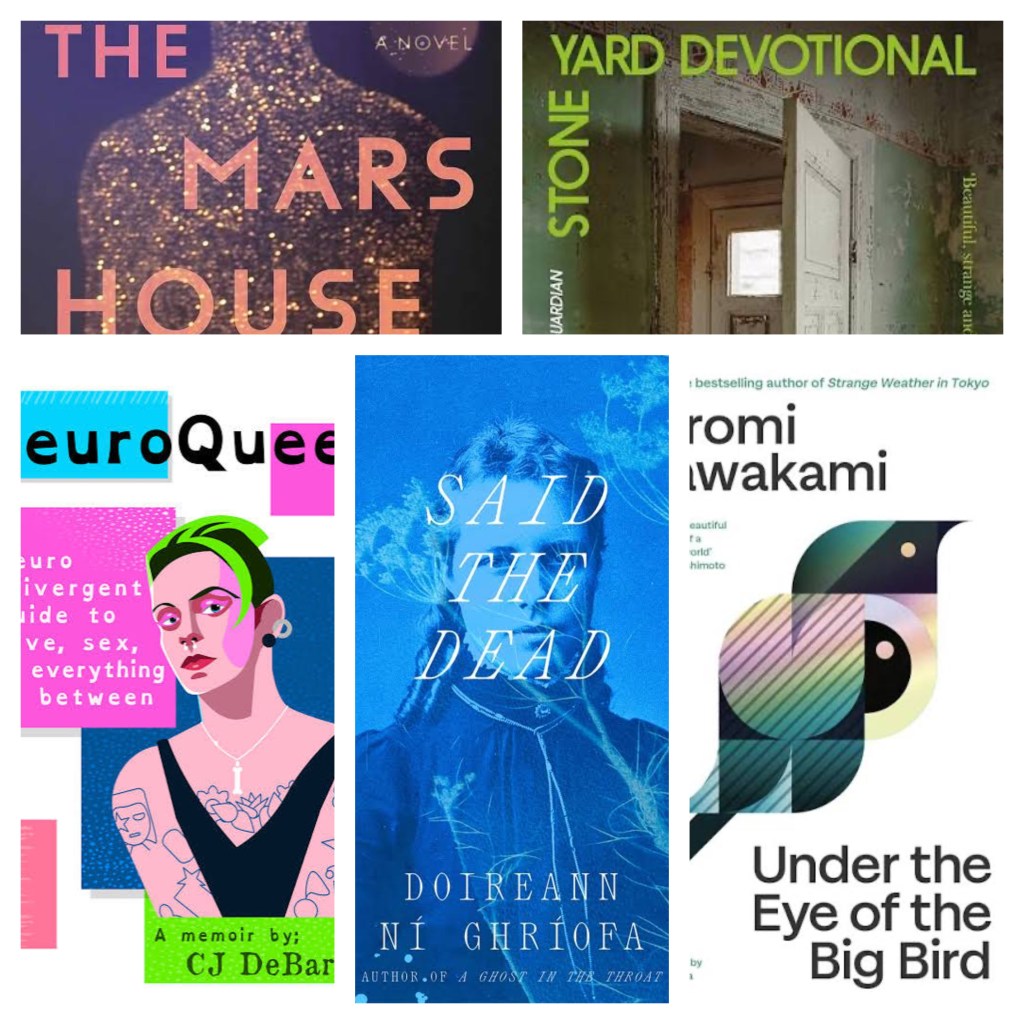
The Mars House by Natasha Pulley
The start of this book is absolutely fantastic and it had me hooked in from page one. In a near future of climate collapse, January, a ballet dancer in his early thirties, is forced to leave London and his job after a terrible flood that renders the city impossible to live in. By force, he becomes a climate refugee from an Earth that is becoming too hot to be habitable. He ends up as a refugee in Mars’ only human colony: the city of Tharsis.
Tharsis has existed for generations on the red planet, initially supported by China but now mostly as an independent state. Now, here I became fascinated with the author’s research on what human life in Mars could be like. Because gravity works different in Mars, Pulley’s characters have evolved to be much taller but also incredibly fragile when compared to the Earthborn humans. Which means that when an Earth dweller as much as pushes a Mars dweller the Mars dweller may end up with broken bones or even dead. (I have read in other reviews such as this one that this is not how it would work exactly if we were following the laws of physics; but for someone who has no knowledge of physics all of these ideas seemed believable plot-wise!)
This creates an interesting dilemma. As a refugee in Mars, January is seen as a threat to the people native to the planet. He’s forced to wear a ‘cage’ (a metal device which is a sort of external skeleton attached to his body) which makes him slower and less likely to hit someone by mistake. On top of this, the Mars government offers refugees a process to get ‘naturalised’ which includes surgery and other invasive methods that have very negative health impacts and leave people from Earth physically disabled.
I thought this was a brilliant metaphor for the refugee crisis the world is experiencing today. The scenes in which January is forced to leave London are dark and compelling. Nobody could judge him for trying to escape an almost certain death. But also, because January and people like him are perceived as dangerous (and they can be, in a physical sense) to Tharsis’s citizens, it’s also easy to understand why people in this Mars colony are very weary of the Earth refugees.
Pretty early into the novel, January meets the other main character: a Mars far-right senator called Aubrey Gale. Gale is very critical of refugees and they want them either out of Mars or naturalised by force. Their whole political message is all about protecting Tharsis as a colony-city, keeping it completely independent from China. Their message of fear against refugees is also reinforced by their own personal experience of losing a leg during an Earthstrong revolt in the city a few years ago. In some political speeches Gale goes even to compare the Mars-born / Earth-born citizens to men and women on Earth explaining that a society in which half of the population is physically dominant is not a healthy one.
Gale is very much a villain in January’s eyes and they both have a confrontation when Gale visits the factory where January works (there are no better jobs for him in Mars, and he has to forget his dreams to ever dance again). However, a plot twist has Gale showing up at January’s flat almost immediately after with a very strange proposition. To win the next presidential election in Mars Gale wants to marry January – to show the public opinion that their policies may be extreme but they don’t hate people from Earth. It’s all a farce, and January is offered a much better life if he goes along with it. His existence as a refugee is very bleak so he has no option but to accept.
A small note about gender here: everyone is Tharsis is non-binary and they all use the pronouns ‘they’ and present androgynously. Most people are also born in artificial wombs and they are genetically engineered to not have overtly feminine or masculine physical treats. This is partially justified in the story as being related to language: people in the colony speak Chinese and Chinese doesn’t have male and female pronouns but a genderless pronoun which, effectively, has erased gender in this culture. Which, sure, but also it seemed a bit strange and simplistic since Chinese culture in our real world is very patriarchal and has very defined gender roles (at least currently) so clearly there is more to gender that only language? I think this was, potentially, a very interesting part of the plot (having a society that has evolved to be genderless) but it’s not really explored,
From the moment January marries Gale the book started becoming quite boring for me, which I was really sad about because the beginning had been so striking and powerful. I could quickly see that this was going to be an enemies to lovers sort of romance sub-plot. I don’t have any issue with this trope per se but I found it strange that January would immediately fall in love with someone who is so terrible to people like him, someone who is willing to use the law against Earth refugees and would happily have them biologically altered and harmed against their will to fit in into this new society. As an immigrant who is affected by similar laws and opinions, I try to put myself in January’s shoes and I think I’d have a hard time falling for say the leader of an extreme anti-immigration party (no matter how rich or gorgeous they were). I mean, the only way I could find of justifying this in January’s case was perhaps Stockholm syndrome?
For the majority of the plot, all these very interesting ethical questions around migration, colonisation, refugees, bodily autonomy and gender were explored and considered very little and the story focused on showing how Gale wasn’t as ‘bad’ as we may have thought at the beginning. But to be fair, to see Gale in love with January did little to improve my opinion of them as a far-right, nationalist person who sees the world pretty exclusively in terms of different races, Martians and Earthstrongs. The final twist at the end (of Gale being the ‘lesser’ twin of the real Aubrey Gale and the real Aubrey Gale being even worse) felt like a cheap trick to show, once again, that January’s love interest isn’t really that bad.
Eventually, I wasn’t feeling anything for this couple even though I really, really wanted to. This was one of these books that I desperately wanted to enjoy and love because the premise and the ideas were great and yet it quite didn’t do it for me personally. I had to force myself to finish it to see if the plot would surprise me (it didn’t). That said, the writing style and the world-building were pretty solid. And I enjoyed how playfully Pulley was when it came to language and linguistics. I just wish this novel had been more daring in its exploration of some of these very complex and compelling themes.
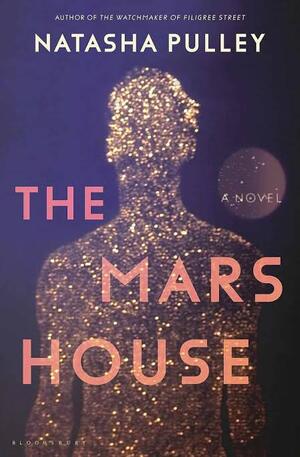
Stone Yard Devotional by Charlotte Wood
Another book I thought I was going to love… and didn’t? This seems to be a bit of a theme for me lately. I picked it because the blurb talked about a woman disenchanted with her professional life who is also struggling with burnout. She decides to leave everything behind to go and live with a community of nuns while all around her the world seems to be ending in a thousand of small ways.
This is a book in which the plot isn’t as important as the character which – I know now – is not normally what I enjoy the most. I love plot. I need plot. And yet, Wood is an excellent writer, and her characterisation of her unnamed narrator is so deep and enticing that it carries the whole book along. The story is told through vert short chapters, almost vignettes, that describe the narrator’s life at the convent while also, slowly, unveiling details of the narrator’s past life since she was a child.
I’m not sure if this was the theme Wood wanted to write about but something that stuck to me was the idea of charity – what leads humans to become charitable and altruistic. Do they do it because the alternative is too horrible to even conceive? Or do they do it to seem likeable to others, to perform the idea of what is socially considered as good and noble?
These are all very interesting questions the narrator grapples with. She’s been brought up as a single child by religious and loving parents that encouraged her to always be good and kind to other humans. And yet, at times in her life, the narrator has witnessed terrible abuse (for example, the relentless bullying of a classmate who was perceived to be too different to the rest of the class) and has chosen not to act. These stories come to haunt her in the convent as the girl that was so badly abused in her secondary school has become a nun and an influencer too who travels around the world offering goodness and wisdom and enjoying the kind of life the narrator may have perhaps wanted for herself.
This novel also explored religion and faith – the ideas and dreams that bring us together versus the ways in which we choose (or not) to influence the world and those around us.
All in all, a slow, dark and lyrical novel.
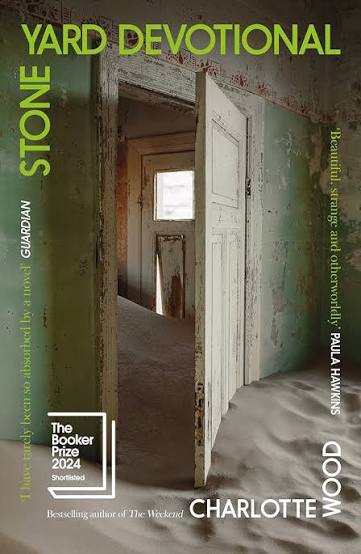
Under the Eye of the Big Bird by Hiromi Kawakami
This was a surprisingly fun read. It’s set in a dystopian future in which humans and human society as we know has completely disappeared. It’s not a novel but a collection of short stories – that said, they are all heavily interlinked and have some recurrent characters. In terms of format, I really liked this idea – how it gave a lot of freedom to the author to explore very diverse sides of her dystopia without having to commit to a specific plot or set of characters.
One of my favourite stories was the first one because of its outlandish premise. In this world, humans are created artificially in factories from the DNA of other species such as mice, dolphins, kangaroos and monkeys. You can’t know which animal you came from until you die – when they incinerate you a small bone reveals itself: a tiny perfectly formed skull of the animal that gave you DNA. The main character of this novel is a wife who has collected all this tiny animal skulls that belonged to her four husbands.
Other favourite stories featured humans being brought up by advanced robots called ‘Mothers’; humanoid creatures that who have created a very strange society in which sex is no longer seen as taboo; plant-like humans that have been developed as the answer to the planet’s climate collapse and a very dark story that features a human observing these humanoid creatures and being so horrified by them (specially because how openly sexual they are) that he decides to poison the lake they all get water from and effectively (and voluntarily) cause a genocide.
Funnily enough, the story that gives a title to the collection was one of my least favourites as it features a somehow clichéd plot in which a child with special powers is rejected by the society she lives in and ends up having to run away.
All in all, a very dark and bleak composite novel / collection of short stories that I enjoyed a lot because of its strangeness.
Said The Dead by Doireann Ní Ghríofa
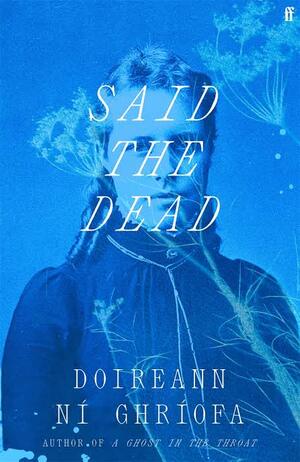
I was in Cork this July and the city had very gorgeous bookshops so I ended buying two books that I quickly read during my trip, this one and the one I’m reviewing next.
I picked Said The Dead because it’s set in a real Cork Mental Hospital. In terms of form this is a very interesting text as it weaves in fact and fiction through two different characters and timelines,
The story starts with the author doing some research for a future writing project. By chance she’s become obsessed with Cork’s old women’s asylum which is being demolished to construct new flats. As she researches the records of this place she discovers that one of the psychiatrists who worked there for decades across the 19th and 20th century is actually a woman. It’s difficult to notice this since in the records she appears as Doctor L. Strangman. The narrator makes the obvious mistake of thinking at first this is a man to then discover it refers to Lucia Strangman.
In this way, the second main character emerges: Lucia, daughter in an affluent Irish family marked by the tragic accidental death of an older sibling who goes to become first a doctor and then a psychiatrist and devotes most of her life to treat mentally ill women at Cork. In the present timeline, the author meticulously researches Strangman’s life and, with the aid of her real notes and those of her contemporaries, new characters emerge: those of the women stayed at the mental health hospital.
These real notes have become accessible through the public record since, by law, all records must be made available once one hundred years have passed. Lucia Strangman’s life is fascinating – as a scientist who advocated for the fair treatment of the women under her care and even pioneered, along with her husband and co-worker, very innovative measures such as preventive therapy (that is, something similar to the modern therapy we have today which can help many before their mental struggles become so hard they have to be interned). The stories of the women under Strangman’s care are even more fascinating. There is a woman who is also an artist who has managed to make a living exclusively through her craft – however, a history of familial loss has affected her mental health greatly. There is another woman married to a cruel husband who has used her to have many children and when he gets bored of her he locks her outside of the house, and she has no other place to go than the Cork Mental Hospital. There is the old, tired wife of a farmer with many children who sees a stay in the hospital as a relaxing vacation compared to the exhausting life she’s forced to live and pretty much refuses to leave, faking mental health episodes so she gets to stay.
This was a dark, hearth-wrenching book which shows many women suffering acutely – and in most cases a lot of this suffering, this hysteria, has very clear links to the cruel life they are forced to experience under Ireland’s patriarchal society.
At some point while I was reading this I wondered about ethics and process– how Ní Ghríofa is using exclusively real records to retell a story and assume the point of views of all these women, many of whom were never given a chance to tell their own stories in their own terms. This is something that the author explores very openly and explicitly during the novel, which I appreciated it and made me trust her. She’s also not sure she has the right to tell these stories and is sometimes uncomfortable thinking that she can’t really get in touch with the women who lived them. That said, in the end she decides that through the book she can’t at least make part of these stories known to the wider public (otherwise all of these voices would forever be trapped in the archives). Ní Ghríofa also very openly shares her own mental health struggles as a woman, mother and wife which include accounts of severe depressive episodes and even a suicide attempt.
The writing style is very lyrical (Ní Ghríofa started publishing as a poet, and you can tell). There is something cyclical and enticing about it that made me read this book very fast.
NeuroQueer by C J DeBarra
I found this book by chance also in Cork and I devoured it. CJ DeBarra is a non-binary author who has ADHD; in this memoir, they focus on how this condition has affected their life and, specifically, the way they form friendship and romantic relationships with other people. So much of this book resonated with me; as I was reading it I was taking photos of different parts of it and sharing those with friends and family. Reading this was being seen and even learning things about myself I didn’t even know where there. I have a lot of respect and gratitude to people like DeBarra who take the time to first do a considerable amount of research and then share it through the framework of their personal experience.
I share a few similarities with DeBarra – for example, we are both immigrants and we both moved to different countries pursuing a career in writing. In this book, they also explored issues with their professional life that felt very similar to my own. When I read their account of RSD (Rejection Sensitivity Dysphoria) I finally understood what this meant in comparison to a more neurotypical experience of rejection. I also really appreciate how candidly they reflected on sex as a neurodivergent person which is something I had never read about before.
The research felt thorough in this book – and at the end of every chapter DeBarra compiles a clear list of resources that I have already found incredibly helpful.
If you know someone who is queer and neurodivergent, please recommend them this book. I wish I had read itwhen I was in my teens – it’d have changed my life back then, gifting me some much needed empathy and self-compassion.
 Inés G. Labarta