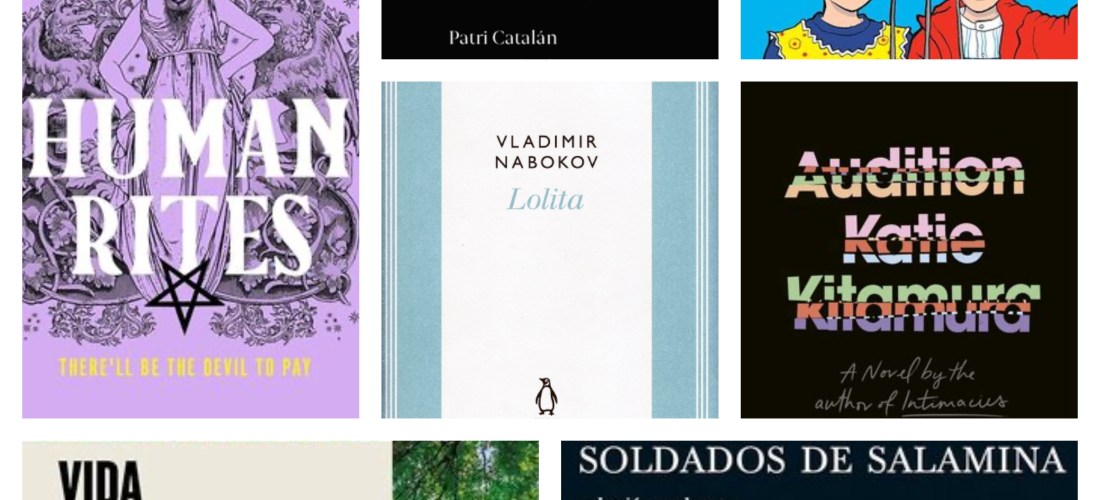
Spent by Alison Bechdel
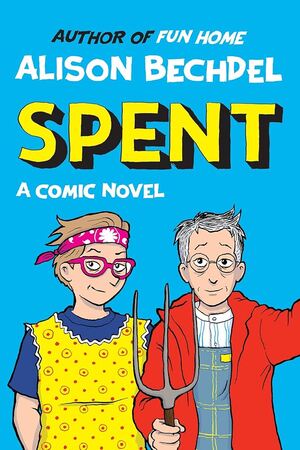
I love Bechdel’s work so I saved this book as a treat and I read it all on one go during New Year. It didn’t disappoint. The art is incredible detailed as always (specially the cats, look for the cheeky cats in almost every frame!). Also, this time Bechdel treats us to a fully-coloured work which makes the small community she portrays here all the more vibrant.
There’s something distinctive about this book. Whereas a lot of Bechdel’s work is autobiographical (i.e. Fun Home, Are You My Mother? and The Secret to Superhuman Strength) what Bechdel does here is something different. The main character is called Alison and looks exactly like her. Her partner is called Holly and looks exactly like the Holly from her other works who we know is the author’s partner. However, Bechdel classifies this work as fiction from the get go. For example, the Alison of this work became famous after publishing a graphic novel titled Death and Taxidermy about her father who was a taxidermist artist (so, no Fun Home and no father working in the funeral business). She doesn’t have two younger brothers but an older sister called Sheila. And this graphic novel is not written in the first person but in the third person.
I’m intrigued but also excited – and creatively stimulated – by observing these approaches. Coincidentally, I also read another book this month that plays with the boundaries between fiction and non-fiction, Soldiers of Salamis, which I discuss below. But let’s go back to Bechdel’s new work. Spent tells the story of a small community in Vermont in which established graphic novelist Alison and her partner Holly have decided to start a pigmy goat sanctuary. Alison’s work has recently been adapted into a very popular TV series. However, life is not as easy as her friends think: it’s actually excruciating for Alison to see her own life adapted into TV. Also, the publisher who has made an offer for her new work is also involved with some far-right politics that go against everything Alison believes in so she has to decide between her career and her ideals on this next step of her professional journey.
Alison’s friends are other important characters in this texts. We have Stuart and Sparrow, who have been married for decades and whose child has just started university. It’s just then that they decide to open their relationship and form a polycule with Naomi. Then we have Lois and Ginger, also friends of Alison and housemates to Stuart and Sparrow. Lois is a flirtatious lesbian with no interest in commitment, Ginger, also a lesbian, has been in a long-distance relationship for decades. Then there’s J. R., Stuart and Sparrow’s non-binary child who unexpectedly drops out from university as they realise they’d rather engage with activism to generate awareness around climate change.
Spent follows this community through happy events, sad occurrences and everything in between. The character of Alison is perhaps not the most sympathetic – she knows she has a great amount of privilege (she’s an established artist, she’s living a comfortable life thanks to her earnings, she does what she loves for a living) and she’s trying to use the power that comes with it for good, but this is not always easy. For example, she has a very difficult relationship with her sister, who she judges because she (Sheila) is a Trump supporter. Yet Alison refuses to acknowledge that Sheila didn’t receive the same encouragement from her parents that Alison did – for example, they were very dismissive of her dyslexia. Also, there seems to a lot of things that join Alison and Sheila and could potentially bring a better dynamic for them: they are both artists (Sheila does bead art, which she knows is not as highly regarded as Alison’s graphic novels) and they are also animal lovers. There is an interesting scene in which Alison goes to a bead art exhibition organised by Sheila (quite reluctantly) and she’s surprised to find work there by queer authors that apparently Sheila is also happy to openly promote.
There are some absurd and cringey moments here but, above all, I’d class this book as a thrutopia. It doesn’t shy away from the many issues the US is facing right now and yet it also celebrates the power of community. Sure, friendships and partnerships come with their own set of problems and challenges, but ultimately there’s power in union and in triggering local change. In the end, this kind of engagement is the perfect antidote to the powerless, numbness and desperation many of us feel right now.
I wonder if this is why Bechdel experimented with fiction in her work – perhaps by doing it was easier to her to scrutinise her own character, her actions, her impulses and desires. Perhaps she wanted to write about a real community, but of course not all of her real friends may have been happy with having their own issues presented to the public in this way. Ultimately, this is a hopeful book, and I’m already looking forward to reading it again.
Vida Contemplativa (Vita contemplativa) by Byung-Chul Han
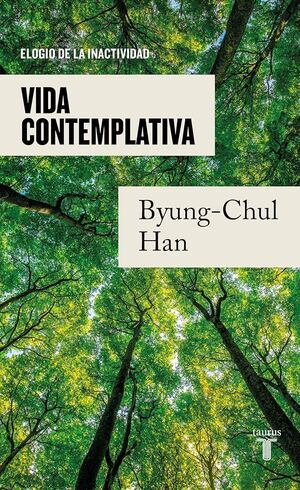
I bought this book on a whim when I was on holidays. I was waiting to enter the cinema to watch a movie (Father, Mother, Sister, Brother) and there was a small independent bookshop in front to it. So, as I waited, and to avoid the cold, I went in to browse the books. I’ve never heard of Byung-Chul Han before but as it turns out he is a philosopher with many books published for the general public – and apparently he’s very popular amongst Latin American and Spanish readers. There were several titles at the bookshop but I picked this intrigued by the title – specially as someone who rarely (very, very rarely) spends her time contemplating life. I’m very much action-oriented – I always need to be doing something.
I don’t read philosophy often but I enjoyed this book – and it brought me back to my days studying philosophy and reading Plato, Descartes and Hume when I was a teenager in secondary school. I found most of the ideas here easy to understand – although there were a few concepts that required a bit more time. I didn’t mind. I found reading philosophy quite comforting and inspiring – a way of adding some meaning and sense to ordinary life situations that are too harsh or bleak.
I also did underline a lot of writing here – specially those parts of the book that challenged my notion that one always needs to be trying, working, crafting, and that this ever-lasting grind is a sign of moral superiority.
These were some of my favourite quotes from the book. As a workaholic who has burnout many times professionally, I relate to this:
‘Dado que solo percibimos la vida en términos de trabajo y rendimiento, interpretamos la inactividad como un déficit que ha de ser remediado cuanto antes. (…) La inactividad tiene su lógica propia, su propio lenguaje, su propia arquitectura, su propio esplendor, incluso su propia magia. No es una forma de debilidad, ni una falta, sino una forma de intensidad que, sin embargo, no es percibida ni reconocida en nuestra sociedad de la actividad y el rendimiento. (…) La inactividad es una forma de esplendor de la existencia humana.’ p. 11
‘Since we only consider life in terms of work and accomplishment, we see inactivity as a deficit that needs to be dealt with as soon as possible. (…) Inactivity has its own logic, its own language, its own architecture, its own splendour and even its own magic. It’s not weakness it doesn’t represent a lacking but it is, instead, a form of intensity that, sadly, it’s not perceived or recognised in our current society, more concerned with activity and accomplishment. (…) Inactivity is splendour when it comes to human existence.’ p. 11, (my translation).
The following quote makes me wish that workplaces in which original thinking is an expectation (such as universities) would enforce more seriously periods of inactivity, periods of contemplation, processing and introspection that are actually an essential part of said job.
Hemos olvidado que la inactividad, que no produce nada, constituye una forma intensa y esplendorosa de la vida. A la obligación de trabajar y rendir se le debe contraponer una política de la inactividad que sea capaz de producir un tiempo verdaderamente libre. p. 12
‘We have forgotten that inactivity, which of course doesn’t produce anything, is also an intense and splendorous aspect of our own lives. Alongside the obligation to work and be productive we should consider a sort of politic of inactivity which is able to generate time that is truly free. p. 12 (my translation)
Considering this quote now I almost want to laugh. Having a portfolio career as a writer means that my writing time is often done during my ‘free time’ (and what a privilege to still have free time!) which means that resting often implies the sacrifice of not working on what I care about the most (but which doesn’t pay rent, or feed my cats… etc.)
Another interesting quote about the importance of culture (I mean, could we even have a society without it?) and also about how it’s not linked to productivity, functionality and even utility. The most important things in life are rarely ‘useful’ in monetary terms.
‘La acción es constitutiva de la historia, sin duda, pero no es una fuerza formadora de cultura. El origen de la cultura no es la guerra, sino la fiesta; no es el arma, sino el adorno. (…) La cultura no se forma con caminos que van directos hacia la meta sino por digresiones, por excesos y desvíos. La esencia de la cultura es ornamental. Tiene su sede por fuera de la funcionalidad y de la utilidad.’ p. 13
‘History is constituted by action, no doubt about it, but action in itself doesn’t create culture. In fact, the origin of culture is not war but the feast, it’s not the weapon but the adornment. (…) Culture is often created not by straight paths which go directly to the ending line but by digression, excess and diversion. Culture’s essence is ornamental. Culture resides outside of functionality and utility.’ p. 13 (my translation)
‘Tanto el dormir como el tedio son estados de inactividad. El dormir es la cima del relajamiento físico, mientras que el tedio es la cima del relajamiento espiritual.’ p. 21
‘Sleep and boredom are two of inactivity’s states. Sleeping is the pinnacle of physical relaxation whereas boredom is the pinnacle of spiritual relaxation.’ p. 21 (my translation)
Another quote that reminded me of all the pressures of the academic life, the obligation to constantly be producing ‘outputs’ in a regular way and under any circumstances if one is expected to have any sort of career. And how this culture of constant production and burnout don’t really foster original thinking or original work.
‘Solo el silencio nos vuelve capaces de decir algo inaudito. La obligación de comunicar, por el contrario, conduce a la reproducción de lo igual, al conformismo. (…) Las fuerzas represivas… nos fuerzan a expresarnos. (…) Solo gracias a las vacuolas que nos da la inactividad tenemos la posibilidad de realizar algo cada vez más infrecuente: algo que realmente merezca ser hecho. La inactividad es, pues, el umbral de un hecho inaudito.
La obligación de actuar y, aún más, la aceleración de la vida se están revelando como un eficaz medio de dominación. Si hoy ninguna revolución parece posible, tal vez sea porque no tenemos tiempo para pensar. Sin tiempo, sin una inhalación profunda, se sigue repitiendo lo igual.’ (p. 30)
‘Only silence allows us to say something unehard-of. The pressure to communicate, however, takes us to reproduce what’s already there, and to conformism. (…) Repressive forces… demand that we express ourselves constantly. (…) Only thanks to those gaps that inactivity gifts us we have the possibility to consider something that is becoming increasingly rare these days: something actually worth doing. Thus, inactivity is at the threshold of something truly original and unique.
The pressure to act and, what is more, the constant rushing that accompanies life nowadays turn out be very efficient as methods of domination. Today a revolution seems more impossible than ever, and this is probably because we don’t have time to even think and process what is happening around us. Without time, without the space to breathe and process, we keep repeating what’s already there. p. 30 (my translation).
And finally, some interesting points about meditation and AI here. I’ve never feel attracted to AI (unless AI starts washing my dishes, doing laundry for me or cleaning my cats litter box, that is).
Al contrario de la acción, que empuja hacia delante, la meditación nos trae nuevamente de vuelta a donde ya estamos desde siempre. (…) A la meditación le es inherente una dimensión de inactividad. p. 47
Action is always pushing us forward but meditation, on the other hand, brings us back to ourselves, to the place where we have always been. (…) Meditation requires inactivity. p. 47 (my translation)
La inteligencia artificial no puede pensar desde el momento en que no está capacitada para el pathos. El sufrimiento y el padecimiento son estados que no pueden ser alcanzados por máquina alguna. A las máquinas le es ajena, sobre todo, la inactividad contemplativa. Solo conocen dos estados: encendido y apagado. El estado contemplativo no se consigue sencillamente desactivando el funcionamiento. p. 51-52.
AI can’t think because it doesn’t have the capacity to experience pathos. Machines can’t enter the sate of suffering, or grief. But above all, machines can’t even come close to contemplative inactivity. They only know two states: on and off. And a contemplative state can’t ever be achieved by a simple deactivating function. p. 51-52 (my translation)
‘
Identidades No-Binarias (Non-Binary Identities) by Patri Catalán

This is the most comprehensive book I’ve read about non-binary identities so far, and I’m so glad it’s written in Spanish by a Spanish author. I picked this book because sometimes I’m not sure how to use non-binary and non-gendered language in my mother tongue (Spanish) – probably because I didn’t really know it was an option when I still lived there and used this language more frequently. As this books shows, things have changed quite a lot since then, and non-gendered language is more mainstream than ever. This book did solved some of my doubts around the use of non-binary pronouns in Spain (‘Elle’ instead of ‘Ella’ o ‘Él’) and how the ending ‘e’ has come to substitute ending gendered words with ‘x’ to signify a non-binary gender or the absence of gender.
This book also covered many other areas – such as social relationships, social roles, sexual orientation and sex, health, fashion and dressing. Much of the research the author is quoting in her book comes from English-written sources, and she made reference to authors and texts I was already familiar with. I think she’s done excellent work – bringing a lot of this to a Spanish speaking audience and adapting it, in some occasions, to the specific context of Spain, which is where she is from. When I started reading this book I wondered if it was going to be purely academic (meaning, dry, dense writing packed with information) but it was actually a very enjoyable read which I finished in a few days. I checked some of the sources she recommended in the book and found them useful. Mainly, I liked this book because it helped me define non-binary identities in my mother tongue. I would definitely recommend this book to anyone interested in the subject – and I wonder if there’s an equivalent book, so complete, written in English.
Soldados de Salamina (Soldiers of Salamis) by Javier Cercas
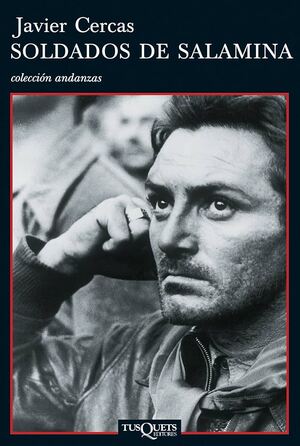
I’ve loved this book – and I can’t stop thinking about it. I watched the film on TV when I was a child, back when in Spain this was a very famous book about the Civil War. I remember thinking the film was strange, and there were some things I didn’t quite understand well. Partly this is because the film changed a few things (for example, the main character is a woman in the film, whereas in the book is a man directly based on the author, Javier Cercas). That said, I’m quite curious to watch the film again, although I very much doubt I’ll like it better than the book because one of my favourite things about the novel is how it plays with form, which is impossible to translate into film.
To start with, the book blends in real facts with fiction. The author is a writer called Javier who shares almost everything with the real writer (for example, his background, his professional experience, his ideas, his struggles with depression). At the beginning of the book this Javier sees himself as a literature failure: he’s published two books that have received pretty much no reviews; he left his job to dedicate himself to the writing of a new novel but after five years he hasn’t managed to finish the novel, he’s depressed and his wife has left him (funnily enough, in real life Cercas has been married for many years). The Javier from the book reluctantly goes back to work at the same newspaper he was at. However, he finds himself increasingly obsessed with the story of Rafael Sánchez Mazas, a real-life fascist writer from the twentieth century pretty much no one remembers in the early nineties and one of the original creators of the ‘la Falange Española’ the political party in Spain with fascist ideas that instigated the military revolution which kickstarted the war and ended up overthrowing a democratically elected republic. Rafael Sánchez Mazas, the narrator tells us, was a good writer, not a great one, but good enough to deserve a bit of remembrance. As any writer, Sánchez Mazas is a great storyteller – and his most famous tale is the one about his miraculous experience of survival during the war. After being imprisoned by the republican soldiers, Sánchez Mazas was one of two prisoners to survive a mass execution when the war was already over and the republican soldiers, trying to get to the French border to escape, decided to kill all their prisoners in a last of revenge. After escaping the execution, Sánchez Mazas is chased into the woods where he tries to hide – one of the republican soldiers finds him but, inexplicably, decides to let him live in the last moment. Javier is fascinated by this – why would an anonymous republican soldier let Mazas, such a famous fascist, and so hated by the republican side, live? What was he thinking, this soldier, at that moment precisely?
The first third of the novel covers Javier’s research into the story – which includes him finding the three other republican soldiers who, later on, helped him survive in the Catalan woods until the Francoist army reached the area and Sánchez Mazas could reemerge as a victorious war hero. Javier manages to find who they were and even contacts some of them who are still alive. They show Javier a few objects they still conserve from Sánchez Mazas, including a piece of paper signed by him in which he promised to take care of them if they were ever in trouble because of their republican past.
The second third of the novel is what Javier writes about Sánchez Mazas (this is almost as if we were accessing a draft of sorts from the book he’s working on). It’s a very interesting biography that focuses on Sánchez Mazas origins as a well-off young man enamoured of a romantic idea of a Spain that has never existed but that he wants to somehow preserve through fascist ideology. This section also makes emphasis on how Sánchez Mazas wrote and obsessed about heroism (just as Javier does, really) but he was never a true hero in any sense (during the war he hid instead of fighting for his ideals, and he only escaped death because of the mercy of his enemies).
The third and final part of the novel becomes almost a thriller as Javier tries to find this republican soldier who saved Sánchez Mazas life. Here the story becomes almost magic realism. Through a conversation with his friend, writer Roberto Bolaño (one of my favourite characters in the book) Javier realises that Bolaño may have actually known this anonymous republican soldier which gives him some specific clues to search for him. I mean, it sounds a bit too far fetched, sure, but at that point in the book you, the reader, as so deep into the story that you really want this to be true. I mean, if a small miracle saved Sánchez Mazas life, could a small miracle help Javier find his anonymous republican hero? In the end (spoilers here) Javier does. Apparently the real Javier Cercas never did, even though he did have the conversation with his friend Bolaño who made him think he could. The soldier Javier in the novel finds is an old man who emigrated to France after the Civil War and fought in Africa to overthrown fascism during the Second World War – so he effectively managed to defeat his enemy and fight for his ideal, even though he could never go back live in Spain. Throughout the book Javier shows a fascination on the myth of an anonymous soldier / hero who manages, just by his actions, to change the outcome of a whole war. It’s an interesting theory even though I find it slightly sinister. It attempts to glorify the figure of the soldier, and it also reinforces the myth of the hero as one single human person (a man, really) whose efforts have consequences larger than himself. I would be more inclined to trust and celebrate communal efforts instead, but again, I can see why this can be an interesting idea. When Javier finally meets this old man it does feel cathartic and powerful. In a way, Javier also finds the father figure he’s lost, and he finds one great story he can finally write. To make things even more interesting, Soldiers of Salamis was the book that launched Cercas to fame and finally established him as one of the most famous Spanish authors of his time – and a recognised author internationally. For all its faults I really enjoyed it and I want to write more about it and how is really inspiring me creatively.
Human Rites by Juno Dawson
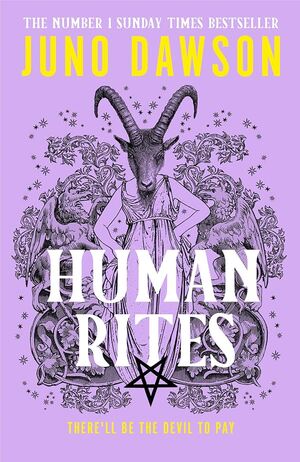
This is the third book in a trilogy – I read the previous two parts and really enjoyed them. (This is my review of the first part and this is my review of the second). I was curious about the final book, since the second book ended in quite a shocking cliffhanger. This book is a thick one, and when I grabbed it I thought it’d last me until the end of the month. Alas, that’s not what happened. The writing here is so entertaining, and good, that I pretty much devoured this in a few days. The story didn’t disappoint and I’d say that I liked this third book more than the second and, overall, it felt like a satisfactory ending for the trilogy.
The first third of the book was perhaps the slowest, as it felt like the characters were trapped in a lot of politics and issues they needed to process (not surprising, though, seeing all that happened on the second book). One of my favourite things about it was the evolution of Elle as a character – it felt like from all the witches she was perhaps the most stereotypical and in this book that previous narrative was challenged and we really got to know her in much more depth.
Something I didn’t like was the (spoiler alert here) forced pregnancy trope – when Leonie, another main character, becomes suddenly pregnant by… Gaia? (The Witches’ Goddess) and then has to birth the baby in a month or so because of course it’s a magic baby and she grows super fast? I feel like getting pregnant out of the blue and without having any saying in the matter is a real nightmare for anyone who has a uterus and so when this trop is played in books (fantasy books specially) the horror of it is never really explored. Let alone the trauma of having to go through all of it… in a month? And on top of everything the child is a Goddess’ baby????
That said, overall this was a very enjoyable book with some unexpected twists. I appreciated the somehow hopeful ending since the first two books in the trilogy had been quite dark already. I also thought the worldbuilding was very strong, doing really interesting things in this UK-based fantasy.
Lolita by Vladimir Nabokov
Here we go! I’ve never read this book before even though I’ve heard it discussed pretty much since I started studying Creative Writing myself. often it’s used as an example of an unreliable narrator. I’m also aware of how controversial this book has been since its publication – why would a writer bother with such an upsetting subject matter? And if Nabokov writes a pedophile so convincingly – does this mean he must also have been one, because how would he know otherwise?
Basically, I saw this book on the library and I picked it thinking, quite literally, ‘let’s see what all the fuss is about’. Oh, boy. I wasn’t ready for this journey. First of all, the prose. I heard that Humbert Humbert, the narrator, had a very beautiful way of writing and describing things. Which he does – although I soon got a bit tired of his florid prose full of hyperbole and irony. What made this book really hard for me, though, was the content. I found it very upsetting, specially the way the narrator looks at women in general, with absolute disgust and contempt. I don’t think he looks at Dolores Haze (who he calls ‘Lolita’) much better. In his mind, she’s just a sexual fantasy. Which is even more terrifying.
It’s interesting to note that this book was surrounded with controversy even before it was published. After reading it, I listened to the Lolita Podcast by Jamie Loftus (which I really recommend) where I learned a lot about its context. For example, Nabokov have been trying to write this story for a while, and similar characters float around in his stories such as the novella The Enchanter. When he wrote Lolita no publisher wanted to risk its publication in the US or in the UK – and the manuscript was only able to find a home with an English publisher based in Paris (Olympia Press) which specialised in erotica. It wasn’t until Graham Greene in the UK read it and gave it a good review that the novel became famous in the UK despite being banned there. From then on, the ‘Lolita’ myth took a life of its own – in part due to the film adaptations which portrayed Dolores Haze as an older character – sixteen in Kubrick’s film and fourteen in Lyon’s film – which somehow dilutes the real horror of the text in which Humbert Humbert, the main character, is exclusively attracted to girls between nine and fourteen (and fourteen is kind of pushing it for him, as he compares Dolores Haze to an ‘aging maiden’ at that age). So, from the story of a pedophile and a murderer Lolita somehow becomes the story of forbidden love between a young and precocious girl-woman and a doomed, attractive older man? After listening to the Lolita podcast I learned that some listeners had studied this book at university in the past where it was described as ‘one of the greatest love stories’ and that some female readers had been recommended the book when they were teenagers by much older men pursuing them. Some other women had gone to it, also as teenagers, thinking they would learn about sex, and love, and attraction to older men there. I can’t think of a worse place, because really, that’s not what the story is about. The book is meant to be a narrative that Humbert writes when he’s in jail (after murdering a man, not because he kidnapped and sexually abused Dolores Haze for years) and he’s trying to convince the jury of his innocence – and to do this he portrays himself always in the best light possible and even suggests that Dolores Haze seduced him, a man in his late thirties then, when she was only twelve years old. I mean sure. Sure.
This book reminded me of Orpheus Builds a Girl by Heather Parry in that it has an unreliable narrator who is trying to convince us that the whole book is a love story instead of a story of misogynistic violence and abuse that expands way beyond a woman’s death. Orpheus Builds a Girl is based on a real-life story – all the more terrifying because back then many people saw in it a romance. Lolita is also inspired (at least partially) in a real story – the kidnapping of teenager Sally Horner when she was eleven years old by a convicted rapist who went on to keep her captive for twenty-one months.
Ultimately, I find Claire Dederer’s thoughts on Lolita illuminating:
‘We shouldn’t punish artists for their subject matter.
But we do. We punish artists for their subject matter all the time. Now more than ever. Could Lolila be published today? I doubt it. The story of a serial predator who grooms a young girl, abducts her, takes her on a cross-country road trip, rapes her every night and every morning too, and prevents her escape at every turn? And we only get his point of view? It’s impossible to know wether or not the book would be published now, but it’s easy to imagine an outraged reception.
(…)
To put it another way: why did Nabokov, possessor of one of the most beautiful and supple and just plain funny prose styles in the modern English language, spend so much time and energy on this asshole?
Maybe the answer can be found in the words of another asshole, Roman Polanski. In the klieg-light aftermath of his rape of thirteen-year-old Samantha Gailey, he said his desire to have sex with young girls was the most ordinary thing in the world. “I realise, if I have killed somebody, it wouldn’t have had so much appeal to the press, you see? But… fucking, you see, and the young girls. Judges want to fuck young girls. Juries want to fuck young girls – everyone wants to fuck young girls!
Polanski, of all people, has given us a piece of wisdom here: the desire to rape children is not so unusual. Why should Nabokov tell the story of Humbert? Because, as Polanski tells us, it’s an ordinary human story. It’s terrible and unthinkable and appalling and it happens all the time. That makes it fit subject matter for a writer.
(pp. 138-140)
Audition Kate Kitamura
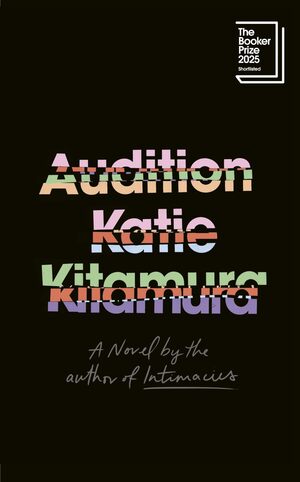
When I finished reading Audition by Katie Kitamura and I was… well, I’m not impressed. I finished this book because I was a literature student, so I’m trained by default to engage with a text and finish it because even though I may not like it (which is subjective) I’m still curious to see how and why it works (at least for other people).
I picked this book without knowing nothing about it – only that it’d been shortlisted for the Booker prize. It’s really well written in a way that feels American to me (I’m thinking Carver here, and Hemingway, and also Sittenfeld) – sentences are sparse but extremely precise when it comes to detail. In fact, this kind of writing was what made me finish it, because it was enjoyable.
The book follows and unnamed forty-nine-year-old Asian-American woman – it seems implied that she has Japanese family. She’s an actress living in Brooklyn married to a writer, Thomas. They don’t have any children. I enjoyed the parts of the book when she discussed her artistic practice the most – her experience throughout the years of being casted only for stereotypical ‘Asian’ roles which made her feel invisible until a Japanese director casts her for a movie in which she finds more fulfilment with her role. She doesn’t even speak Japanese but she phonetically learns to for this project – and this is the first time she feels ‘seen’ artistically.
The opening scene is in a restaurant, in which our protagonist is having lunch with a man much younger than her. This is Xavier, who is in his twenties, a theatre and film student. She’s curious about the reason why he wanted to meet. Is it to ask for her advice? To seek mentorship? Does he fancy her? Things take a turn for the weird when it turns out that all Xavier wanted to ask was – is she his mother?
(The context here being, Xavier is Asian-American too, but he’s adopted, he doesn’t know who his biological parents are but he read in an interview that our main character put a child for adoption twenty-five years ago and he’s convinced they look alike and that he is that child).
The narrator knows this can’t be possible – she never had a baby although she went for an abortion once (which a journalist misinterpreted as having given the baby for adoption).
From here own, the narrative just becomes weirder in a way I simply didn’t believe. Because suddenly, it seems that our narrator believes she’s Xavier’s mother and even has memories of raising him with Tomas, her partner. What is more, Tomas is also convinced that’s the case. So Xavier moves into the house with them and starts a life there as their child, although things soon go awry as he seems to destabilise their carefully curated lives.
I didn’t understand the sudden change in the book (why Xavier changed from being an stranger to the narrator’s son) – but considering they are all involved in art – and that Xavier works as an assistant director and the narrator is an actress – I felt it was connected to that, like an elaborate game of pretend. By reading some reviews on the book such as this one I figured that perhaps the two halves of the book are supposed to be distinct and maybe even different versions of the story with the same characters, even though the second one, (in which Xavier, Tomas and the narrator are a family) did seem to me more surreal, almost as if the characters where acting different roles than themselves, sometimes in a hyperbolic way.





 Inés G. Labarta