Dystopias and Introspection: September 2025 Reading Log

Book Review, Books, Creative Non Fiction, Fantasy, Horror, Literary Fiction, Short Story Collection, Weird Fiction

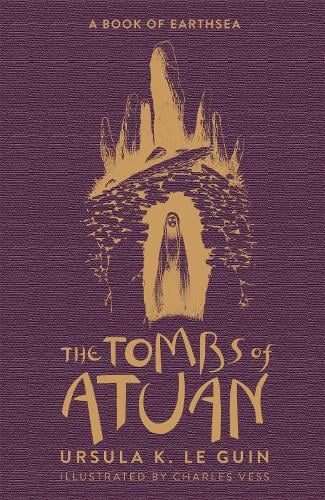
The Tombs of Atuan by Ursula K Le Guin
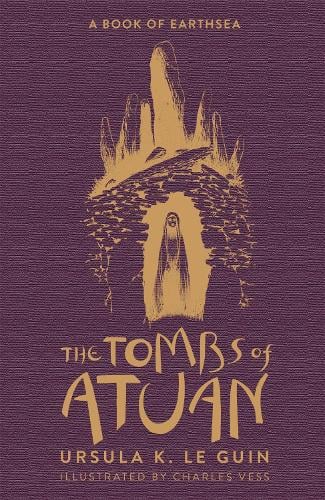
This is the second book in the Earthsea series that I started reading in August this year. I loved this second instalment even more than the first one, if that is even possible. Whereas A Wizard of Earthsea was more classical fantasy, this book had some horror and weird fiction features intertwined that I particularly enjoyed.

The Tombs of Atuan starts in the Kargad Lands with a mother looking at her six-year-old daughter playing in the fields – already grieving the fact that her little girl will be taken from her. This child, Tenar, is taken to the mysterious Tombs of Atuan to become a High-Priestess of the Nameless Ones. In Kargad’s old religion, people believe that their High-Priestess never dies and keeps reincarnating, coming back to take care of her temple. Under the Tombs of Atuan (which include a collection of mysteriously placed monoliths) there is a vast labyrinth. Tenar’s training as High-Priestess includes ‘remembering’ who she was in her past life as a High-Priestess and learning how to navigate the labyrinth in total darkness to honour the Nameless Ones. She’s not allowed to use any source of light in most of the labyrinth’s rooms so she has to go by sound, smell and tact only. This was, for me, one of the most chilling images from the hold book. I am a claustrophobic and I can’t imagine anything more horrific than being underneath the ground moving through tight corridors without being able to see, hoping that I have memorised all the twists and turns correctly or I’d end up lost forever. And, let’s not forget that at some point in the labyrinth there is a vast drop that also needs to be remembered and navigated correctly – or else, you risk dying in a pretty horrible way.

Even though Tenar is, technically, in a very powerful position as the High-Priestess of her country’s oldest religion, things are challenging. She grows up with two mentors, Thar and Kossil. Thar is the old keeper of the lore of The Tombs and trains Tenar on how to use the labyrinth. Kossil is High Priestess of the God-King, the other competing religion in the Kargad Lands. This was one of the most fascinating aspects of the book – the fact that this is a world with two religions existing at the same time, the cult to the Nameless Ones (extremely powerful but abstract forces that can only be connected with through complex ritual and fear) and the cult to a God-King who justifies the presence of the real Kargad king and is a monotheist, patriarchal faith. As she matures into a young woman, Tenar is forced to take difficult choices in her role of High-Priestess such as deciding how prisoners of war need to be sacrificed to the Nameless Ones and, almost without realising, she starts questioning these beliefs she’s been brought in.

The world-building in this book is flawless and I realised it must have been an inspiration (consciously or unconsciously) to Tasmin Muir, writer of The Locked Tomb Series which I loved because of its dark, strange necromantic cult. I found a lot of Muir’s ideas in this earlier work by Le Guin.

At some point in the story Sparrowhark (main character of the previous book) appears and from then on Tenar’s doubts intensify as she meets someone who is not from Kargad and brings in a complete different version of the world. This book was a superb meditation on faith and doubt and the challenges an individual may face when they exist within the boundaries of institutionalised religion. It also shows the impact of mythology and lore on our sense of identity. Kossil, an antagonistic character, may not be as devoted to the gods (the God-King, who she technically serves, or the Nameless Ones) as it may seem but she sure understands the social and political power that her position as High-Priestess of the God-King grants her – and she doesn’t hesitate in using it. Tenar has gone through a lot of grief (being separated from her family as a young child, growing up pretty much alone) to fulfil a religious prophecy. However, her position is dual: she’s the leader in the Tombs of Atuan but also she’s no more than a prisoner in Kargad, forced to enact rituals designed so long ago that everyone has forgotten their meaning and having no freedom to go beyond the boundaries of the temple.

All in all, this is one of the best books I have ever read, equally chilling and moving.

Heridas Abiertas (Open Wounds) by Begoña Méndez

I’m a fan of Méndez’s work, and I have read most of what she’s published. This book, which is quite short, is a very interesting meditation on journaling by discussing the practice of a series of female artists. Some of them are very well-known (such as Alejandra Pizarnic, Susan Sontag, Santa Teresa) others I discovered thanks to this book (Lily Íñiguez, Marga Gil Roësset, Idea Vilariño).

This book also proposes the idea of journaling as a process that helps us understand our truest inclinations and desires. A process that also keeps artists inspired and in touch with their own process. An activity that, despite being so intimate and private can also be considered an art. Ultimately, Méndez shows us that reading these diaries inspires her and also allows her to understand herself better. If you are looking into going back to a journaling practice, I can’t recommend this book enough.

Sunrise on the Reaping by Suzanne Collins

I loved the Hunger Games trilogy when I read it as a young adult, specially because of its dark political themes. I picked this book curious, not expecting much from it as to me the trilogy was satisfactory enough to explore the themes and the characters and I never really felt like I needed extra books (I haven’t read the other prequel, The Ballad of Songbirds and Snakes, I only watched the movie which I thought was an hour too long).

That said, from the very first pages I was completely hooked in. I really enjoyed the voice and, to be fair, I’m so familiar with the world (the twelve districts and the capital they all serve, Panem) that it felt like coming ‘home’ a horrifying kind of way (because this is certainly a world-building I wouldn’t enjoy inhabiting).

This particular instalment is narrated from Haymitch Abernathy’s point of view. Haymitch is one of the Hunger Game’s survivor’s from district twelve who mentors Katniss Everdeen, the trilogy’s main character. The adult Haymitch we met then was an alcoholic with lots of issues but ultimately someone who knows how to play the capitol’s game to his advantage.

Let’s start with the drawbacks of the book: the lack of tension. In terms of format, this book follows a known formula: tributes from District 12 (including Haymitch) are brought to the arena, they have very few chances of survival but somehow they manage to beat the odds. Because you know that Haymitch needs to be alive to feature as an older adult in all the other books you never fear for his life as he encounters one challenge after the other. In that sense, this is not a gripping book. Except that, weirdly, I found it gripping. I enjoyed getting an insight into this character who, unlike Katniss, is trying to play the capitol’s game but is also still so naïve that he doesn’t quite manage – which brings disastrous consequences.

This book is also extremely dark to points where I thought it was perhaps a tad unnecessary, even though I imagine Collins wanted to show us to what extent Haymitch is damaged (and suffering from CPTSD) to explain his condition and attitude in later books.

Something that this book gets really well is the use of propaganda in a highly controlling regime. The moment Haymitch is recruited to join the Hunger Games he realises that the capitol has the power to control reality through media – which means feeding their people very curated information so President Snow, the dictator, can, to a great extent, control their ideas and beliefs.

Something baffling about this book (I can’t remember if Collins does this in the original trilogy) is the fact that she uses elements from our real world in Panem (which is meant to be an alternative version of the United States). For example, Haymitch’s girlfriend from District 12 is Lenore Dove, and throughout the book there’s plenty of references to the Edgar Allan Poe’s poem The Raven and the Lenore character in it (it also foreshadows the unhappy fate of the relationship, which you know was coming anyways as you have the future version of Haymitch living alone and refusing to engage with people). Another famous text that makes an appearance is The Goose and the Common which Lenore Dove, who is a singer (just like Lucy Gray was, from previous books) sings even though this is forbidden by the capitol. This creates a strange feeling – almost as if these characters belonged to our real world (or to a version of it where things went very wrong). It’s worth mentioning here that Suzanne Collins was also influenced by the philosopher David Hume, specially his ideas on implicit submissions (which is why, according to Hume, the few manage to rule over the many) and the differences between inductive and deductive meaning (here there is an interview where Collins explains all of this).

To sum up, there was nothing new here: a character whose fate we already knew and the hunger games process we are familiar with (at this point I believe Collins has written four different arenas). Yet formulas work and I think this book is a perfect sample of it. I knew what was coming almost all the time and still I enjoyed being back in this universe specially because of how familiar I’m with it at this point. Collins brings in many younger versions of well-known and well-loved characters from the original trilogy. Sometimes it works, sometimes a bit less so (as it may feel as if she’s literally ticking them off the list and some cameos feel a bit forced), The two characters I enjoyed the most were young Plutarch (a key character in the last two books of the original trilogy) but specially Maysilee, the other District 12 tribute. She starts as a villain but somehow you end up rooting for her at the end of the book. Also, she has probably the best lines in the book and hers and Haymitchs’ bickering was just delicious.

All in all, I think this is a book to be enjoyed by fans of the trilogy – and as such, I have to say that, despite all its flaws, I did. Be warned, though, this is, as its core, a dark and depressive story about the power of a regime to control and destroy individuals’s lives.

Show don’t Tell by Curtis Sittenfeld

I’d only read Sittenfeld’s short story ‘White Women LOL’ which appears in this collection and was published on its own a few years ago. It was a great one – funny and nuanced, exploring the topic of racism in the American midwest from the perspective of a woman, a ‘Karen’, who gets cancelled (mainly by her friends and her community) after a semi-viral video.

I saw this collection in the library and I picked it without even knowing if I was in the mood for short stories. Surprisingly, I avidly read this in a few days (and it’s not a small book). I thoroughly enjoyed it and Sittenfeld’s writing – precise, funny, thought-provoking – felt like a nourishing and delicious meal (I can’t explain it any other way).

Show Don’t Tell – a story about a postgraduate student in a writing programme who is waiting to see if she’s received a prestigious scholarship for her studies that year. It’s not as much about the money for her but about the fact that receiving that particular work somehow means that you will ‘make it’ in the literary world. As someone who was a writing student once and now teaches writing at a university I loved this one. First of all, it encapsulates how terrible the writing workshop can be: the small battles in and outside of it, the jealousy and the fear. For example, the protagonist goes out with a guy in her workshop and they have excellent sex. After that, they decide to give each other feedback on their work, and when she doesn’t say that his story is perfect, the relationship sours… (probably not a good idea to date someone in your dating workshop, and if you do, maybe don’t give feedback to each other after having good sex…) Another boy in the workshop evaluates the writing by his female peers with a curious rule. If the woman is ‘beautiful’ (whatever that means to him) she can’t produce award-winning writing. As a woman, you have to be a little bit ugly to actually be ‘good’ at this writing thing (hilarious). As the day goes on (and she worries more and more about the scholarship, taking note of who got what and who didn’t, trying to discover if she did too by process of elimination instead of simply checking her mail) this scholarship becomes something supremely important not only for her but also for everyone around her. In the end, you can’t avoid but finding the situation funny because, as a reader, you know that even though getting that scholarship is the most important thing in this small writing programme in this particular university… it barely means anything outside of it.

The Marriage Law – a woman in her forties working for a film company travels to Alabama to try to convince the author of as self-help book for married couples to sell his rights. The film company is interested in making a film out of it – but they want to include a non-heterosexual married couple in it. The man, who is religious, refuses to sell the rights on the account that it’d be like betraying his most loyal followers. The story takes an strange twist when the woman is convinced the man is flirting with her (he is, of course, married) and becomes upset when he doesn’t make a pass on her.

The Richest Babysitter in the World – this story follows the life of another university student who finds herself a surprisingly well-paid baby-sitting gig. She starts working for a young family with a three-year old in which the woman, who is writing her PhD, is pregnant. At some point in the story, the mother offers the student quite a lot of money to be on call the moment she goes into labour and needs to go to the hospital (so the student can take care of the three-year-old). It transpires then that the husband thought it was way too much money but from the point of view of the mother finding someone who will take care of their child as if it was hers is the most important thing and she’s ready to reward it. Later on in the story, the husband offers the babysitter a job in the small business venture he’s just started and she refuses. It’s then that we readers start to realise that this man is very similar to Jeff Bezos because his online business, ‘Pangea’, is pretty much Amazon. The story fast forwards many years (a device that Sittenfeld uses in many of her stories). Now the main character has a stable job after doing a PhD in speech therapy and a family and yet the most interesting fact about her, what she always shares with people at parties when she wants to impress them, is that she once worked as a babysitter for the richest man in the world.

Giraffe and Flamingo – this was one of my favourite ones in the collection and also one of the most disturbing. A middle-aged woman (as most of the characters in this collection) reflects on her years at university studying music and living in student accommodation where the bathrooms were shared by all students. She recalls a particular experience of abuse – in a subtle yet terrifying way – she was subjected to by one of her male flatmates who now, as an adult, is actually in very ill health.

The Tomorrow Box – one of the few stories narrated by a man. It follows a teacher in a boarding school (boarding schools seem to be a theme in the collection, I understand it’s because the author went to one as a teenager and this also informed her first novel, Prep). It’s about his experience of fatherhood as a man in his fifties with small children and also about his slightly unhealthy obsession with a former friend who was kind of a loser when they were both young men but now is an extremely successful (and rich) journalist and author of self-help books for men who lack confidence.

The Patron Saint of Middle Age – a woman visits her three female friends and recalls the story of their friendship when they were all mothers of small children in the local pre-school. Another of my favourites – it’s quirky and enjoyable. The title refers to a ritual the protagonist engages in, burying the figurine of Saint Joseph in the garden of the house she wants to sell because she’s heard that if she does this she will sell very fast (and she does). Simultaneously, she becomes one her friend’s guide and adviser as said fraud embarks on a new relationship past her fifties (having barely had any sex during her adult life).

Follow-Up – a story about a woman who has to get an urgent appointment with her doctor to check some strange results in her breast ultrasound. As anyone would be, she’s terrified – yet she finds she doesn’t really want to share the news with her husband. Through flashbacks we discovered that she had a strong connection with a man when she was at university, but because he wasn’t the kind of man she thought she wanted to date (meaning, he wasn’t handsome in a conventional way, because he was short, and bold) she didn’t pursue the relationship. Now she finds herself married to a man that was actually ‘handsome’ but they don’t get along and apart from having a son and a house together it doesn’t seem that there’s much else connecting them in a meaningful way.

A for Alone – a forty-nine-year-old textile artist decides to start a project inspired by the so-called Mike Pence rule (according to which a married man shouldn’t be alone in a room with a woman who is not his wife). As part of this project, she makes a list of all the men (married or not) who she knows and invites them one by one to have dinner alone with her in different restaurants. After this happens, the men are made to fill a questionnaire that assesses their ideas on this particular rule and, more broadly, about gender dynamics. I enjoyed this story and I thought the first scenes – which include the awkward conversations the protagonists has with different male friends – were great. The end took a strange turn for me in that I wasn’t expecting her to fall in love with an old friend and somehow then ‘prove’ Pence’s rule. That said, I can see that a lot of Sittenfeld’s stories are about liberal women who believe they are morally superior to others (without realising how often they are hypocritical too about their beliefs). Or maybe this is about being human (and falling in love, and doing things you didn’t think you would) more than anything else.

Lost and Found – probably my least favourite story. But there is a reason for this, as it’s meant to act as a sort of epilogue to Sittenfeld’s first novel Prep which I haven’t read. To me, it was obvious that all the characters (and specially the narrator) were meant to be people readers had encountered before. They seemed quite annoying and I didn’t connect with them at all – and the blossoming romance between the narrator and an old school mate didn’t feel earned from my perspective. I think with this story you feel there is a lot whole missing already if you haven’t read Prep. Which also means that I wasn’t really the audience for it.

Creative Differences – Another favourite from the collection, perhaps because it wasn’t about marriage and partnership as many of the other stories were. It’s one of the very few stories (alongside ‘The Tomorrow Box’) narrated from the point of view of a male narrator. It follows Ben, a film producer, who is travels to Wichita in Kansas to film a documentary which, really, is kind of a fancy ad for toothpaste. Many famous actors and celebrities already appear in it, but in Wichita Ben and his crew are meant to film some scenes with Melissa, a photographer who reached fame unexpectedly after some of her photos became viral. From the very beginning, it’s obvious that Ben doesn’t really think that Melissa is ‘a real artist’ – because she’s not nearly as famous and sophisticated and stereotypically beautiful as the other people they haver filmed. It seems that having her in the documentary will be an easy job right until Melissa realises this piece is actually and ad – a fact that hadn’t been made obvious to her. After that, she refuses to be filmed saying that she doesn’t want to do something so commercial, stating as well that the rate she’s being paid is probably way too low if she’s meant to advertise the product of a big corporation on camera. Ben and the crew insist that the exposure she will get from being in the documentary / ad will be invaluable. In the end she refuses to participate and nobody can’t force her since she hadn’t signed the contract yet (and nobody had bothered to check this). This story reminded me of the book industry and how silly it can be sometimes – how the money people get paid is not often not even dictated by their skills or the overall quality of whatever they produce. Also, how hard it is to do what Melissa does in this story: she stands her ground and prefers to protect her artistic integrity. Which may seem a bit silly (why would she let an opportunity like that pass?) but actually she’s simply refusing to playa game where she was never meant to win anyways. I’ll finish with a quote from Melissa about art, success and being seen:

‘I know there’s this idea, with social media and everything, that we all want as much attention as possible, all the time, but one of the things about my early success that’s been eye-opening is that I’ve gotten so much attention and it doesn’t feel that great. It feels strange. That’s helped me realize that my goal isn’t to find the biggest audience. It’s to be able to keep taking pictures and to find an audience who really appreciates what I do’ (Sittenfeld, 2025)

Travels through space and time: August 2025 Reading Log

Book Review, Books, Creative Non Fiction, Fantasy, Graphic Novels, Horror, Literary Fiction, Queer Literature, Science-Fiction, Speculative Fiction, Weird Fiction
image.jpeg

Here by Richard McGuire

image.jpeg

When I worked at the bookshop, we had a graphic novel that I would check on occasion. Its concept fascinated me. If you don’t know it yet, Here tells a story through double-page illustrations of the same space – a room in a house – spanning years, centuries, and millennia. For example, if you are watching the space millennia ago, there is only plants, maybe some strange prehistoric animal lurking in the background. In the future, water floods everywhere. Or we may get glimpses of a futuristic society. The present time focuses mainly on the twentieth century, allowing you to see the same family grow and evolve in the same space.

Books I can’t shut up about: May 2025 Reading Log

Book Review, Books, Climate Fiction, Fantasy, Horror, Literary Fiction, Queer Literature, Science-Fiction, Speculative Fiction, Weird Fiction

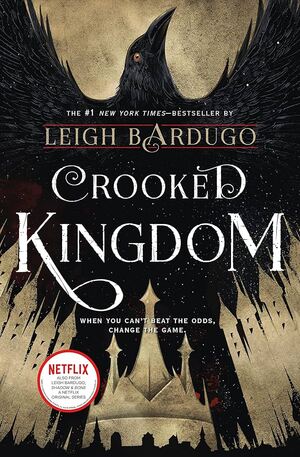
Crooked Kingdom by Leigh Bardugo

This is the second (and final part) of the Six of Crows duology. I enjoyed it as much as the first one, especially when it came to the evolution of some of the characters from the previous book, such as Wylan, the disowned son of the wealthy merchant Van Eck. Something I loved about this series is how dark it can get, but also, how it also contains some hilarious moments (such as the gang kidnapping Van Eck’s young wife, who turns out to be a very bad singer who loves to sing…and torments them all). Another character that I enjoyed getting to know more of in this second book was Jasper – a gunslinger with a great sense of humour (and also, a gambling issue). His relationship with his father is both sad and tender (he’s been spending his father’s money while pretending he’s a university student, whereas in reality he’s just devoted to a life of crime as a member of Kaz’s band).

Seahorses, aliens and willows: September 2024 Reading Log

Book Review, Books, Creative Non Fiction, Graphic Novels, Horror, Queer Literature, Science-Fiction, Speculative Fiction, Weird Fiction

The Hollow Places by T Kingfisher

This is the third book I read by T Kingfisher and it’s possibly the one that I’ve found the spookiest. By now I know Kingfisher is an author I enjoy – I’ve literally devoured all her books. What I love the most is her fast-paced writing style and her characters.

In this story, we follow Kara, a thirty-something-year-old recently divorced who goes back to live with her uncle Earl in North Carolina. Now, Uncle Earl has quite a special job. He’s the owner and curator of a very particular museum: Natural Wonders, Curiosity and Taxidermy. You can imagine the deal: all sorts of quirky stuffed animals (including a Fiji siren) and strange artefacts. Kara, however, is anything but spooked. In fact, she has very good memories of growing up around the museum, so when her uncle offers her a job there helping him out she immediately accepts.

Things are going normal until one day, when she’s taking care of the museum while his uncle is in the hospital healingfrom back surgery, she discovers a strange hole in the wall. At the beginning she tries to patch it up but ends up realising that the hole is actually quite large – she gets inside (of course!) and discovers that she’s actually in a tunnel in a completely different dimension. That’s how she ends up accessing another world. Now, this new space she discovers is one of my favourite parts of the book. A strange alien, empty land filled only with water and willows.

Non-fiction and psychedelics: April 2024 Reading Log

Book Review, Books, Creative Non Fiction, Fantasy, Literary Fiction, Queer Literature, Science-Fiction, Speculative Fiction, Weird Fiction

Daisy Jones & The Six by Taylor Jenkins Reid

This seemed a fun book and I was in the mood for something I could read on a long train journey. It was a quick, entertaining reading – even though it’s narrated in quite an interesting way. Basically, it’s written in the form of interviews and statements made by people who belonged to the fictional rock band from the title. This American band became extremely famous in the 1970s and is loosely based on Fleetwood Mac. This formatting threw me off at the beginning but I soon got into it and I think that, thanks to it, the book is certainly quite pacy.

One of the things that I didn’t like (subjectively) was how Daisy Jones (the band’s female lead) was depicted from the beginning. She’s from a rich but emotionally detached family, and she’sbasically born gorgeous (she’s described as beautiful as a girl, as a teenager, and as a woman, no matter how much alcohol she drinks and how many drugs she does). She’s also incredibly talented music-wise. And everyone loves her. But she’s also kind of broken inside because it’s so hard to be perceived ‘only’ as a beautiful girl… I mean yes, but also, give me a break. I’m so tired of female characters that have beauty as their primary characteristic.

Parents, Families and Trouble: February 2024 Reading Log

Book Review, Books, Crime Fiction, Fantasy, Horror, Literary Fiction, Queer Literature, Weird Fiction

Nettle and Bone by T Kingfisher

I really enjoyed T Kingfisher’s writing style when I read The Twisted Ones, so when I got this book for my birthday I was really looking forward to it – especially as some of my friends said they thought I’d love this one even more. They were right.

First of all, this is a revenge quest, and I have a thing for revenge quests. I adore them, there’s something about getting what you are owed in the end that I just– yeah, I know life is not often like this, which is perhaps why I really like characters to get some retribution in fiction.