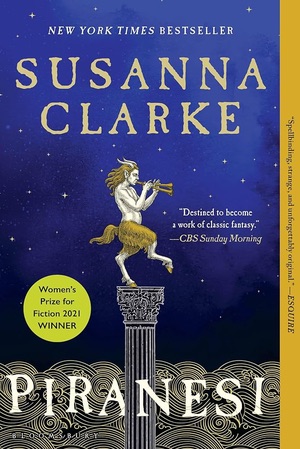
Piranesi by Susanna Clarke
What a read.
I picked Jonathan Strange and Mr Norrell when I was twelve or so in the public library (translated into Spanish). It caused a great impression in me, because it wasn’t like any other fantasy book that I had read before – I’m looking forward to rereading it as an adult in its original language.
Piranesi, on the other hand, didn’t draw me in as much when I first saw it in a bookshop. I remember working at Waterstones when it won the Women’s Prize for Fiction and we were selling heaps and heaps of them. And yet, when I read the blurb, it didn’t sound attractive to me at all – it seemed so vague.
I know, judging a book only by its the blurb. I should know better.
Sure, there are many potential issues and plot gaps in this book but I adored it and I read so fast. One of the most astonishing achievements of this book – which you could call a novella because of its length and the way the plot works – it’s how it manages to suggest such a complex world in very few pages.
Piranesi has something I have a passion for: strange vast and desolate landscapes. I can’t explain it, but I feel attracted to such places, which explains why Abandoned Places is one of my favourite books to look at and chill with a cup of tea.
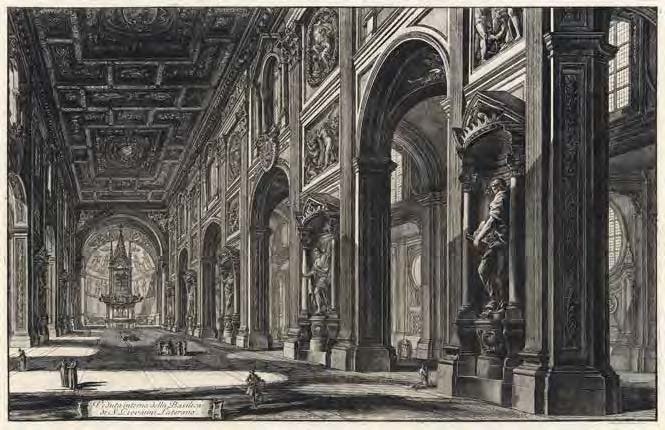
In Piranesi, most of the plot is set in the House, a building of mammoth proportions composed of halls with impossible tall ceilings. There’s nothing in them but statues of all the things you can possibly imagine, including, for example, a woman carrying a beehive. (Because, why not.) To complete the picture, there is also a sea in the House so now and again, and depending on the tides, some of the halls get flooded. Because of this, there are fish, and sometimes seagulls, and even albatrosses. Apart from that, there are no other beings aside from Piranesi and the Other.
Can you imagine anything more beautiful?















 Inés G. Labarta