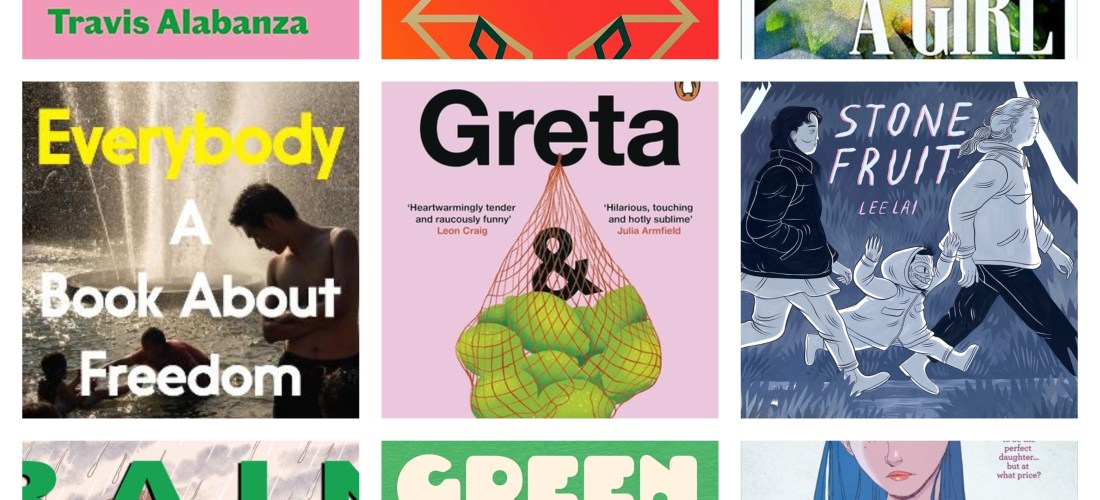

None of the Above by Travis Alabanza

This year I’m doing a lot of reading around gender (starting with books I really liked, such as A Real Piece of Work by Erin Riley and Disphoria Mundi by Paul B. Preciado). I was very excited to find this book at the university library because it is written by a non-binary author, which is a perspective I haven’t encountered all that often.
This was an entertaining book I read very quickly, each chapter centring on a specific theme around Alabanza’s experience of transness, queerness and being non-binary. It was thought-provoking – for example, their experience of being harassed in the street because of the way they look was painfully shocking. It made me think of the many ways appearances are policed, specifically when it comes to how appearances fail to fit the idea of ‘womanness’ ingrained in our society. For example, Alabanza’s anguish of showing themselves as someone who is femme but also has hair in their legs or even facial hair reminded me of a similar anguish I feel as someone who is femme and has hair in all these places but is not supposed to show it when being out in public.
Another idea that I found interesting in this book was the concept of transness not as something one is or is not (coming back to the idea of rigid binaries) but a process one can simply embody without committing to either the female or the male gender.
Alabanza speaks insightfully about this:
‘I believe that my transness is a reactionary fact, not an innate one. I am trans because the world made me so, not because I was born different. I am trans because the systems the world operates through force me to be so, not because of genetics. I am trans because of you, not because of me. I did not always know, because once I imagined a world where U would not have to know. More than this, I believe that others may only be so very cis because the world is forcing the same reaction for them, too. That my reaction to declare transness is similar to the cisgender men and women running away from any chance of something else. When the gender binary is created so harshly, all it forces from us are strong reactions – because it eradicates any chance of calm self-discovery. Transness is held to a higher scrutiny, so we are seen as the performative choice or reaction, rather than that we are the living proof of the reactionary ways the gender binary makes us live. We, rather than the gender binary itself, are seen as unnatural.’ ( p. 30)
This book also touched on the intersections of transness with race and social class, which is something I wish the Alabanza had elaborated more on throughout. Even though I enjoyed the content of this book and it made me think and reflect, the tone and the writing were a bit off for me; at times I found it repetitive, or I wanted the book to expand more on certain topics it barely touched on (for example, how the non-binary gender has been traditionally featuring in non-Western cultures). But all in all, this was a good read that I’d be recommending to anyone interested in non-binary identities.
The Future by Naomi Alderman
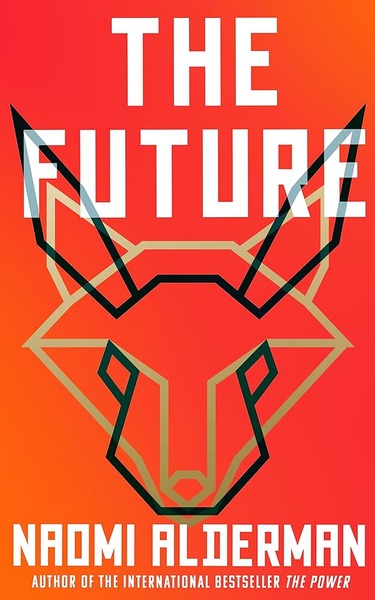
It’s not a secret that I pretty much love everything Naomi Alderman writes, and this was no exception. I actually started this book as an audiobook but I couldn’t get into it – I felt like a lot of plot intricacy was going over my head. I’m so glad I stopped and got a physical book (also from the library) which allowed me to engage with the story much better.
This is my kind of narrative – a cast of different characters, different timelines, pieces in a puzzle that slowly but surely starts coming together as we get through the story. It follows the lives of three obnoxiously rich billionaires who are the heads of the (fictional) multinationals which control the world. In this day and age, who hasn’t experienced frustration at the fact that most of the world’s resources are (sadly) in the hands of a few individuals who, far from being generous and altruistic, are only concerned with hoarding even more riches? Who hasn’t ever wondered what would happen if this wasn’t the case, and if there was a way to send all these people to, say, (ahem), a different planet so we can all get ready here to share and distribute in a way that makes more sense for everyone?
This thought experiment seems to be pretty much Alderman’s original idea for the plot. The magnates of the story are fictional people, of course, but their fictional companies are easily identifiable as companies that exist today. Alderman’s characters are obsessed with getting richer no matter the cost, and they are also obsessed with preventing a potential revolution from the angry masses or any form of social movement which could threaten their power in any way.
Because this is an Alderman’s book, there’s also a fair share of philosophy and religion. She uses the myth of Lot and Abraham all throughout as an enlightening metaphor. In this novel, some people see humans as being either ‘rabbits’ or ‘foxes’. ‘Rabbits’ are those who, like Lot, decided to become sedentary and live with others in cities. ‘Foxes’ are those who, like Abraham, decide to roam the land and embrace a nomadic lifestyle. There’s also another important point Alderman extracts from this particular myth: When society goes terribly wrong, is God right in wiping it out (as he did with Sodoma and Gomorrah) so he can start over? And if something like this were to happen, would it be fair for some people to get spared?
All of these very interesting questions, especially considering we as a human race are facing the very real threat of extinction even though many remain blind to this fact, believing they won’t get to live through the consequences of their actions.
One of my favourite characters in this novel was Martha Einkorn, daughter of the leader of a religious cult that sees themselves as ‘foxes’ but who, in a turn of events, has ended up as the Personal Assistant of one of these super-rich CEOs. She was a nuanced character and many times throughout she kept surprising me as we got to learn her backstory and some of her real motivations.
Something that I find a bit hard to believe was (SPOILER) another character’s timeline (I’m talking about Lai Zhen, the survivalist turned internet influencer) especially when she sacrifices three whole years of her life (three whole years!) for the greater good. But I would be lying if I said I didn’t love that she got her happy ending literally in the last chapter of the book. So that did it for me.
I found the author’s note at the end very interesting too – how she took time to explain that she had actually done a lot of research into the gift economy and other possible ways of sharing resources across a society (let’s not forget here, capitalism is not the only system available out there, we humans have tried many other things before and I hope we try different things as well in the future, better things, hopefully). She gives credit to Indigenous scholars who have inspired her work in this regard. She also points out that Western societies seem to fear the concept of nomadic living – those who are on the move, those who don’t belong to ‘the land’ are often treated as outsiders (think about refugees here, immigrants, Travellers and so on). I found this idea fascinating, especially because, who knows, we may all become climate refugees at some point in our lives.
Something else that I wasn’t expecting with this book but that I liked was the overall optimistic tone of the narrative (I mean, there was a lot of darkness too, don’t get me wrong). I think we need more fiction like this – fiction that is unashamedly political, fiction that makes us think of the world we live in and question some of its perceived ‘unmovable truths’ but also offers imaginative solutions out of it, solutions that call for collaboration and communication across different groups and communities rather than a sudden deus ex machine. I’ve seen recently the category of ‘thrutopia’ floating around and I think this book could definitely fit in this sub-genre. (See this interesting article by author Manda Scott if you are interested in the term ).
All in all, this was a fast-paced read with an admirable amount of depth and nuance. At times I wish there had been more character in it (I felt that a bit got sacrificed to have a fast-paced plot) and yet, a couple of months after reading this book I’m still thinking about it and I can’t stop recommending it to friends enthusiastically. So I suspect that, despite all its faults, it may end up as a year favourite.
Orpheus Builds a Girl by Heather Parry
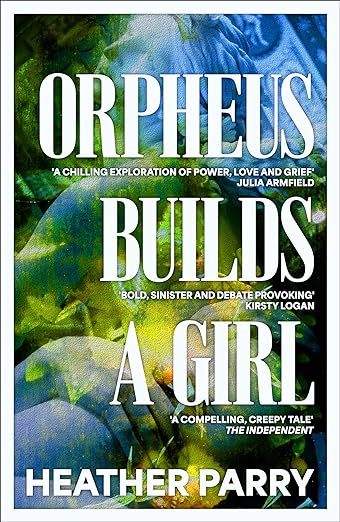
This is, by far, one of the best horror books I’ve ever read. It terrified me, it made me feel literally nauseous, and it also made me so, so angry. Especially because it’s based on a real story (a classic example of reality being stranger than fiction, also a classic example of humans being capable of the very worst).
This novel follows the story of a German doctor, Wilhelm Von Tore, who happens to have a very distinctive and unique childhood at the beginning of the twentieth century – he’s brought up by his rich grandmother, who he adores; she’s a woman obsessed with health and physicality, something he passes on to his grandson.
It also follows Gabriela and Luci, two sisters living in Cuba who have a very close relationship – but who are forced to emigrate to the States for financial reasons.
At some point in the story, all of these characters end up in the same place, Florida: Van Toren has to escape Germany after World War II (it’s implied he was a Nazi supporter). Luci and Gabriela’s family is hoping to start over and solve their financial difficulties.
Things start getting dark when Luci, now a teenager, is brought to the hospital because of physical problems and is told that she has TB, an illness her family can’t afford to treat (hello, private healthcare!) So when a nice, slightly older radiologist (who says he is a doctor) offers to treat her for free at her house, the family accepts, considering him a saviour.
What follows is the terrifying tale of obsession – with Wilhelm Von Tore believing, in his delusion, not only that she’s in love with him, but that death won’t be able to separate them. Once she dies, he gets hold of his body (apparently back in the day, if you went to a graveyard saying you were the husband of a woman who was buried there they’d let you transfer the body, no questions asked). A nightmare ensues in which Wilhelm Von Tore tries to keep Luci ‘alive’ by preserving her body at all costs, while the family doesn’t even know that her tomb is empty.
I loved this book so much (even if it made me feel sick, and while I was reading it I was living in a semi-permanent state of dread, I’m not going to lie). First of all, it has unreliable narrators (a personal favourite of mine). Both Wilhelm and Gabriela are telling stories that are very important to them, but also stories that are drastically different from each other. They’re also looking to showcase ‘the truth’ of the events. But you can easily choose who to side with – from the very beginning it’s clear that Wilhelm’s narrative has a purpose: to make him look in the best light possible. Gabriela is more worried about her sister and examines their lives from the very beginning to make sense of what happened, and to find out why she was targeted by a man like Wilhelm in the first place.
What made this story even more horrific was to realise that everything – even the most gruesome details, the ones which you’d think the author has taken some artistic license with – are real. This is a story that happened (which I’d never heard of before, somehow).
This is also a story that stirred so many feelings in me. First of all, the value of a woman’s body. Which is close to nothing, especially in a world in which there are actual laws which dictate what women can (or can’t do) with their own bodies.
The book also had a final note about the bodies of young women being stolen from their graves. Which, apparently, is a thing, yes, even today, there’s a black market for it, it seems, and for many purposes, not only necrophilia.
The writing was impeccable – full of details – and the characters’ voices believable. I related to Gabriela’s story because I also have a younger sister (so it definitely hit home). But also, it’s worth noting that Parry writes Wilhelm Von Tore with nuance and empathy – he’s monstrous, but by reading his account of the events there are times when you surprise yourself (dare I say it) understanding where he’s coming from even though his actions are revolting. Equally revolting, however, are the reactions of the media to this crime (apparently many people chose to believe that there wasn’t a crime but a beautiful romance, the romance of a man who didn’t want to let his lover go, not even after her death).
To sum up, this is horror at its very best: political, detailed, sharp, unashamed.
Greta & Valdin by Rebecca K. Rilley

This is not the kind of fiction I’d normally read – if I had to categorise it I’d say is definitely literary fiction but the kind that authors like Sally Rooney write (is there a proper name for it? Please tell me!) But also something like a sort of modern comedy of manners, because this book is actually very funny, often in a cringey sort of way (that I found very entertaining, personally).
The story follows two siblings, named in the title. Greta is in her twenties, finishing an MA and trying to survive on a meagre salary she receives as a teaching assistant at the university and almost non-existent funding for her research (yup, I’ve definitely been there so I can relate). She has a somehow hilarious and sad romantic life: she is bisexual, desperately in love with her colleague Holly who seems oblivious to her advances but also takes every chance she can to use Greta to do her work (Holly comes across as charismatic but also very annoying ).
Valdin is Greta’s older sibling, a bit luckier in terms of his career – despite having studied Physics he works on TV, and he’s very successful at what he does. His romantic life though is similar to his sister’s, that is, also in shambles. Because he can’t quite get over his ex, Xavier, a man twenty years his senior who has moved to Buenos Aires (Greta and Valdin live in New Zealand, so yeah, that’s literally the other side of the world).
Also: Valdin and Greta’s family is completely bonkers in all the nicest ways. Their father is a Russian refugee and their mother is Maori. Their older brother, Casper, was a teenage dad when he was seventeen but now lives happily married (not to the biological mother of his first child) with a second child, the precocious and endlessly entertaining Freya.
I loved how every character in this book is quirky but still very much believable. These were all very flawed exuberant people one can’t avoid but love. Like, for real. I wouldn’t mind being invited to a dinner at their home, for example.
That said, there were a few things in this book that felt a teeny tiny bit melodramatic (SPOILERS ahead) such as Valdin quickly adopting a child with Xavier at the end and this child being an absolute angel, and this being exactly the thing they needed to fix their relationship… or Greta quasi-perfect Scottish girlfriend who is also the exact person she needs to overcome heartache.
But other things compensated for this and made me thoroughly enjoy this book much more than I thought I would. First of all, its celebration of different cultures mixed in one family and in one country, and how it complicated the idea of ‘family’ and ‘home’. There were plenty of queer characters and queer relationships featured here. Second of all, there were also many funny (but knowledgeable) observations about academic life and culture in general. Third of all, the tender and complicated sibling relationship Greta and Valdin have was delightful to read – I love it when books focus on siblings rather than on romantic partners, which often seems to be the default. On top of all of this, this book was very well written, with an easiness and comedic manner that reminded me of authors such as Zadie Smith.
Everybody by Olivia Laing

My second book by Laing – which I also devoured in a couple of days and I also loved. Yes, Laing is definitely my new literary crush, I’m just in awe at their talent, blending in so many strands in their work – history, memoir, social commentary…
In Everybody Laing examines the idea of freedom – which actually is very much linked to the body, meaning that freedom can often mean the absence of physical restriction. But also, the degrees of freedom you may get (or not) depend very much on the body you inhabit, which is something you don’t get to choose in the first place (a significant paradox).
This book, like The Lonely City, organises topics according to characters. But, unlike that previous book, this one has a clear protagonist, Wilhelm Reich, a psychologist, Freud’s disciple (and eventual detractor) who ended up moving to the States (it’s funny here to notice the parallelisms between this Wilhelm and the other Wilhelm from Heather Parry’s novel!) Reich is indeed a fascinating figure, a man who studied sex in Germany between wars, a time of unusual freedom in Europe. He had many modern ideas (even for the time) as he advocated for the sexual liberation of women and the free right to contraception and abortion (so essential to women if they want to enjoy said liberation):
‘Sex was the key. Sex was the way to turn the tide, to reach the masses and liberate them from their rigid, infantile fixation with fascism. In the early 1930s Reich coined the term the ‘Sexual Revolution’ to describe the universe of happiness and love that would arise once people had shaken off their shackles, divesting the world of its punitive, prurient attitudes. He was undoubtedly naive in this… but it doesn’t mean Reich’s utopianism was completely without solid, practical foundations. If people had access to safe sex, and especially to contraception and safe, legal abortion, they were far less likely to produce unwanted children, or to find themselves shackled by poverty or unhappy marriages. As he pointed out in The Sexual Revolution, between 1920 and 1932, twenty thousand women a year died in Germany because of illegal abortions, while seventy-five thousand became ill with sepsis. You don’t need to believe in the magical power of the orgasm to see why a sexual revolution might be desirable, especially for women.’ (p. 93)
In his later years in the States, Reich became a bit of a controversial figure, as it was there where he created ‘the orgone accumulator’ a sort of small wardrobe one can sit in that accumulates the so-called ‘life force’ (if it sounds bonkers is because it is… but Reich treated a lot of people with this ‘machine’ of his). Despite this – and many other dark episodes in Reich’s life – Laing narrates his actions with empathy, something they are very good at in general.
The book covers many things that intersect with freedom – freedom and health, freedom and race, freedom and gender… and so on. It also has a very interesting chapter on the prison system – how jails initially were simply transient places (where they put you before they hanged you or let you go, basically) and never intended to host people for long periods (as they are understood today). It makes a case for how inhumane jails are (I mean, after reading this chapter you pretty much understand why prisons should mostly be abolished, especially the institutions that dehumanise those who live in them).
This book also introduced me to the fascinating story of Bayard Rustin, who I didn’t know had played such an important role as Martin Luther King’s advisor – but been relegated from many official accounts of this history because he was also openly queer:
‘In the pacifist and civil rights movements alike, his [Rustin’s] homosexuality was regarded as an unexploded bomb, capable of jeopardising or even destroying the campaigns in which he played such an outsized role… he had no desire for a life of secrecy or self-confinement, and nor was he interested in monogamy. As his colleague Rachelle Horowitz once observed, ‘he never knew there was a closet to go into.’ While his colleagues in the Fellowship of Reconciliation wrote him coercive, distressing letters, begging him to curb his objectionable desires, perhaps even marry a woman, he was in the library, reading the history of non-cooperation, strikes, sit-ins and civil disobedience.’ (p. 226)
All in all, a very good read, thought-provoking and enlightening, making us reflect on how freedom can be embodied, asking us to extend empathy to others who may experience this concept in very different ways. Also, and like Laing’s previous book, it contains insightful reflections on gender:
‘At that time, my own gender was like a noose around my neck. I was non-binary, even if I didn’t yet know the word. I’d always felt like a boy inside, a femme gay boy, and the dissonance between how I experienced myself and how I was assumed to be was so painful that often I didn’t want to leave my room and enter the world at all. Ten years ago, trans issues were nothing like as visible or widely discussed as they are now, and what discussion there was focused on the transition from male to female, female to male. It was a step forward, but it didn’t address the problem of what to do if neither gender fitted you. What I wanted as a trans person was to escape the binary altogether, which seems so natural if it includes you and so unnatural and violently enforced if it does not. I wanted Hirschfeld’s forty-three million genders, resplendent and unpoliced, a pool you could dive into and swim away.’ (p. 285)
Stone Fruit by Lee Lai

I read this book in one sitting and it wasn’t at all what I expected it was going to be. Also, the more I thought about it afterwards, the more I liked it. (For more thoughts on this piece please check out Eloise Grill’s gorgeous and insightful graphic review).
This is a sad and heartbreaking story which feels raw but not melodramatic. It follows two people who are very much in love – Bron and Ray. But they are also both dealing with different personal issues and family trauma, which has put a strain on their relationship to the point of a break-up seeming imminent.
Every character here felt nuanced and real, and you can’t avoid but love them all by the end of it, really. No matter how they behave, the author gives us space to understand where they are coming from in a subtle, yet powerful way.
This graphic novel also portrayed relationships in a very realistic way – queer relationships in this case, although I think anyone could relate to these characters. Especially how hard it is to be with someone who is struggling with their mental health – how lonely that can be, and how the boundaries between partner and carer can get so blurry.
This book is also about chosen family – Ray has agreed to bring up her niece along with her sister (the niece’s father is out of the picture). Bron, Ray’s partner, immediately falls in love with the child, which is such a tender detail in this plot. Also, this was so validating for me to read. My mother and my aunt are the two people who have had the most impact on my life and looking back at it they were definitely ‘my parents’. This book kind of made me go to my sister (who I adore, and feel very close to) and beg her to co-parent a potential child with me because I think she would be excellent at that, and also, there is no one else in this world I would trust more on a role like this.
Other topics this book touches on are transness and religious trauma – all of these are handled very well as no character is ‘good’ or ‘bad’ based on their personal choices around gender or religion.
This is a graphic novel I will definitely get for my own personal collection. The drawing style is so personal but so rich – depicting both the external but also the internal world these characters live in.
A very sad book, but also, so strangely comforting.
Hungry Ghost by Victoria Ying

This was a graphic novel I picked on a whim when I was at the library and that I read in less than an hour sitting in my garden (it was sunny that day, which, by the way, is an unusual occurrence in my corner of the world).
First what I liked: the story. I thought the script was interesting as it focused on the main character’s relationship with food which has been very much directed by her mother, who is obsessed with linking ‘thinness’ with ‘beauty’ and all things female. As one can imagine, this ends up in disaster for the protagonist of this book. She learns to avoid ‘caloric’ food since very little and once she becomes a teenager she starts purging whenever she feels she’s given in the temptation of eating food which she feels is not ‘allowed’ (meaning, food that will make her fat). The story focuses on the time during her teenage years when she has to finally confront her eating disorder after a terrible and sudden tragedy (which also means having to confront her own mother, who thinks that teaching her daughter to restrain her eating habits is also part of her education). Some parts felt a bit rushed (I wished the author had expanded a bit more on the friendship theme in the story) but overall I thought it was pretty good.
The drawing style, however, was not for me. It felt unfinished in a strange way, which may be the style the author was going for – a lot of Tillie Walden’s work also has that rush and sense of being unfinished, but strangely enough, this doesn’t seem to bother me in Walden’s case. I think it was especially the lack of backgrounds which made this story feel not as deep as it could have been – in terms of the world-building and having a specific sense of place.
Rain by Mary M Talbot and Bryan Talbot

This is the second novel I read by the Tabolts – the first one was Dottir of His Father’s Eyes, which I thought was brilliant. This story has as a background the floodings of 2015 in the north of England – that caused a lot of havoc and misery. I could relate because I was living in the area at the time: first, we had a month of never-ending rains (November). Then December came. I was living close to the river Conder then, and I remember looking at it one night and seeing that it was fuller than ever before, almost about to burst its banks. That night I went to bed worried – and I woke up to a flooding, no power (the electric station had flooded) no internet, no phone signal, nothing.
Rain follows the story of two women who become closer as the story advances, Cath and Mitch. Cath is a journalist from London, whilst Mitch is a teacher living in the north of England. Mitch is also very environmentally conscious, she’s campaigning to make people more aware of climate change, tries her best to buy organic food without pesticides and so on. The novel opens with an unforgettable scene: they are both walking with a group of people around the moors in Brontë country. These moors are covered by a special kind of moss that absorbs the water. This is very important because it means that, thanks to it, the land can take the heavy rains in. When the moss is burnt (this is done so the rich people who own the land can indulge in grouse hunting) the land loses its ability to take in the water, meaning that the valley (where towns lie) floods.
There’s a lot of infuriating information like this in this graphic novel. The idea of grouse hunting I found particularly disgusting – I can’t believe is still apparently considered a sport – with people spending thousands on equipment (clearly they belong to a social class where they can afford to) to spend a day shooting at hundreds of birds that get thrown into a pit to be burnt because nobody wants to eat them. The waste, and the nonsensical violence, are absolutely disgusting.
As a story, this graphic novel has a very clear message and the land we live in and the environment – and at points it seems that this message takes the focus – with Mitch and Cath being characters that embody different points of view.
The art in the book – drawings with a lot of detail, and made using watercolours – is breathtaking. Especially the panoramic views of the town during the flood, and the incredibly detailed (slightly trippy) double-page illustration that shows what lies beneath the ground – how rich the land can be and how much life it can sustain (if let be).
An important book that clearly needs to be read. An excellent example of how focusing on a very particular story (the flooding of a northern town in England in 2015) can be used to talk about wider themes such as the concept of ownership (why don’t we take care of what we own, why do we focus on exploiting it instead of protecting it?), and political awareness.
The Anxious Person Guide to Non-Monogamy by Lola Phoenix
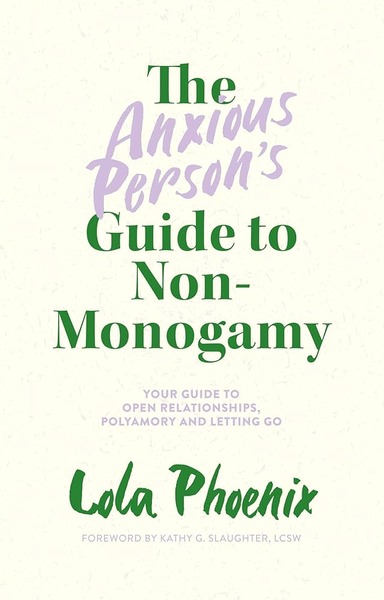
There’s not much to say about this book – apart from the fact that it was quite interesting in that it addressed non-monogamy from quite an empathic point of view. It was quite straightforward and pretty much a basic manual on non-monogamy but also on boundaries and the importance of having a healthy relationship with yourself and others. It didn’t tell me anything new from other books I have read about this topic but it could be an interesting one for people coming new to this.
Gender: A graphic guide by Meg-John Baker and Jules Scheele

Like the book above, this was more of a ‘manual’ – an informative book about gender and its history but written in graphic form – with plenty of colourful illustrations. Again, it didn’t tell me anything I didn’t know so it’s a bit more ‘let’s start with the basics’ kind of book but also a good one to recommend to someone who wants to get an overview of gender studies.
Something I took note of was the list of books (especially speculative fiction ones) which have touched on the theme of gender in one way or another. There were plenty I hadn’t read or didn’t even know of so these have now become an addition to my ever-growing ‘to read’ list.
Green Dot by Madeleine Gray

Not the kind of book I’d normally gravitate towards, but it was everywhere. Very similar in style to Greta & Valdin – so strange that I read such similar books in the same month! And even though I prefer Greta & Valdin, this was also an entertaining novel.
Green Dot follows Hera, a twenty-four-year-old who has never had a proper job in her life – having spent her years at school and then studying liberal arts at university. She feels like she’s drifting in life, almost aimless, so she decides to become a ‘proper’ adult and get a ‘proper’ job at an office that of course is completely soulless.
Hera as a character is very interesting – she can be self-deprecating but she also exhibits a lot of inner-confidence (in my opinion). She’s definitely someone I enjoyed reading about and I had no problem in spending all this book in her point of view.
The main conflict of this story (introduced basically on the first page) is Hera’s affair with a married colleague in the office who is also, as it turns out, her boss. Most of the book follows Hera having to book random hotel rooms during the day with her credit card (even if she is the one on a low income having to live at home) so it doesn’t show in his bank statements and the two of them can see each other.
I thought this book would be more of a comedy, and even though it has a lot of funny moments (for example, the online messages Hera and her co-worker at the office keep exchanging, both of them find very creative ways to say how much they hate their job) this felt, all in all, a really sad book. It captured the intensity of falling for someone inaccessible, and how a love like this can turn into an obsession that could end in a happy twist if this was a Hollywood movie… (but this book decided instead to take the realistic route, which is, of course, much more interesting to read, in my opinion).
I enjoyed how Arthur – the English man she has an affair with – is depicted in the story. In the beginning, he seems like a sweet, sensitive man. He’s respectful, great at sex and in love. He also explicitly states that he doesn’t want their relationship to end. But as the story goes on we start understanding that Arthur has no intention of leaving his wife and the comforts of his life (which, of course, is much better than the life Hera is living). We realise that for him Hera is possibly just something that adds a bit more excitement into his life – rather than a relationship he actually wants to pursue. Things get more difficult when (SPOILERS ALL THE WAY UNTIL THE END) he confesses to Hera he can’t leave his wife because she’s pregnant with their first child. She promises Hera he’ll leave her once the baby grows a bit and she can be a bit more independent. At this point, I knew, as the reader, that Hera had no chance, but she somehow deludes herself into thinking Arthur is telling the truth and that all is going to be fine – she even shops for baby clothes with him believing that she’ll get to co-parent the baby when Arthur leaves his wife.
Something I was asking myself all throughout was how Hera could be so gullible – how she could still like Arthur when he was clearly being such a terrible partner to his wife, indulging in an affair for months. There’s no honesty and integrity in that. But, at the same time, I suppose the point of the book is to show that over-consuming feeling of love and adoration for someone else from Hera’s perspective – and how this makes us behave in ways we don’t expect.
The novel includes an impromptu trip to England – with Hera trying to put as much distance between herself and Arthur, so she tries making a living in a different country, finding one of those ‘easy’ remote jobs in content writing one can do from anywhere in the world. At times I feel a bit frustrated by her because yes, it sucks that she has to do these soulless jobs but she also has a support system. She lives with her father, who is a nice and supportive presence in her life, and she has trusted friends. I get that jobs are soulless and that the working system is very, very flawed (but wouldn’t you want to change it, or escape from it? I guess the affair is Hera’s way of escaping all of this, in a way?)
In the end, she leaves him (finally! Yes!) and in the last scene, we see how pathetic Arthur can get (trying to approach her years after they’ve finished their affair, now with a toddler in tow, thinking he can still get away with it).
A bittersweet story about feeling lost in life and throwing oneself into an impossible relationship just to escape numbness. Sad, yes, but also relatable. Very well written. (If only there had been more queerness here though! Hera is described as bisexual in the blurb but there’s barely any exploration of her identity as such, which is something I was interested in when I picked this book…)
 Inés G. Labarta
2 thoughts on “Thrutopias: May 2024 Reading Log”