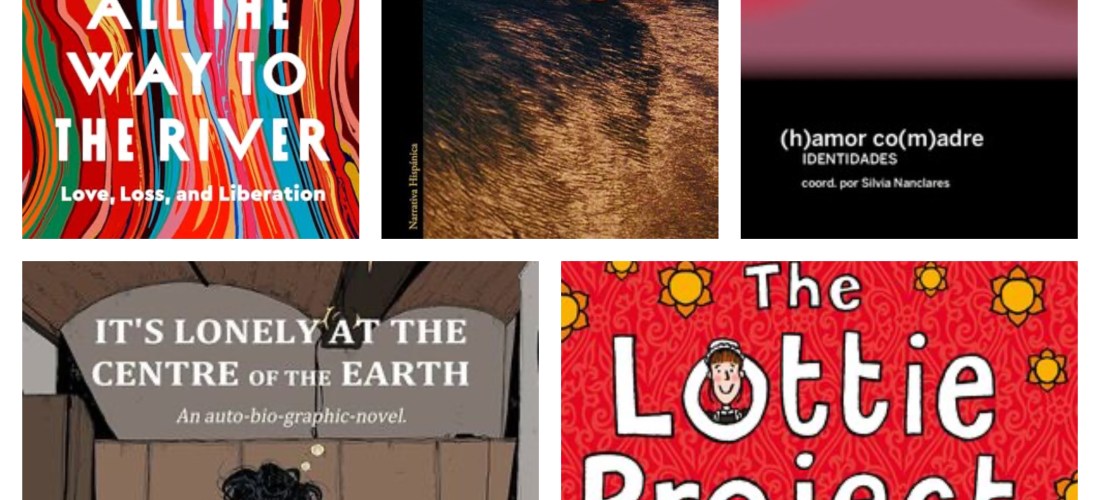

El Celo by Sabina Urraca

The writing of this book is frenetic, visceral and full of detail that is sometimes luscious and other times absolutely disgusting. It took me a while to finish this book because its themes – societal misogyny, sexism, abuse. It follows a female character – ‘The Human’ – who finds a female dog in the streets of Madrid and becomes her owner almost against her will. Taking care of another creature becomes a mammoth task, but The Human, who can barely take of herself as it is, is willing. What she’s not prepared for is her dog in heat – which comes with its own set of complications and pressures for her to handle this wild side of her animal.
As the book advances – often mixing different timelines, The Human as a child growing up in Tenerife, and also as a young woman trying to make life work in Madrid – a few things are revealed. First, that The Human is addicted to anti-anxiety pills she takes to numb a traumatic experience. Her doctor recognises her as a someone who’s suffered from the abuse of an ex-partner so he sends her to group therapy where she meets other women that are nothing like her (they are much older, much younger, they come from complete different places and classes) but that can understand her experience of being hurt by someone they love. The Human bonds with one of the members of this group – Mecha (is interesting to see that other characters are given actual names) – who becomes a friend, a bad influence, and a saviour.
I really enjoyed this story and thought the writing (in Spanish) was really good. It was an uncomfortable, claustrophobic read – which makes sense, considering the narrator is constantly surrounded by many ghosts, the ghost of her grandmother, who she adored when she was a child, but who died of dementia, the ghost of her ex partner, still controlling and frightening her even though they are not together anymore, the ghost of a still birth in the family which was never discussed or acknowledged, the ghost of her grandfather, who dies during the book right after confessing an unsettling truth, the ghost of the career she’s left behind in marketing, the money and the stability, as she tries to become a writer and recover from trauma, the ghosts of all the abusive lovers of the women from her group therapy sessions… and so on.
This is one of the books that makes me wonder about the boundaries between fiction and non-fiction. After listening to a few interviews with the author (she has a gorgeous voice, she works in radio often, which is no surprise) I understand that a lot of this is based in her own life and experiences. But the book has clearly been marketed as a novel, and the main character doesn’t even have a name, even though, like the author, she’s a writer, she has dog, and she lives in Madrid. (As an aside, it was so good to read a book set for the most part in Madrid, it made me miss so many places in this city, like the Casa de Campo). I’m really curious to consider what happens when we write auto fiction – what are the advantages and the drawbacks and to what point we can modify and embellish the reality – or even consider plot directions that never happened in real life but could have been interesting nonetheless.
For those of you who worry about the dog – the dog is fine in the end. I promise you.
(h)amor co(m)adre: Identidades, edited by Silvia Nanclares
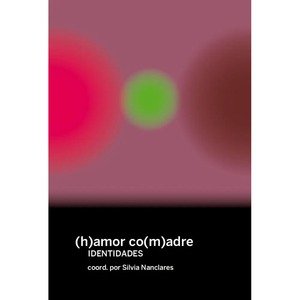
This is a collection of short essays from the Spanish publisher ‘Continta Me Tienes‘ which specialises in giving a space to books that ‘contribute to make the world a place where are lives are worth living, a world that is less hostile towards the weird and more open to enjoying beauty’. To reach this goal, they publish texts on feminism, non-monogamy, LGTBQIA+ and the scenic arts.
This collection in particular shows the different experiences of parenthood that go beyond the idea of the nuclear family. There are essays about bringing up children with a community of neighbours and family. Essays about the experience of non-binary and trans parents. About two gay parents who have adopted a son. About an artist who decides she wants to become a single mother and is taking care of her daughter with the support of her friends. About a woman who feels the pressure of having children (as most women do!) the moment she is in her thirties but realises she doesn’t want to – even though her best friend is a new mother, showing her all the potential beauty and positive aspects of this experience. There are stories about infertility and about navigating the healthcare system when one parent is trans and the other is intersex and one of their twin babies has to stay in the NICU.
It was very refreshing to read these experiences in Spanish and to read about parenthood beyond the (in my opinion) frightening and isolating ‘mother and father’ pairing. I’m very interested in this collection and will definitely more titles. (And feel very proud that essays like this are being written and published in Spanish!)
It’s Lonely at the Centre of the Earth by Zoe Thorogood

This graphic novel had been on my shelves for a long time. I bought it after reading a few reviews, specially interested in the topics it covers (the artistic process and struggles with depression and suicidal ideation). This is also a graphic novel that I often hear students from my Writing Graphic Novels course at the university mention as one of their favourite ones, so I was very curious. I’d already read Thorogood’s previous work – The Impeding Blindness of Billie Scott – which I enjoyed (and which covers somehow similar themes). That said, I have to confess I wasn’t prepared to like this book as much as I did.
First of all, I was worried that this comic would be too bleak and that I’d have trouble enjoying it because of that. This has been a hard year for me mental health wise (because of a series of events beyond my control) and even though I normally don’t mind heavy and dark subjects I’ve been feeling a bit more fragile recently. Was this comic hard to read? Yes, sure, at points it was. Was it absolutely brilliant at the ways it dealt with these hard topics? Absolutely.
I don’t even know how to describe this story. It’s like getting inside the author’s head as she herself goes through a particularly hard year. She’s doing what she loves the most (drawing comics) but the pandemic is in full swing and she lives a life of extreme isolation in a small flat in Bradford. She’s been struggling with depression and suicidal ideation since she was a child, and the fact that these topics are often considered taboo by families (I relate to this) or are dealt in a pretty much inhuman way by certain systems (the school system and our very much needed but very much overloaded and underfunded public health care systems) doesn’t help much.
Thorogood navigates all of this through the graphic novel form – a hard year, made much harder when a professional trip she’d been looking for to the States gets cancelled and a long-distance relationship she was in starts to crumble. This book is such a great example of why comics can be excellent at what they do – because I don’t think a story like this would have worked as well in other media. At the beginning, for example, Thorogood introduces the readers to a series of alter-egos to explain her mental struggles. Some of them are easily recognisable (like a young and prone to fits of crying version of herself) but others are really interesting like the quick caricature of a bald guy with a permanent shrug who represents Thorogood’s self-deprecating side. Depression is also personified as a looming, growing dark monster with a terrifying smile that follows her everywhere – including a family holiday. During this event, Thorogood uses video games to explain the complicated family dynamics. Her mother has always suffered from depression, but this is something the family avoids talking about. As she spends time with her parents, as an adult, she needs to moderate her behaviour so they don’t notice it when she’s going through a depressive episode. Being with them becomes a game: the parents have a ‘suspicion bar’ over their heads – which starts filling up every time they observe some ‘trace’ of depression in Thorogood’s behaviour. When the bar gets filled, Thorogood knows she’ll be in trouble.
During other parts of the story people close to her – such as her best friend, or a romantic interest – have animal heads instead of human heads – an excellent way of assuring they stay anonymous while still showing things about their characters. In the end, at least to me, this is a great story about an artist having very serious struggles with mental health. Not talking about these things or trying to hide them as shameful or as something that makes us weak is its own poison. I think there’s something to be gained by talking about them and using them to inform the stories we tell.
All the Way to the River by Elizabeth Gilbert
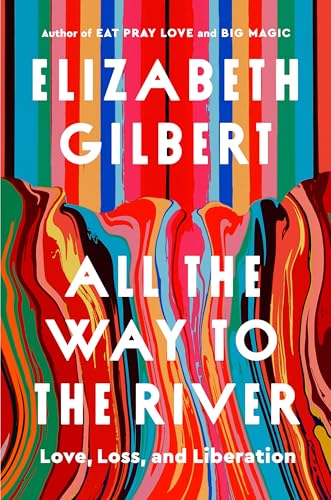
I’ve read a few of Gilbert’s books. Eat, Pray, Love kept me company during some hard moments in my life and managed to transport me to to a different reality – even though I didn’t find it specially meaningful or life-changing, it was just a fun read. I enjoyed Big Magic and I actually used some bits of it to initiate useful discussion with my Creative Writing students. Specially on the idea of creativity, fear and rejection. City Girls was my first Gilbert’s novel – it came out when I was working at the bookshop so I got a free copy (sent to the shop by the publishers). It was another fun, light read. Gilbert writes well, so it’s not difficult to get lost in her stories.
I picked All the Way to the River because I was curious by its themes – death, addiction and grief. It tells the story of Gilbert as she falls in love with her best friend of many years, Rayya, and then cares for her as Rayya relapses into addiction and suffers from cancer and finally dies. In the midst of it all, Gilbert realises she’s also an addict – a sex and love addict (something that she repeats and muses on throughout the whole book).
This was a specially gruelling read, since it focuses on the disintegration of a once loving relationship because of addiction – plus, it’s also a story about watching someone you love wither through a terrible illness. At times it was difficult to empathise with Gilbert, because she’s so rich (thanks to her extreme literary success) that she’s the kind of person who can just buy a recovered church as a house, decide that is not large enough for her and her husband as they both work from home, and then pretty much ‘gift’ the church to a friend (Rayya) who has just lost her New York apartment. I mean, I can’t even imagine the level of wealth. Other bits are also strange – for example, Gilbert swearing to us readers she didn’t notice that Rayya had a relapse even though she was an alcoholic drinking wine and liquor (but promising it was for health reasons and saying that her doctor had encouraged her to do so?) Gilbert maintains that this was partly because her own love and sex addiction – that the only thing she cared about was being loved and admired by her obsession / her friend Rayya to the point she was ready to forget everything else.
The narrative in the book is combined with Gilbert’s diary extracts in which she writes (or you could say, prays) to God and then channels a sort of divine voice. This voice is amusing, direct, always loving. Even though it got a tad irritating for me to read I can see how this writing was an essential part of the author’s process – a way of connecting with her intentions and meditating on life in a way that is not as clouded by fear, anxiety or bitterness.
Gilbert doesn’t show herself in a good light in this memoir – and tends to be quite honest about her flaws. At some point in the book, when Rayya has gone so deep into addiction that taking care of her as a terminally ill patient is becoming impossible for Gilbert, she starts making plans to murder her. She is so lost in her own life and circumstances that she sees no other way out than literally killing her lover. I was quite shocked when I was reading it – who would want to admit something like this while still claiming that the person they once wanted to murder will forever be the love of their life? Well, a love and sex addict, that’s who, Gilbert states in her book. Other parts of the book – specially those in which Gilbert suggests she can ‘hear’ Rayya’s voice after she died, a loving and caring Rayya who is ready to forgive everything and who is still the love of her life felt a bit forced – almost as if she was giving Rayya a perspective in the narrative – which seems a bit unnatural seeing as this is Gilbert’s memoir and Rayya is now dead and can’t talk about it.
All in all, this was a fast and entertaining read – I am interested in reading about death as well as about caring for someone we love who is going through this process. But there was something in it that didn’t quite sit well with me – perhaps Gilbert’s initial naïvety, or the way in which she adequately ‘fixes’ herself after this terrible experience.
The Lottie Project by Jacqueline Wilson
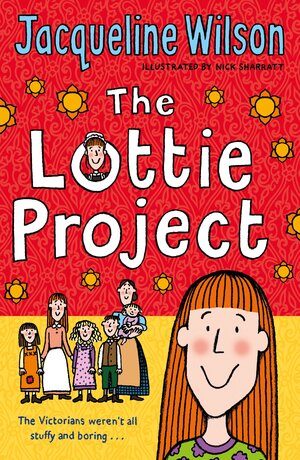
I bought this book years and years ago because I read it as a child (I was probably a pre-teen, if I remember correctly) and it was one of those novels that made me want to become a writer. I read it in Spanish, of course. I think it was at my primary school library and I loved it so much that I begged my mother for my own copy. Back then, I read it many, many times. I think what I loved the most about it was its combined timelines and narratives – it was one of the first times I saw something like this done in literature.
The story follows Charlie, a sassy eleven-year-old who lives with her mum, Jo, (a teenage mum, who had Charlie on her own after Charlie’s father refused to take care of her daughter) in a tiny flat in London. As a new school year starts Charlie gets a teacher who is serious and severe and sets a very boring term task: every student has to write about the Victorians. Charlie, who’s normally the class clown and doesn’t get along with the teacher at all initially finds this project really boring. But she soon comes up with the idea of writing the fictional diary of an eleven-year-old girl (Lottie) during Victorian times. And she soon becomes obsessed with the project – using Lottie to explore things that worry her in her own life.
Now, Charlie’s life is far from easy. At the beginning of the story her mother, Jo, gets made redundant from her job as a shop manager from a chain that sells kitchen appliances. Jo doesn’t get along with her own parents, who are more worried about appearances than anything else and see Jo’s single motherhood experience as a failure. To make ends meet Jo has to get several part-time jobs, including a baby-sitting gig for a man who is recently divorced and has a six-year-old son. When Jo starts to develop feelings for this man (and it looks like they may be reciprocated) Charlie starts to worry that her relationship with her mother (who is her best friend) and the life they have (which, in Charlie’s eyes, is ideal) may be compromised.
Reading this again I was reassured to find out that I still loved this book. I understand much more of its social context too – since by now I’ve been living in England for eleven years. There are so many plays on words here (specially when Charlie chats with her teacher, Miss Beckworth) that I wonder now how the Spanish translation handled this. I still love Charlie’s character (she’s a pretty cool model for a pre-teen to have, because she’s brave, and direct, and she’s not ashamed of her quirkiness). But, unsurprisingly, I found myself feeling understanding towards her mother, Jo (worried about how to pay her mortgage now that she’s made redundant) and her teacher, Miss Beckworth (who, I have to say, handled Charlie, a challenging student, brilliantly). I still think that the idea of the two connected timelines is one of the best things about this novel – which is so, so good that it makes me want to try and write my own middle grade fiction.
 Inés G. Labarta