

Queenie by Candyce Caty-Williams
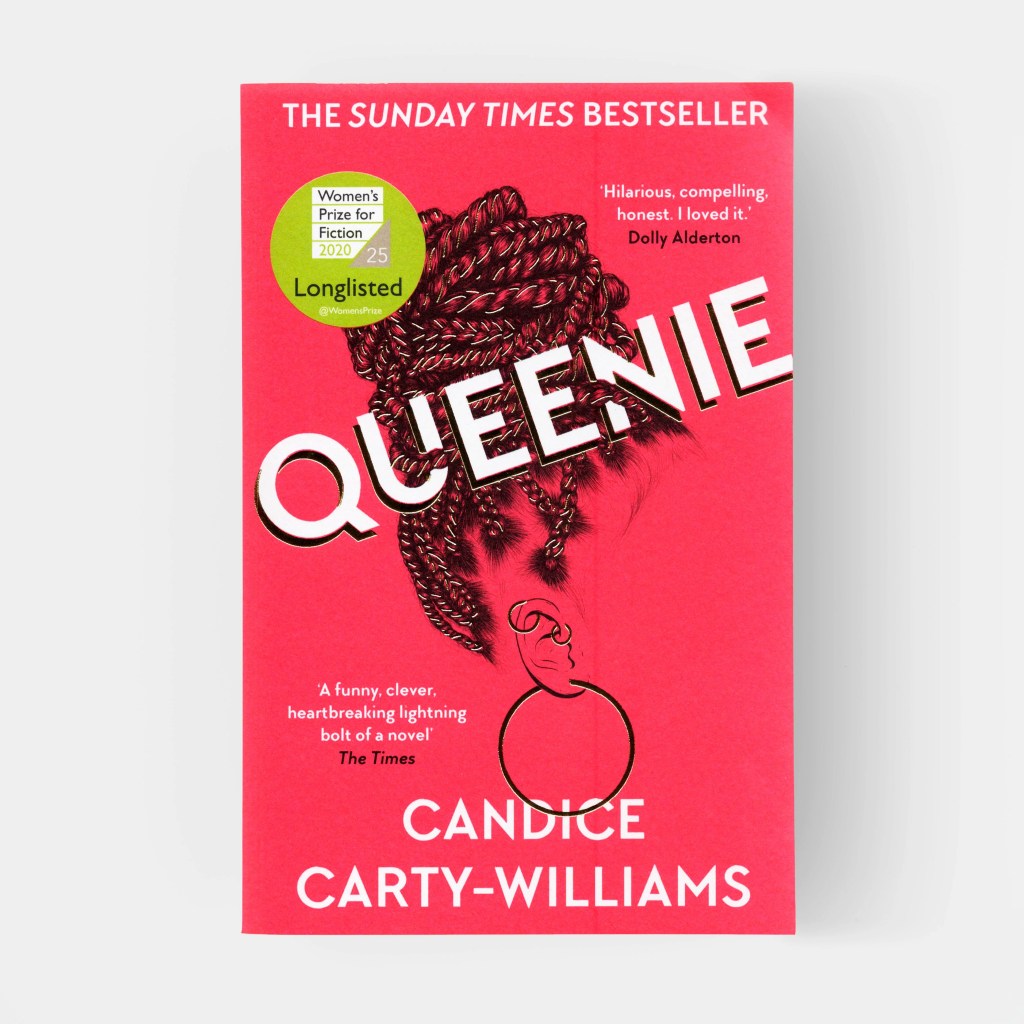
Perhaps because the cover I have of this book is neon pink I was convinced it would be a sweet romance but this ended up being much darker and dramatic than I could have anticipated. Also, I loved this book much more than I thought I would, even if I sometimes wanted to scream at the main character (red flag, RED FLAG! RED FLAG!!!!!)
Queenie is a twenty-five-year-old English girl from a Jamaican family living in London. She has what many of us would consider a dream job – she works as a writer for an important newspaper. She has a group of supportive friends. She lives with her white boyfriend in a flat they rent together. All seems perfect but it couldn’t be further from the truth. She’s struggling with her relationship – her boyfriend is slowly breaking up with her, saying she’s ‘too intense’ and accusing her of always messing up things with his family (who are a bunch of, well, entitled racists, for the most part, but also the kind of racist people who would openly deny being racist…) She may not be able to be who she really is around her family. At work, her bosses would discourage her from writing anything remotely political or critical because they don’t think there’s an audience for it. As for her friends, not all of them are as supportive of her as it may seem; her friend Rebecca for example seems to secretly enjoy lending her money whilst at the same time questioning a lot of her life choices (for context here, Rebecca is white from an affluent family, Queenie is the first person to go to university in her family and has been brought up by her grandparents and her aunt as she has an absent mother and a father she never knew).
As her relationship with her boyfriend disintegrates Queenie goes on a self-destructive dating spree, going out with men that are all kinds of wrong (special shout to Guy, the doctor, who I found especially revolting).
One of the best things about this book is actually its realistic and nuanced depiction of mental health and, in this case, PTSD and panic attack disorder. Queenie comes from a family that has been through a lot. Her grandparents, born in Jamaica, are from the Windrush generation, and old-fashioned in many ways but they love her (even if they absolutely don’t believe in mental health and almost stop talking to her when she suggests she may go see a therapist). There is also something wrong between Queenie and her own mother (she never got to meet her father) who lived many years with an abusive partner who ended up beating her up almost to death and stole all her money. This particular story is sad, and shocking when it’s finally revealed towards the end (especially when we learn about how this affected the main character).
But Queenie is not only being influenced by what happened during her childhood: she’s also a black woman living in England constantly experiencing microaggressions. The scene where she goes to the swimming pool for example is particularly hard to read. Also, most of the men she dates don’t even try to hide how they fetishise her because of race and see her as a woman they can have sex with but would never consider as a partner (pure objectification, sometimes particularly violent). This book, which was published before the Black Lives Movement of 2020 (Queenie came out in 2019) already makes a powerful call at how racism is ingrained in society and impacts negatively the mental health of those who suffer from it (as any form of oppression would do).
This was a book well-written and entertaining, with a pacy plot. It didn’t try to embellish things and focused on characters who are flawed, who do wrong things or make the wrong choices and yet some of them you can’t avoid love. Very funny on occasion, like a comedy of manners, although dark and disturbing at parts (this is a story about someone who is suffering from PTSD, after all, someone who has been gaslighted by so many throughout her life). A lot of Queenie’s journey is about fighting against prejudices (against the men who objectify her, against those in her family who think she’s not suffering from depression but just not trying hard enough). It reminded me of books such as Detransition Baby by Torrey Peters which I adored – which managed to hit the balance between harrowing tragedy and comedy, whilst being a sharp sociopolitical commentary. I definitely recommend and I have another book from Caty-Williams in my list to read.
Nijigahara Holograph by Inio Asano

I knew Inio Asano through his A Girl on the Shore duet – which, in my opinion, is a nuanced exploration of teenage desire. And also through Solanin, which focuses on the existential anguish of a group of friends who leave university and end up having soulless jobs they all hate. This was completely different – instead of being strictly realistic Nijigahara Holograph blends in horror, the speculative and even a dash of dark mythology.
The plot follows a group of people, students and teachers in the same school, through different timelines. What unites it is a story of trauma – they were all classmates or teachers of a young girl who appeared dead at the bottom of a well – the official story is that she died of suicide, but of course, the truth is much more complicated than that as she may have been murdered.
What ensues is a really dark and bleak story. We have the little girl who died, who was abandoned by her mother (who also ended up turning up dead years after) and has an abusive father. We have a school teacher who doesn’t enjoy her job anymore and has suffered a brutal injury that has made her blind. She was attacked by someone (a stranger? someone she knew?) more or less at the same time her student appeared dead. We have a young boy who is new at school and struggles with a very bad case of depression – when his classmates learn that he jumped out of the window from his previous school they don’t hesitate to bully him because of it. We have another student, seen as a bully by both students and teachers who was secretly in love with the dead girl, and also ends up mysteriously attacked and thrown into the same well, even though he ends up surviving the fall (but struggling with the consequences of a head injury all his life).
I often enjoy stories that blend in different timelines and force you to pay attention to even the smallest of details so you can put all the pieces together at the end. The atmosphere throughout this story is also very well made – the little town can seem so sinister. The violent dynamics within the classroom are also very interesting – this is a book that shows how children are capable of unspeakable cruelty. All in all, this is a story that questions social responsibility – it’s not only those who perpetrate violent acts but also those who stay quiet and don’t challenge them.
At parts, the level of bleakness got almost unbearable – especially when some of the ‘secrets’ some of the characters were keeping started to be unravelled and turned out to be much worse (in many cases) than what I could have imagined. In a way, I suppose this is also a story that talks about how violence and trauma can often generate more violence and trauma when passed down through generations. The children of this story do horrible things, but they also come from abusive households, or households where that don’t give them any form of moral support.
I enjoyed the speculative element and the mythology aspect very much – there is a legend associated with the well where the girl dies that is simply terrific (a legend which also talks about the dangers of using an individual from a community as a scapegoat, no matter how convenient this may be from everyone else).
I did have to read the ending a few times because the timelines had got too confusing and I felt I was missing important details to understand everything. Afterwards, I had to check on the internet to see what people thought of this story – and I think you can come up with different theories. This is a very ambitious piece of work – and it did remind me a bit of Junji Ito’s work in terms of its horror elements. Although, I have to say, in Asano’s work the real horror is definitely all rooted in reality.
Even though it is at times difficult to follow, and it demands attention from the reader, I found that this story made an impact on me. I still think about it (a month after reading it). It was so bleak that when you finish the book you feel dirty inside, like you need to take a shower, or maybe hug someone you love to remind yourself that we humans are also capable of good things. (I can’t say I mind, this is what some of the best horror does, I suppose) Definitely recommend it if you like horror and complicated plots.
Splinters by Leslie Jamison
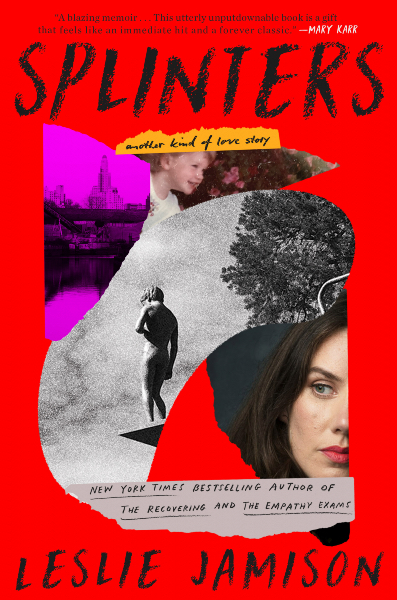
I read a few essays by Jamison before and I found this book – her latest – at a bookshop when I was in California. I picked it up because since reading authors like Olivia Laing and Paul B. Preciado this year I’ve been really interested in creative nonfiction.
Jamison is a very good writer who manages to express very complicated, emotional and intimate things with impressive lucidity. Her work has a greater focus on her own life definitely than that of Laing and Preciado, but it’s not less interesting because of this. In this book, Jamison writes about her experience of becoming a mother more or less at the same time as she decided to get a divorce. So this is a book about love, I suppose, love that starts, love that ends and everything in between.
If I had to summarise the ‘plot’ of this book would be something like this: a woman has a baby and falls in love with her while falling out of love with her husband. There’s something really interesting here: how Jamison describes her experience of motherhood, which is of course full of challenges – she has quite a traumatic birth, she travels all over the country with her baby while giving talks and doing promo with a book so she can breastfeed… etc. And yet, this experience of motherhood turns out to be something much more intense than she could have ever anticipated. At some points in the book Jamison talks about literally falling in love with her baby daughter, about feeling that she can learn so much from her – about playfulness, about being able to live in the moment. At the same time, she writes about the relationship with her husband, also a writer: the intensity of the first days and years of the relationship, and how things start falling apart even before they have their first child together.
When she decides to ask for a divorce, he is shocked – I suppose it is because the reason for this break up is quite a painful one to hear: Jamison has just realised she doesn’t love her partner romantically anymore and that she prefers to live on her own with her daughter. He turns aggressive on her and at points, his verbal abuse towards her is quite hard to read – I was really interested to see how Jamison wrote about this, which is her truth of the events… but at the same time, well, I suppose her ex-husband is not portrayed under the best of lights, even though she writes several times how he is such a great father to their daughter. (I remember listening to Jamison speak in an interview saying that she does send drafts of her work to people in her life she’s writing about, and she takes suggestions from them but in the end, she, the author, is the one who decides which things stay in the work and which things are taken out, meaning that her readers can’t really veto stuff).
This idea – women realising they don’t need a partner I suppose – is so interesting. I mean, who would want to become effectively a single mother when you have a baby who is not even a year old? It seems a very challenging position to be in, and yet. This links with some ideas explored in a book I’ll write about for next month — Good Material, by Dolly Alderton – which is also the story of a break up between a man and a woman, both in their thirties, for some similar reasons (she’s just fallen out of love, there’s nothing else more terrible or dramatic).
Another theme Jamison writes about, quite candidly, is friendship – how she turns to her friends when she’s struggling in her marriage, and how actual conversations with said friends make her realise that she doesn’t want to keep trying hard in her marriage but dissolve it instead because she doesn’t love her partner anymore. She also writes about having to negotiate a temporary break-up with one of her best friends – who needs a bit more space because she feels that Jamison is dumping all her emotional distress on her almost constantly and she needs a bit of a rest. I enjoyed reading about this because, again, people have written so much about romantic relationships and the phases and challenges they go through – but there’s not enough out there about friendships.
Finally, there’s also quite a lot about Jamison’s work as a Creative Writing teacher at university, focusing on creative nonfiction. I enjoyed reading about her experience – I like to be as private as I can with my own students, and I can’t imagine ever writing so honestly about my own life (and then assuming that they may have read about this!) but then again I suppose it can be done, to negotiate this in a teaching environment. I loved the scene when Jamison invited all her students to her house for a little celebration – again, something I don’t see myself doing, at least not at this point, but I found it interesting because a lot of the mechanics of the workshop are based on trust and building community.
A book about motherhood, love and writing. Honest and filled with so many visual and gorgeous details (but not idealised, as I said before, Jamison shows the good, the bad and the ugly in herself and those who surround her).
Querido Capullo (Dear Jerk) by Virginie Despentes
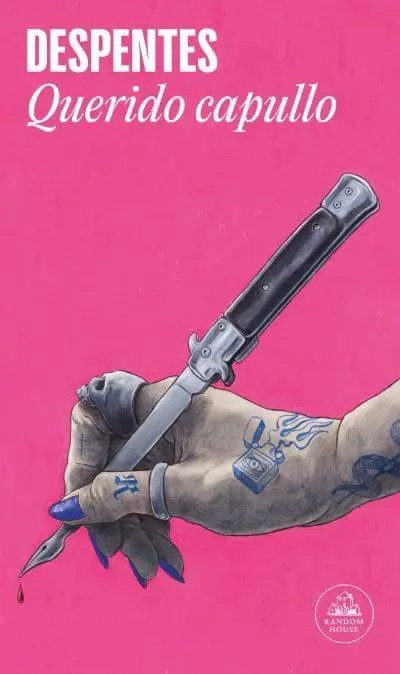
My first fiction book by Virginie Despentes – I read her non-fiction book King Kong Theory last year and absolutely adored it, I think everyone should read this very thought-provoking collection of essays on feminism and gender. I was wondering if Despentes was going to be as good at writing fiction as she clearly is at writing non-fiction and I’m glad to report she doesn’t disappoint.
This novel is her most recent one, and it is definitely a story about our times that reflects on things such as the #MeToo movement, the COVID-19 pandemic, and the fragmentation of the feminist movement, amongst other things. This is also an epistolary work composed of the emails the two main characters send each other, very occasionally interspersed with blog posts from a third character. The epistolary form is a favourite of mine – I love the unreliability and the intimacy of it – and it was the right vehicle to explore the psychology of these two characters who couldn’t be more different from one another – and yet, they end up becoming almost friends.
One of the main characters is Oscar, a writer of a certain fame who has managed to make a living for most of his adulthood by writing crime fiction that a lot of people like. His whole life goes upside down when one of the editors he used to work with comes forward saying that, ten years ago, he harassed her; nobody did anything for her at the time and she ended up quitting her job and suffering a lot of mental health issues because of this. Oscar of course doesn’t remember it that way (even though back then he was almost always on drugs and doesn’t remember much, this was also the time when it seemed he was going to become THE writer of contemporary French literature, so he was under a lot of pressure). After this editor’s declarations, everyone shuns Oscar (including most of his contacts in the publishing world) and he feels his life (literary and otherwise) is over.
The other main character is Rebecca, the fifty-something-year-old actor who enjoyed a lot of fame when she was younger (and was considered a sex icon). Now that she’s not young anymore, she finds that almost no one wants to give her interesting roles so she’s disenchanted with her career. She’s happily unmarried and childless by choice. She’s also an outspoken feminist and has no qualms in calling out Oscar’s bullshit (who at the beginning of the book sees himself as the victim of an unfair conspiracy, although, as the plot advances, we, and he, realise that there’s a lot to be reckoned with).
Even though at the beginning the emails Oscar and Rebecca exchange are quite abusive (he leaves her a very offensive comment on her Instagram, and she replies with a direct message telling him to basically fuck off) they soon discover they have some things in common. For example, they both grew up in the same working-class neighbourhood and Rebecca was a very good friend (even lover? maybe?) with Oscar’s older sister – an outspoken lesbian he doesn’t get along with.
They are also both struggling with a lot of disenchantment in their careers – they have both been cancelled out, him because of the allegations of harassment, her just because of her age. And they are also addicts – this becomes significant at the point in the book when Paris goes into lockdown and they are both forced to realise that they have a very unhealthy relationship with alcohol and drugs. Even though they don’t want to become ‘boring sober people’ (Rebecca is especially adamant about this) they both go through journeys of recovery and sobriety throughout the novel (yes, this is one of those books in which characters, with a certain privilege, realise that the pandemic is actually being a good thing for them).
Zoë is the third character – the woman Oscar harassed ten years ago – who is using social media to spread her story and extend her support to other women who had been abused and harassed by men – and were made to go quiet, or were gaslighted. Through her we discover the terrifying world of social media (although I think that the fact social media can be terrifying is no news to anyone anymore) – and how quickly people can make heroes or villains or those who put themselves and their stories out there. And more specifically, how women can be so quick to judge and condemn other women too, so brilliantly that other groups of society (i.e. misogynists, incels and the like) can take the backseat and enjoy without even having to put the effort in anymore.
I loved so much about this book – the writing style is fast-paced, full of anger, and intense, unashamed. I enjoyed reading about cancelling culture, for example, and gender, and how it plays out in the arts. This book uses a lot of Despentes’ thinking – her characters use feminism but also struggle with it – as I said, at some point, Rebecca points out that women judge other women with the same violence as men, and become as abusive, if not more, towards their own kind.
I loved how Rebecca reflected on feminism herself – especially how she discussed the way violence against women (I’m including here femmes too) is so ingrained in our society that has almost become invisible. One of the things she mentions in one of her first letters that I found poignant was that if bosses started abusing their employees and killing them there’d be an uproar in French society – but when it comes to men abusing women the story is a bit different (it’s so easy to think that women may have done something to deserve that abuse or forget the gender power dynamic…)
A brave and intense book, very politically aware. I loved that it connected these two characters who are so different and reflected on the kind of dialogue they could create – and how they could change each other because of that. There are no good ones or bad ones in Despentes’ fiction – which I think, again, is brave, and inspiring. I personally ended up empathising with the character of Oscar at the end, which surprised me. Despentes is a great writer, and a generous one, too. I read her work translated into Spanish – and I wish she was more famous in English, to be fair, she definitely deserves it (I’m not sure this novel is even translated into English yet, which is a tad frustrating).
 Inés G. Labarta
One thought on “There’s more than one side to a story: June 2024 Reading Log”