

Toto Among the Murderers by Sally J Morgan
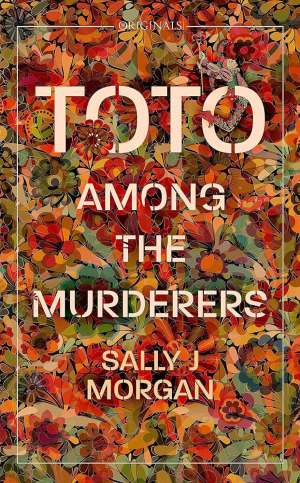
I picked this book because it was intrigued by its premise: it’s partly based on the encounter its author had with the infamous murderers Fred and Rose West in the 1970s. Sally J Morgan was a young girl hitchhiking who decided not to get in their car – but was impacted by the encounter – as she later learned what she had really escaped from.
This novel is about women, the relationships they share, and the sexism and cruelty they faced in 1970s England (which actually, still feels pretty relatable these days).
The story follows two main characters living in Yorkshire. Toto is an artist who doesn’t know what to do after uni but doesn’t really care much. She goes with the flow, following her friends and flatmates Nel and Jo. The story starts when the three girls get to the house they’ve just started renting in Leeds. It’s cheap and spacious, but it’s also on one of the worst neighbourhoods in town, the kind of place where you wouldn’t want to be walking around on your own, especially as a young woman, and especially at night. (In one of these scenes in the novel Toto and Nel are coming back home from the pub and get harassed by a man who thinks they are sex workers).
The second character is Nel, Toto’s best friend, who’s also studied art and specialises in textiles. After uni, Nel has decided to leave her passions on the side and focus on something more practical, that is, getting a teaching training that will allow her to teach arts in schools. She’s doing this partly because her parents’ pressure – she’s an only daughter, and they want her to be fine – and also because her boyfriend Simon thinks that would be a great way for both of them to get some proper income while he focuses on his real art.
Simon is a truly obnoxious character: a self-involved young artist who only cares about his craft and who is abusive towards Nel (psychologically and physically) because he sees her not as an equal but as someone who exists to facilitate his life. I’d like to say that I hated Simon because he was a bit of a caricature of that tormented / thinks he’s brilliant young male artist but, actually, there have been so many relationships such as this one between couples of creatives (for example, Edward Hopper and Josephine Nivison, I read about them in a book I’ll review next month, The Lonely City by Olivia Laing). At points I did wonder why Nel was putting up with Simon’s nonsense (he’s literally living at her expense while being awful to her) but then I realised that I’d also felt, as a young woman myself, that I wasn’t truly complete or real without the validation brought by a stable male companion. It makes me feel ashamed now, but somehow I had that stupid belief ingrained in me, the same way Nel did.
Toto and Nel are almost on opposite paths but they’re both running away from something. Toto ends up in an abusive relationship with an older woman, Callie, who is in an open marriage. Callie is such an interesting characters – one the one hand it’s clear that she’s queer – as she prefers to take female lovers, even though she’s married to a man. On the other hand, she’s dealing with her own issues, and soon becomes incredibly possessive of Toto going as far as to hide Toto’s shoes so she can’t leave her the house (let’s remember here that Toto is a broke woman out of university who doesn’t have a regular job or the support of her family… she doesn’t have much money at all).
Even though they move in different spheres, violence follows Toto and Nel. Still, everyone is always joking that Toto is the one who’s truly tempting destiny by her free-spirited ways, drinking as much as she wants, sleeping with whoever she wants and hanging out with all sorts of people.
Toto, however, doesn’t see it this way. She’s been trained by her father, a former soldier, to respond to any possible attack. In one of my favourite scenes, Toto defends her own choice to hitchhike to places (in part because she’s broke and she doesn’t have the money to use any other kind of transport, in part because she’s really oblivious and keeps missing the chance of getting the rides her friends offer her):
‘I love hitchhiking. I call it jaunting. Now everyone who knows me calls it that too. Some of them thinks it’s brave and funny, others think it’s stupid and irresponsible.
Hank’s still observing me.
‘You know I know how to kill, don’t you?’ I lean towards him with a smile.
He rears back in pretend alarm. ‘Is that right, Toto?’
‘I’m serious,’ I say. ‘When I was six, my dad taught me the hand-to-hand defence he learned in the Air Force.’
‘You’re fucking kidding!’
‘I’m not kidding. He was air crew. If they got shot down in enemy territory, they had to escape without leaving witnesses. All he knew was how to incapacitate and kill, so that’s what he taught me. I could break your fingers in one move, and I can gouge out an eye like nobody’s businesses. If I chop you in the temple with the side of my hand – you’re dead, pal.’
‘Fuck off.’ I can see he’s not sure if I’m lying.’ (p. 58)
After this (and spoilers ahead) we get a great scene in which Toto goes to a party and gets incredibly drunk. So much so that she goes up to one of the bedrooms and drops asleep in the bed. It turns out the bed belongs to a young man that has been eyeing her for a long time. When he discovers she’s there sleeping and very drunk he decides to sexually assault her. Things don’t go as planned when Toto actually gets up and fights him back, actually breaking his finger.
The story gets more surreal as Toto tries to make her way to Sheffield where Nel and Jo have gone to spend their time off from the teaching training. She ends up having to hitchhike all the way meeting a varied array of characters, including two runaway prisoners – both young boys who paradoxically are not threatening but very friendly towards her.
The encounter with Fred and Rose West happens at the very end and is truly terrifying, and very well written. The ending has an unexpected queer romantic twist which I personally loved. Nel finally leaves Simon and Toto reaches home alive (even though scarred by her hitch-hiking nightmare).
A dark yet joyful book that features many unforgettable scenes (such as Nel’s childhood memory of her mother cooking a full heart for dinner for her and her father being hurt after the father’s infidelities! I did wonder if that one was also based on a real story!)
Babel by Rebecca F. Kuang

I’d heard a lot about this book – people telling me they loved it, people telling me they were not all that impressed with it. But it being fantasy, dark academia and having translators as the main characters… well, I had to read it.
This is the second book I read by Kuang and one thing is for certain: she knows how to write, and she knows how to plot very well indeed. As Yellowface (which couldn’t, in a way, be more different) this was a quick and intense read.
Let me start by saying what I love. First of all, the atmosphere of this alternative version of Oxford as heart of the British Empire where the main power is held in a special tower inhabited by translators. Because in this magical world people can make magic thanks to translation. It seems bonkers but it’s also a really cool and a truly original magic system once you start to understand how it works.
The book follows a young man, Robin, originally from China, who has been adopted by Professor Richard Lowell after his family dies in a typhus epidemic. Soon into the book we realise that Professor Lowell’s motives to save and adopt Robin are quite selfish – because of his ability of being fluent in two languages, Cantonese and English, Robin is a very powerful too for the British Empire. This is why Professor Lovell invests in his education – which focuses on the learning of Mandarin, Greek and Latin – so he can also get a place in Oxford as soon as he’s of age to attend the school of translators.
Once he gets to Oxford, Robin develops a strong friendship with the other three students of his cohort, Rami from Calcutta, Victoire from Haiti and Letti, from England. While in the school, the four of them learn everything there’s to learn about the arts of translation. I found this side of the book fascinating as someone who speaks different languages and is proficient in two (English and Spanish). I’m not the greatest translator and I have always found it so complicated (even when I’m trying to translate my own text). I also can imagine that these discussions are perhaps things Kuang heard or thought of herself as a multilingual writer, perhaps as she was a postgraduate student in Oxford.
The following scene of a class taught by one of the professors is also reminiscent of the translation classes I took as an undergraduate when I was studying languages:
‘… This is the ongoing debate of our field. Schleiermacher argued that translations should be sufficiently unnatural that they clearly present themselves as foreign texts. He argued that there were two options: either the translator leaves the author in peace and moves the reader towards him; or he leaves the reader in peace and moves the author towards him. Schleiermacher chose the former. Yet the dominant strain in English now is the latter – to make translations sound so natural to the English reader that they do not read as translations at all.
‘Which seems right to you? Do we try our hardest, as translators, to render ourselves invisible? Or do we remind our reader that what they are reading was not written in their native language?’ (…)
‘But what is the opposite of fidelity? (…) Betrayal. Translation means doing violence upon the original, means warping and distorting it for foreign, unintended eyes. So then where does that leave us? How can we conclude, except by acknowledging that an act of translation is then necessarily always an act of betrayal?’ (p. 152-153)
And here there is an explanation of the magic system in the book:
‘No translation can perfectly carry over the meaning of the original. But what is meaning? Does meaning refer to something that supersedes the words we use to describe our world? I think, intuitively, yes. Otherwise we would have no basis for critiquing a translation as accurate or inaccurate, not without some unspeakable sense of what it lacked (…)
‘That pure realm of meaning – whatever it is, wherever it exists – is the core of our craft. The basic principles of silver-working are very simple. You inscribe a word or phrase in one language on one side, and a corresponding word or phrase in a different language on the other. Because translation can never be perfect, the necessary distortions – the meaning lost or warped in the journey – are caught, and then manifested by the silver. And that, dear students, is as close to magic as anything within the realm of natural science.’ (p. 156)
The plot is gripping from the very first sentence and it only becomes more and more gripping as the book advances. That said, something I’d have liked to see more of here is character development. Which was pretty much what I thought of Yellowface.
For example, I found the characters of Victoire and Letty were only superficially explored. I wanted to know more about them and towards the end (spoiler here) Letty seemed like a very plain classic villain and also precisely the kind of character who you would expect would betray the gang.
The end was also shockingly dark (I was definitely not prepared for it) and yet I think I’d have had even more impact in the character of Victoire had been developed further.
But, all in all, this is a book that I read in barely a week – (for context, it has 500+ pages) and I enjoyed a lot, especially for its original magic system, the way it engages with the horrors of imperialism, and its gripping plot.
Novelist as a Vocation by Haruki Murakami
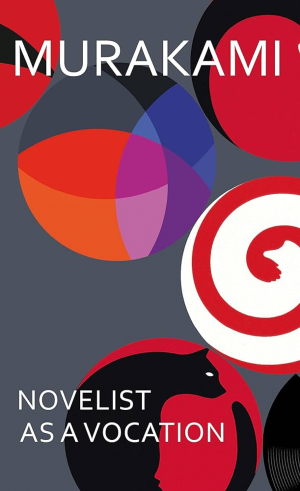
I used to love Murakami when I was a teenager, and if you’d have asked me then I’d have probably told you he was one of my favourite writers. Sumire, the main character in Sputnik Sweetheart, was one of the first queer female characters I read and it was such a revelation. I felt so close to her growing up, and I was impacted by her story as a someone who wanted to become a writer so intensely and also fell in love with a woman many years her senior.
However, in the most recent years, I’ve found myself not enjoying Murakami as much as I used to. I still very much like his writing style and his imagination – he’s one of those writers who I can always get into – but I guess I’m more critical of his characters now, of how similar they seem to each other, and also, how his female characters don’t seem so relatable to me anymore. (For example, 1Q84 is a book that frustrated me for so many reasons, including its bizarre love story…)
Novelist as vocation was both a fun and slightly infuriating read. Infuriating because if you are a writer Murakami is one of those persons whose story can make you mad, specially if you are going through a gruelling period. His experience with writing is quite unusual, and he’s the first one to recognise that. He’d never had a true interest in writing until he was in thirty and decided to write a novel just because. A novel that he happened to send to a competition. A competition he won and which launched his writing career which allows him to live comfortably and travel to places such as Paris or Hawaii while he’s working on a project and feels like living in a foreign environment helps his creativity.
I mean, give me a break. As someone who has been working on a writing career slowly but surely through so much misery, rejections, jobs and struggle… this stings a bit. And yet, a lot of his advice is pretty useful in this book. I was specially fascinated by his reflection on writing style and finding a voice. When he was writing his first novel, he finished a whole manuscript but found his writing style boring when he was editing it. Then he tried to write it first in English (a language he had been reading in since he was a teenager). He found that writing in a second language gave a strange cadence and rhythm to his writing that he completely fell in love with (apparently it’s this particular voice and style what many Japanese critics don’t like about his writing). I’ve always read Murakami in translation, so I don’t know, but again, as someone who writes in different languages, I loved reading about this particular experience.
One chapter made me laugh – it’s all about why literary prizes don’t really matter – and Murakami spends most of his pages explaining how he actually doesn’t care that he never won the Akutagawa prize in Japan (a very prestigious prize for writers in their early career). I mean, honestly, mate, if you didn’t care as much, why did you spend a whole chapter of your book writing about it?
Of course there’s a chapter about writing and running which I loved – as a fellow runner, his book What I Talk About When I Talk About Running is still one of my favourite ones. He goes as far as to suggest that doing exercise helps the creative process because it gives neurones extra energy to create connections (the same connections that can be used during the creative process).
He also goes on to criticise the rigidity of the Japanese education system, in which all the emphasis is placed on passing very structured tests versus being able to explore and being curious. I enjoyed reading about his experiences learning English as he taught himself to read English paperbacks he found in Tokyo, being exposed in that way to a foreign language in an organic environment.
Another chapter that I found interesting is when he discusses the process of being translated into English for the first time (which was what eventually brought him fame outside of Japan) and even being commissioned by institutions like The New Yorker to write several pieces to them throughout the years. I may be wrong here but I got the impression that the literary scene in Japan seems quite prescriptive and closed down and that critics there never considered him as highly as critics abroad. We have a saying in Spain about this (‘no one is a prophet in their own land’) but I can see how I’d also have mixed feelings about this if it happened to me.
There was another bit about people reading your work when you are writing it in which he compared his wife to an old music system which made me laugh but also was a kind of infuriating metaphor. He explained that she’s still his first reader, and acts as a filter of sorts, a first audience he uses to tweak and make changes to his stories before he sends them to his editors. He compared her to the old music system that he loves: it’s old-fashioned and when he plays music on it it doesn’t come out perfect (and probably a newer system would also give him higher sound quality) but because that’s the music system he’s had for decades he’s attached to the way the music sounds when it comes out of it and wouldn’t change it for anything. I mean, I get the point he was trying to make here but also… really?
All in all, an interesting book with Murakami’s very personal musings on his own writing practice and his career to date. I wouldn’t say this is a manual on how to write (I don’t think he even intended writing it with this aim in my mind) but more like a very personal recollection of this experience which, of course, can be interesting to read (specially if you are a fan of his work and have read most of his novels).
Some of Us Just Fall by Polly Atkin
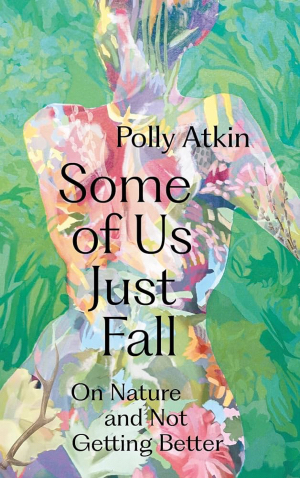
I met Polly Atkin during my time at Lancaster University, as she did her PhD there and also has taught at this institution regularly. I’ve also attended many poetry readings in which she was performing – she’s an excellent poet. So I was excited to read her first non-fiction book, and when I was in Grasmere (up in the Lake District, on a hiking trip, I popped into Sam Read, the gorgeous independent bookshop there (which, as it turns out, she and her partner own as of quite recently) and snatched a copy. Sadly Polly wasn’t there that time – (I wanted to say hello!) – but there was a signed copy all the same which also included a doodle of a deer. So I took it and started reading it that same day in a cafe in Grasmere (right after we’d finished the hike and were congratulating ourselves with a warm drink… this is what you do in the Lakes where hiking also means battling the elements, endless wind, rain, cold… etc.)
I was engrossed on this reading from the very first pages. Atkin’s writing is flawless, precise, entertaining, funny at times, thoughtful, sharp. The book opens with quite the scene – Polly as a toddler being ‘ran over’ by her older brother on his bike which means she ends up breaking a leg. Then she goes on to deconstruct this anecdote (that of course has turned into the anecdote her family always shares) as an adult who has been diagnosed with several chronic health issues, including two very rare conditions, Hemochromatosis and Ehlers-Danlos syndrome, which makes her joints particularly weak and her bones prone to breakage. As she says (and I can recognise a fellow storyteller teacher here) a story can change so much depending not only on who tells it but also on how much context we have about the situation.
This idea of context and interpretation runs through the book as she goes over the very difficult experience of her numerous health struggles in the absence of a diagnosis (that she only got when she was already in her thirties, after a life time of confusion and pain, both in the metaphorical but also very physical sense).
The book is divided in chapters that are in reality incredibly well-crafted essays around different topics engaging this main theme around chronic illness. One is about the diagnosis. Another about genetics – since the conditions that she has are both inherited through the genes. That was one of my favourite chapters: it was fascinated to see how Atkin started unravelling her family’s history through the diagnosis, going back generations and realising that there were other people like her, only that at the time they were no words to describe their experiences. She goes on to reflect about what happens when something that afflicts you is not an external agent but part of yourself – the unravelling of the condition then, is it also the unravelling of the self?
Another chapter goes against the idea of the ‘nature cure’ – that no matter how ill you are you will always be healed when you go to nature. Most of this book is set in the beautiful landscape of the Lake District – and Grasmere – where Atkin lives, and this has been space where doctors tried to open spas and places where people could retire to rest and heal, claiming things like the water from the lakes has health properties and so on. Atkin herself swims regularly in the Lakes – although she’s quick to explain how some days it’s the only thing she manages to do, and for barely a few minutes, because her energy doesn’t allow for more. But she also is true about how this is not a cure in itself or a sort of miraculous treatment for her condition – is just something she does because she enjoys to and that sometimes (not always) brings some relief as well.
A Real Piece of Work by Erin Riley
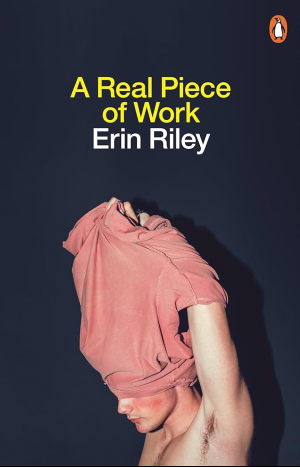
I found this book by chance, while looking for something else, and decided to read it on a whim. It’s a collection of essays by trans, non-binary Australian author Erin Riley and touches on different themes including childhood and OCD, the trans and queer experience, working as a social worker, family, dating, love, travelling and swimming in the sea.
I really vibed with the style and voice on this book, it was one of those books you don’t want to ever end because you are enjoying being in the author’s head so much that you leave the last couple of essays unread for a while, just because you are not ready to get the book finished.
A lot of the experiences Riley goes through are written so kindly and thoughtfully. One of the most touching and heartbreaking essays is about their uncle, who grew up facing different mental health disorders (including depression) and could never live on his own. As an old man, he can barely take care of himself and the house he lives in, he’s also become incredibly homophobic and racist, all at the same time as Riley suspects (revising the past) that he may actually have been a closeted homosexual in a time where these things simply were not said or even thought of. Both of them bond over their creativity – and, of course, over their mental health struggles, as Riley suffers from OCD since they were a child. I loved reading about that very specific love and hate relationship one can have with a relative, and also the experience of having to take care of someone during their old age – someone who’s not necessarily ready or willing to receive that care.
These essays were also very well constructed in terms of research and structure. A few of them are on Riley’s experiences as a social worker – in my opinion, one of the hardest jobs out there, having worked myself as a carer for a brief time. They write about how frustrating it can be to work day to day in such vocational job when laws don’t really protect the most vulnerable and the resources available are simply not enough. Burnout is a very common part of this profession (burnout is also very common in teachers and educators, which is part of my own profession as a lecturer, so I do relate to that in my own way).
Other essays are about being queer, dating and falling in love. There are essays about family too, about their parents’ separation when they were an adult and subsequent reconciliation, about Riley coming out as queer (which is celebrated in the family) and then as trans (which their family takes a bit longer to assimilate). Riley’s mother is a hardcore feminist who can’t understand why their child feels so proud of having grown a moustache they even tint so it looks darker and more noticeable.
One of the most upsetting chapters to read was towards the end, when Riley explains a painful moment in their life when their parents felt that they didn’t want to start using they/them pronouns with them. They felt it was too much of a fuss, that those pronouns would never come to them naturally, that it was unfair of Riley to ask for such a massive accommodation from everyone else. Because of this, the parents’ frustration ends up reaching a climax during Riley’s wedding ceremony in which Riley’s mother reads a speech in which she continuously misgenders her child (to make a point, it seems). It made me so sad reading about this because Riley’s parents are portrayed in such a positive light throughout the book, and it’s clear that these are people who love each other, their family and their child, and they are also trying to do the best we can (like the rest of us, of course). I understand the pain they may be feeling, thinking they are perhaps losing a version of their child which was very important to them. But also, getting rejected by your parents over a word or an identity that is clearly making you happier is heartbreaking. I thought it was written in a nuanced and compassionate way (which a hopeful afterword in which Riley said that since then they had been able to repair the relationship with their parents).
I feel this was also a book I read when I really needed to, as this is the experience of a non-binary person who was socialised as a woman like myself. All and all, a great read that I’ll be recommending to others.
Lapvona by Ottessa Moshfegh

This is my first book Otessa Moshfegh who, I know now, it’s apparently famous for writing really dark and disgusting fiction (to which I say, cool, go for it!) I would be lying if I said I didn’t pick it up because I heard it was extremely dark and it had horrifying stuff going on in there such as cannibalism. I can be quiet morbid, so I had to check and see with myself.
Yes, sure. This book delivered, so if you are already intrigued (and thinking, how bad can it be?) do pick it up. It covers pretty much every human depravity and taboo you can imagine and I’d even go to say the cannibalism in it is one of the tame things. It’s also very disgusting – on purpose, clearly – and some other scenes did turn my stomach a bit.
The story is set in the medieval times, in the town of Lapvona, which gave me East European vibes (I don’t know why). It follows Marek, a hunchback teenager who lives alone with his father, a shepherd, and is routinely being beaten up by him and other members of the community for being ‘monstrous’ – to the point where he starts desiring physical pain because he thinks will bring him close to God. Marek gets involved in quite a tragic event and because of that he is (quite randomly) adopted by the Lord of Lapvona, who lives in a house separated from the rest of the city. The story is told during the course of a year, following the seasons and focusing on a terrible period of drought during the summer in which most of the population of Lapvona dies.
There was not a single character here you could like. Honestly. They all spend most of the time being disgusting or evil, or both. They are so extreme that they feel bit as caricatures. I only liked Lisbeth, a young girl, servant of the Lord, who’s quite stoic.
This is a book I really wanted to finish because being in this place, with this characters, wasn’t a nice experience at all. I felt a bit dirty after reading it actually, like I needed a palate cleanser, or a shower. There was so much depravity and darkness that at some point it all started feeling a bit pointless. Sure, the medieval times could be quite savage and different from now, but I feel like other, also very daring and dark books, set in medieval times are a bit more balanced – like Now She Is Witch, by Kirsty Logan.
When I got to the end of this book I couldn’t decide if I liked it or not – or if I was glad I’d read it. I think if you take it as a satire it is an interesting book. One of the best things about it is that all the town dwellers keep praying to God and blaming the Devil for all their misfortunes – violence, raiders, the drought… When in reality most of it is the Lord’s fault, and still they all respect him (the lord is a narcissistic clown, by the way, stupid and devoid of morals) and still the people trust him and believe he has their back. For example, one of the reasons why the drought is so bad is because the Lord has drained the river to keep his own reserve of fresh water (a lake in his property nobody else knows about) full. Can this be a metaphor for climate change, and how those few who are in power are responsible for some of the most damaging practices? Or a metaphor for our current political leaders who have god-like delusions and don’t really care about those they are supposed to protect? It’s worth saying this book was written in 2020, when a lot of societal issues got worse because of the impact of Covid-19, and many leaders were happy to late people put themselves at risk and die for the sake of the economy while they didn’t have to cope with the same standards…
Second Place by Rachel Cusk

A Life’s Work is one of my favourite books on motherhood, but I had never read any of Cusk fiction. I took this from the library seeing as it was a self-contained novel. It has an intriguing argument – a woman, a writer, becomes obsessed with a male painter and his art when she’s younger. Many years later, when she has an adult daughter and is living with her new husband on a marsh, she offers the land to this painter so he can come and stay for free in another, smaller house they have on the property. So, basically, a sort of artist residence. He ends up accepting and moves there with his much younger female lover, disrupting the main character’s family dynamics and life.
This book is written in a sparse yet incredibly detailed prose, in the style of stream of consciousness from the main character. It’s interesting because the painter, named L, is The Artist in the story, the older white man who has been celebrated from most of his life, enjoying all sort of privileges. The woman is a writer, sure, but what does she know about Real Art? Shouldn’t she stay as a secondary character in this story, and even perhaps occupy the place of villain since she refuses to become the kind of muse The Artist is looking for, and doesn’t really worship him as he feels he deserves?
There were many interesting questions about art here, about privilege – let’s not forget that most of the art we know about and consume has been historically created by men, this includes literature, which surely has an impact on our psyches. There are also questions about femininity and womanhood as the three women in the story watch each other closely as the story unfolds. There is the main character, of course, divorced and married again, her daughter, Justine, who is twenty-five and has recently moved back home with her boyfriend to save some money and consider where she wants her career to go next. And then there’s The Artist’s much younger lover, Brett, stereotypically beautiful and occupying the place of The Muse (at least at the beginning of the story).
I won’t say what happens in the end but it’s quite interesting. This is a very short novel – I read it in a couple of days – that had many thought-provoking quotes that I immediately wrote down and I will share here. I’ll definitely read more of Cusk’s fiction now – this has been a great introduction.
‘‘What on Earth is this?’ Brett would say, as I myself didn’t dare to, when she discovered Justine in one of those sack-like garments she had taken to wearing. ‘Did it come from Mother Hubbard’s cupboard?’
A ‘Mother Hubbard’ was that lose kind of dress certain Victorian ladies used to wear that covered them from top to toe, to avoid having to put on a corset – Brett’s comparison was an exaggeration, but it wasn’t far off! Brett herself, of course, showed off her lovely figure at every opportunity. I believed, I suppose, that Justine’s concealment of herself and her embracing of the cult of plainness and comfort was the result of her shame and self-dislike, and the reason I believed it was because it was what I had always felt myself. At heart I feared I had failed to do something vital with respect to Justine’s womanhood, or worse, had inadvertely done to her the same thing that had been done to me. I had grown up disgusted by my physical self, and regarding femininity as a device – like the corset – to keep the repellent facts from view: it was impossible for me to accept what was ugly in myself as to accept any other kind of ugliness. A woman such as Brett, therefore, unnerved me deeply (…)’ (p. 87)
‘I’ve often thought it’s fathers who make painters’ he said, ‘while writers come from their mothers.’
I asked him why he thought that.
‘Mothers are such liars,’ he said. ‘Language is all they have. They fill you up with language if you let them.’ (p. 116)
 Inés G. Labarta
One thought on “On injustice: March 2024 Reading Log”