

Caliente (Hot) by Luna Miguel

I learned of Luna Miguel by chance, in one of those late night internet searches which took me to an old blog of hers. I saw that she’d published plenty of poetry but also some non-fiction and became curious. When I was in La Librería de Mujeres (The Women’s Bookshop) – one of my favourite places in Madrid, they recommended this book to me, and so I bought it and read it in a couple of days.
Luna Miguel explores female desire in this book, which starts with her personal experience of going through a divorce after being with a partner (and also married) for many years and having a child in common. What follows is an exploration into self-pleasure, female masturbation and poliamory. It’s interesting to note here that Miguel brings in many other authors and examines their work and their life experiences to develop some of her points.
For example, one of the parts in these book that I found most interesting is one in which she goes over sexuality and masturbation during childhood. No matter what media tries to make us believe or think children do experience sexual feelings as they explore their own bodies and the world around them. By talking about her own experiences when learning about sex and, especifically, about masturbation (which is a sort of taboo for girls in a way that boy’s sexual experiences are not) Miguel talks about art and the work of the controversial artist Balthus – controversial because of his depiction of prepubescent girls in attitudes that can definitely be seen as sexual. Miguel suggests here that what may be bother some people is not necessarily that Balthus’ representations may come a bit too close to pedophilia but that his young girls are indeed experimenting things like sexual pleasure, when everyone knows that girls should not behave in such ways, or have such knowledge or control over their own bodies.
I resonated with a lot of what Luna Miguel wrote about in her book – how being born as a woman and being educated as one, even if my education was quite liberal (as was Miguel’s) I still learned to see my body as something dangerous, something vulnerable, and something disgusting if it didn’t absolutely complied with some very specific beauty standards. I also don’t recall talking about sex or masturbation at all with my friends – I don’t know what happens between boys, but certainly that was my experience.
Another thing that made me angry while reading this book was to learn that the first comprehensive study of the clitoris wasn’t made until 1998 – and it wasn’t properly scanned with a MRI until 2005. All of this is extremely recent (basically, it’s happened during my lifetime).
The reflections around poliamory were also interesting – the idea of not giving all the focus to the romantic couple or the nuclear family but understanding relationships in a horizontal way. Because Miguel is an extraordinary reader I found her bibliography very interesting and made notes of a few authors I was interested in reading next, including Paul B. Preciado, who I also ended up reading for the very first time this same month.
Guerrera Errante (Wandering Warrior) by Kabi Nagata
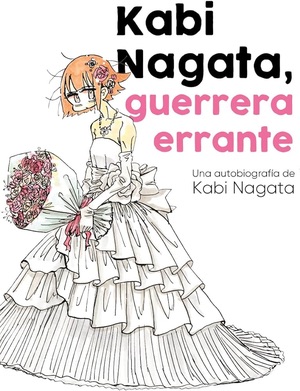
I’ve been reading Nagata’s work since My Lesbian Experience with Loneliness which actually remains my favourite work of hers to this date and I recommend to everyone. Using the graphic novel as a form, she talks with candid honesty about her life struggles as someone who is very creative, incredibly shy and also neurodivergent living in a family and a culture that feels constraining and suffocating.
It’s funny to consider how much in Nagata’s work can be relatable, even though our backgrounds couldn’t be more different (although, I suppose, we are both creative, queer and also were born and educated as women).
This is the last volume of her work and starts with a strange ceremony Nagata decides to throw herself: after being incredibly (and surprisingly) moved during her friend’s wedding she decides to book a photo session in which she’ll wear a wedding dress a look like a bride (even if she doesn’t even have a partner at that moment in her life). The whole ordeal with the dress, the make-up and the photos ends up being frustrating and terrifying which triggers something else in Nagata. What is what she really craves? A partner for life? To feel like she has earned her parents’ approval? (Her mother has been fantasising with her daughter’s wedding day all her life.)
This graphic novel has some interesting exploration on ideas around gender – why we as women grow up so obsessed with being beautiful, complacent and sexualised for the enjoyment of the male gaze. It also contains quite a disturbing episode, the recollection of Nagata’s sexual abuse, that she suffered when she was only a child. It’s also terrifying because of the way people around her reacted – almost as if she was responsible for it.
Nagata’s drawing style and narrative is not as well-thought and nuanced as her first book. In this instalment (and all her previous ones) it seems as if we were reading a slightly edited version of a drawn diary in which she simply throws her current thoughts. But still there’s a lot of honesty and questioning of the gender and sexual identity that I think makes her a very brave writer.
Dysphoria Mundi by Paul B Preciado

I had heard Paul B. Preciado’s name before and when I read a few of his quotes on Miguel’s work I decided to try and see if I could find some of his books in Madrid. I ended up in another beautiful bookshop – Desperate Literature – buying this book in particular, especially because of the drawing in the cover (which is a rendition inspired in the Tarot card of The Devil in the Marsella Tarot deck.)
Where to start? I don’t really read philosophy, and at the beginning I found this book a bit dense – and terrifying, and inspiring, and beautiful too. So I persevered. After the first chapter – which explains some specific terms and the basis of his thinking – the rest of the book was much more engaging but also more and more shocking. Let me explain.
This is a book written by Preciado as he’s forced into lockdown in his little flat in Paris – where he’s just moved to, after breaking up with his partner – during the first months of Covid-19. It’s an examination of the Covid-19 crisis that we all lived through (in different ways, depending on our circumstances) recasting it as the moment when a great paradigm is changing – irreversibly and forever.
I think this is a book I need to read again. It’s also a book I can’t wait to comment on with other people who have read it, because there’s so much in here about being a woman, about being trans, about being an outsider… and about feeling extremely scared and sad seeing the rise of fascism all over the world, coming hand in hand with a clear threat to our freedom (the freedom of those of us who are not white, privileged men, I suppose).
I know this terror, I’ve felt it before, for example, when abortion was criminalised back in some of the states in the US in 2022. I cried reading the news, because even if I’m not a citizen of the US and I likely will never live there I have someone very dear to me who now calls this country her home. Also, the US has such an impact on our mainstream culture, that’s easy to imagine a domino effect. And as someone with a womb and the potential of getting pregnant I can’t quite comprehend (I’ve never done, to be honest) how can it be that others consider that our bodies should be the bodies of the State, of the Church, of others rather than ourselves. It’s so strange to me. Almost as if, for example, I was told I need to donate any of my organs, at any time, just because someone else may need it, and my life (or my freedom) is not as valuable as theirs. Mind-blowing, isn’t it?
I will now share a few quotes I loved in this book. There’s no particular order or links in between them, just text that made me reflect. The original in Spanish comes first, followed by my own translation into English.
‘Se trata de un libro disfórico, o mejor dicho, no binario: rehúye las diferencias convencionales entre la teoría y la práctica, entre la filosofía y la literatura, entre la ciencia y la poesía, entra la política y el arte, entre lo anatómico y lo psicológico, entre la sociología y la piel, entre lo banal y lo incomprensible, entre la basura y el sentido. Hay entre estos papeles extractos de un diario, elucubraciones teóricas, mediciones de los pequeños temblores provocados por el movimiento de complejos sistemas de conocimiento, recolecciones de las fluctuaciones de dolor o de placer de un cuerpo, pero también rituales lingüísticos, himnos, cantos líricos y cartas cuyes destinataries no han pedido que nadie las escribiera. La primera versión fue escrita como un mosaico en tres lenguas (francés, español e inglés) que lejos de establecer fronteras entre ellas se mezclan como las aguas de un estuario. El libro está, como el planeta, en transición. Esta publicación recoge un momento (y una lengua) de ese proceso de mutación. (p. 30)
‘This is a dysphoric book, or rather, a non-binary one: it challenges the conventional differences between theory and practice, between philosophy and literature, between science and poetry, between politics and art, between anatomy and psychology, between sociology and what lies under our skin, between what’s considered banal and what can’t be comprehended, between rubbish and common sense. In between these papers we can find extracts from a diary, theoretical musings, trackings of those small movements made by complex systems of meaning, recollections of changes in patterns when we talk about pain or pleasure in our own bodies, and also linguistic rituals, hymns, lyrical chants and letters whose recipients never asked for. The first version of this book was written like a mosaic in between three different languages (French, Spanish and English) which, instead of marking boundaries in between them, are combined as the waters in an estuary. This book is, like the whole planet, in transition. This publication is making space for a moment (and a language) in the process of mutation. (p.30, my translation).
Paul B Preciado
On the Geneva Consensus Declaration, signed by 34 countries in October 2020… these included United States (which pulled out since) Brazil, Hungary, Indonesia, Georgia, Kenya and many others.
‘Resulta interesante observar que no son las oposiciones capitalismo-comunismo, cristianismo-islam o judaísmo-islam las que definen los bloques de la guerra caliente dividiendo el mundo en términos de políticas reproductivas, sino que más bien los Estados teológico-políticos – tanto de confesión católica como musulmana – que sen enfrentan en otros ámbitos encuentren en la expropiación del trabajo reproductivo de las mujeres, la misoginia, la homofobia y la transfobia un terreno común de acuerdos que les permite celebrar una ceremonia conjunta, reunirse con sus banderas y sus ministros y firmar una única y misma convención. Frente a los úteros libres, frente a las lesbianas, las mujeres sexualmente soberanas, las obreras sexuales, las personas trans, no binarias y los maricas, la relevancia política de la distinción entre el Occidente cristiano y el islam, entre el capitalismo y el comunismo, entre el norte y el sur, incluso entre los Estados Unidos y China, se desvanece.’ (p. 395)
‘It’s interesting to observe that it’s not the opposition between capitalism and communism, Christianism and Islam or Judaism and Islam which define the blocks of this hot war which is dividing the world in terms of reproduction politics. In fact, the theological-political states – those who ascribe to Christian and Muslim faiths – the ones which, even though they fight themselves in other ambits, they do find a sense of agreement when it comes to expropriating women’s reproductive work as well as misogyny, homophobia and transphobia. This allows them to celebrate a joint ceremony, to unite with their flags and their ministers and sign the same convention. A convention against free wombs, against lesbians, against sexually liberated women, against sex workers, trans people, non-binary people and gay men. When it comes to fighting against all of these the distinctions between the Christian West and the Islam, the capitalism and the communism, the north and the south, even between the United States and China… all those distinctions fade away’ (p. 395, my translation.)
On the ethics of scientific experiments carried out to find a cure for AIDS:
‘Los protocolos farmacéuticos clásicos de ensayos controlados aleatorios (ECA) exigían crear un grupo de control con placebo en doble ciego: es decir, un grupo, sin saberlo, recibiría pastillas de ATZ, mientras que otro, sin saberlo tampoco, tomaría pastillas placebo a base de azúcar durante seis meses – si es que con suerte lograban sobrevivir todo ese tiempo–. Los participantes en los ensayos clínicos llevaron a cabo dos procesos casi simultáneos de crítica de los procedimientos científico-técnicos y de su complicidad con el mercado. En primer lugar, pusieron en cuestión la dimensión ética del uso de placebos en un contexto donde los enfermos estaban condenados a muerte. Frente a la supuesta “moralidad” de los ensayos de doble ciego, los enfermos se apropiaron del proceso de investigación y decidieron abrir las píldoras que les habían sido recetadas en las diversas pruebas para verificar por sí mismos si se trataba de un placebo o de la molécula activa. Aquellos que encontraban píldoras con moléculas activas reducían sus dosis a la mitad para poder compartirlas con los que habían recibido placebo. Estos colectivos iniciaron un giro performativo y espistemológico sin precedentes: críticos de los ensayos clínicos, los activistas reclamaron el deber ético de dar acceso al AZT, poniendo de manifiesto otro modo de producir conocimiento científico y de representar y construir el cuerpo seropositivo en comunidad.’ (pp. 526-527)
‘The classic pharmaceutical protocols which determined controlled random experiments demanded that one controlled group would need to take placebo without knowing it: that is, that one group would receive ATZ pills, whereas another group would, without knowing this, receive sugar pills for six months (if they managed to survive that long). The participants in these clinical trials engaged in two procedures that challenged, simultaneously, these scientific and technical procedures whose main aim was to comply with the existent market. First, they questioned the ethical dimension of using placebo pills in a context where all the prognosis of all the patients was death. Challenging this apparent ‘morality’ of the trials that determined that some patients take placebo, these same patients decided to take the research into their own hands. They opened the pills that they had received to check if they contained sugar or the active component of the medication. Those who found out they had in fact received the medication decided to reduce their dosage by half to share it with those who had received the placebo. These collectives made a whole performative and epistemological twist that had never been done before: by criticising these critical trials, the activists reclaimed the ethical duty of giving open access to ATZ, showing that there was another way of producing scientific knowledge and representing and building the seropositive body in community.’ (pp. 526-527, my translation)
Paul B Preciado
‘Utiliza tu disforia como plataforma revolucionaria. Si es cierto que los cambios necesarios son estructurales (cambios en los modos de producción, en la agricultura, en el uso de energías fósiles, en las construcción de tejidos urbanos, en las políticas de reproducción, de género, sexuales y raciales, en las políticas migratorias) y que, en último término, demandan un cambio de paradigma, ninguno de estos cambios podrá ser operado si no es a través de prácticas concretas de transformación micropolítica. No hay cambio abstracto. No hay futuro. La revolución siempre es un proceso. Ahora. Aquí. Está sucediendo. La revolución o la muerte. Ya ha empezado. Wuhan está en todas partes.’ (p. 532)
‘Use your dysphoria as a revolutionary platform. If we say that necessary changes must be structured (changes in modes of production, in agriculture, in the use of fossil fuels, in urbanism design, in politics of reproduction, of gender, of sex and race, in politics of migration) and that, to a point, they demand a change of paradigm, none of these ways of changing will be operated by others than precise practices of micropolitical transformation. There is no such a thing as abstract change. There is no future. The revolution is always a process. Now. Here. It’s happening. Revolution or death. It’s started.’ (p. 532, my translation).
Paul B Preciado
Tomorrow and tomorrow and tomorrow by Gabrielle Zevin

This is a book I would have never chosen for myself. I heard people raving about it over social media an the internet but didn’t quite seem for me. It turns out that it was my sister’s Christmas present, so of course I had to read it. She gave the hardback version of it, which is very thoughtful of her. I have to say that the cover is gorgeous and that it was very nice to read a hardback for a change. I normally buy paperbacks second hand which they cost me a couple of quid and I destroy books anyways – I take them with me everywhere, so they end up getting damaged… I’m not very precious about my books, as long as they stay readable is fine with me.
There were a few things I loved about this book. First of all, the main characters. At the beginning – especially the first scene, in which they meet as college students after years of not speaking to each other – I found them a tad irritating. A bit too nerdy, snobish even. But by the end of the book I was completely invested in their lives and I wanted them both to be alright. I’m not one who enjoys romance or love stories per se, unless they are incredibly twisted and dark and strange. This book did seem romantic for me because these are people who fall for each other’s intellect. The times in my life when I really, really fell for another human it was for a similar reason. I love someone intelligent, someone with a bright mind, someone with ideas with the power of opening up my world. So I guess that Zevin wrote, in a way, my kind of love of story. Because Sadie and Sam (the main characters) are first partners in creativity (the create, write and design video games together). Their story is also twisted from the very beginning because Sadie and Sam are their worst own enemies, as every tragedy demands. Sadie is competitive to the extreme (which is why she loves gaming). Sam loves the storytelling behind video games and their power to create community. He’s also incredibly unconfident when it comes to his body – he was left disabled after a terrible accident when he was twelve years old – and refuses to make his feelings explicit to Sadie because he thinks she’ll reject him right away. And yet, there’s a lot of love. I mean, creating a whole MMORPG to connect again with the person you care about the most who refuses to talk to you because she’s so deep in a depression she’s cutting ties with almost everyone around her? That section – the depiction of Sadie in Pioneers, the MMORPG written by Sam, and her life with Dr Edna Daedalous (a character being played by Sam) is bizarre and tender and was one of my favourites in the book.
Another aspect of this novel I enjoyed was the collaborative and creative process behind creative games, the struggle of coming out with new work when your first game was a hit and people want you to repeat the same trick again, dealing with rejection when something you created doesn’t quite connect with your audience in the way you intended to… All of these are things any artist (including writers) can resonate with. If anything, I was only slightly bothered by the fact that Sadie and Sam have, in many ways, an easy ride. They happen to have a super rich, super great friend called Marx who’s happy to put all the money needed (and then some more) so they can launch their first video game together. Marx also helps them fund a whole video game company, Unfair games. Many of us haven’t been all that lucky when it comes to finding rich and incredibly supportive and understanding patrons. (I also thought it was quite funny that at the end of the book Sadie supported herself and her daughter as a teacher of one class of video games at MIT… I mean, how much can you earn on a gig like that? Apparently a lot, although in this fictional book Sadie is super famous in the video game industry, so maybe…)
This was an interesting quote from Sadie, talking about her university students that made me think of my own teaching practice.
‘This generation doesn’t hide anything from anyone. My class talks a lot about their traumas. And how their traumas inform their games. They, honest to God, think their traumas are the most interesting thing about them. I sound like I’m making fun, and I am a little, but I don’t mean to be. They’re so different from us, really. Their standards are higher; they can bullshit on so much of the sexism and racism that I, at least, just lived with. But that’s also made them kind of, well, humorless.’ (p. 394)
Gabrielle Zevin
There are some interesting thoughts on cultural appropriation here – on a fictional interview in which Sam gets called out because the first video game he developed with Sadie (and which was a massive success) was set in Japan and used many aspects of Japanese culture.
‘[SAM] MAZER: The alternative to appropriation is a world in which artists only reference their own cultures.
KOTAKU: That’s an oversimplification of the issue.
MAZER: The alternative to appropriation is a world where white European people make art about white European people, with only white European references in it. Swap African, or Asian or Latin or whatever culture you want for European. A world where everyone is blind and deaf to any culture or experience that is not their own. I hate that world, don’t you? I’m terrified of that world, and I don’t want to live in that world, and as a mixed-race person I literally don’t exist in it. My dad, who I barely knew, was Jewish. My mom was an American-born Korean. I was raised by Korean immigrant grandparents in Koreantown, Los Angeles. And as any mixed-race person will tell you – to be half of two things is to be whole nothing. And, by the way, I don’t own or have any particularly rich understanding of the references of Jewishness or Koreanness because I happen to be those things. But if Ichigo had been fucking Korean, it wouldn’t be a problem for you, I guess?’ (p. 78)
Gabrielle Zevin
There was something I found I tad jarring in this book and that was the character of Marx. Yes, that super rich guy who becomes first Sam’s best friend and then Sadie’s partner. He’s always happy, he’s always keen to help, he’s always supportive… and he’s very, very rich. To me, he seemed so perfect that he was basically unreal. And then (huge spoiler ahead) when he dies I felt that it was a bit too neat for the plot. Because his death was used to make a commentary on video games and the video game industry (he gets killed by a video game user who is angry at the fact that the company’s first MMORPG allows for gay marriage in the virtual world they have created). Also, his death was the tragedy that set Sam and Sadie apart is such a horrible way (to make things even more complicate there Sadie had also just got pregnant with Marx’s baby). Plot wise it made sense, sure, but character wise I never quite bought it.
But that’s about it – apart from that qualm this was a highly enjoyable read. Plus, this book had many examples of fantastic characterisation. For example, one of my favourite quotes comes from eleven-year-old Sadie thinking about her older sister Alice (who’s fourteen and ill with leukemia in that part of the book… she recovers from it later on). I think it defines so brilliantly what some sibling relationships can be, especially at that age.
‘Sadie might not have many friends, but she’d never felt she needed them. Alice was ne plus ultra. No one was cleverer, more daring, more beautiful, more athletic, more hilarious, more fill-in-the-adjective-of-your-choice than Alice. Even though they insisted Alice would recover, Sadie often found herself imagining a world that didn’t have Alice in it. A world that lacked shared jokes and music and sweaters and par-baked brownies and sister skin casually against sister skin, under the blankets, in the darkness, and most of all, lacking Alice, the keeper of the innermost secrets and shames of Sadie’s innocent heart. There was no one Sadie loved more than Alice, not her parents, not her grandmother. The world sans Alice was bleak, like a grainy photograph of Neil Armstrong on the moon, and it kept the eleven-year-old up late at night.’ (p. 15)
Gabrielle Zevin
Calypso by Oliver K. Langmead

I’m not going to lie. When I saw this book was a novel in verse, I was immediately put off. I love poetry, I love novels, but the idea of finding them somehow mixed with each other made me feel uneasy. I read the first chapter feeling slightly challenged by the page and the rhythm of the language but soon enough my doubts vanished and then I was mostly in awe with the atmosphere of this book that I can only describe as exuberant and terrifying.
The start is a good one: engineer Rochelle wakes up after being frozen cryogenically on the spaceship Calypso which is a character in itself, a spaceship-cathedral of vast proportions designed to travel for centuries to allow a group of humans colonise a new planet after having destroyed they one they had (AKA the Earth). After all this time Rochelle finds out that things are not as they should – during her sleep some other engineers from her group who were also frozen cryogenically have mysteriously disappeared. People on board of the Calypso have fought each other with a group splitting up to go live on their own moon…
This is a tale that expands centuries and follows different narrators, Rochelle, Catherine, a charismatic biologist and altered human tasked with the quest of bringing flora to the new planet, Arthur, the man who designed Calypso and the plan for terraforming the new planet and finally the herald, the collective tasked with the protection of people aboard the spaceship.
One of the most beautiful and touching things about this book is how it manages to portray very complex and vast subjects – such as ideas around human versus nature, what is natural, what kinds of societies can people organise on and so on – with tenderness and a sensitive hand, mainly through the character of Rochelle, who embodies so many contradictions and is the most human of them all. Rochelle, who is both ambitious and naïve, who refuses to become an ‘altered’ (and super healthy) human, who struggles with the religious faith she inherited from his father, who is capable of leaving her own children behind to pursue a great dream to save humanity but it’s also aware of when said dream has gone a bit too far.
There were many parts in this book which were disconcerting and confusing and colourful and lush – basically, like being on hallucinogenic drugs. And I enjoyed every bit of them. Definitely a book for fans of the Foundation series by Asimov and Annihilation by Jeff Van Der Meer.
Permafrost by Eva Baltasar

I heard of Eva Baltasar first in the podcast Books Unbound (perfect podcast to do crochet and chill while listening to two women chatting about the books they read). Of course I was surprised to hear the name of a Catalan author that had been translated into English (definitely not something that happens every day!) And even more so than another one of her novels (Boulder) had been shortlisted for the Booker International. Because I was in Madrid when I listened to all of this of course I went looking for the book (Boulder, initially) in my favourite bookshops.
I found it in Berkana, a small but beautiful LGTBQ+ bookshop on Hortaleza street that I adore. When I was about to buy it the owner (who is a very nice woman) recommended I buy a volume that included Baltasar’s trilogy of novels – Permafrost, Boulder and Mamut. She told me they had some links in between them and that it was a good idea to read them in order. So I did.
These three novels are all about motherhood, in one way or another, but from the perspective of three queer female narrators. Also, and as I said to a friend I was recommending these books to, after reading them I felt less inclined to become a mother myself, I’m not going to lie.
In Permafrost we follow a main character, a lesbian woman, who is depressed to the point when she’s started planning for her suicide while fantasising with the idea that a new mole she’s observed growing in her skin means that she has terminal cancer (another way to willingly welcoming death for her). To understand what has make her get to this point we have a series of flashbacks of her life. Her relationship with her mother is a complicated one – her mother is a hypochondriac, suffering from terrible migraines triggered by the smallest of sounds, and she’s also a narcissist, controlling every aspect of the narrator’s life, always making her feel like she’s not enough of a woman, enough of a daughter. The younger sister, who is initially supportive but recognises to the narrator that she would never let her be the godmother of her own daughters because, as a lesbian woman, she’s just not right to offer an ‘estable’ family framework. The single aunt of the narrator, lets her live in a small flat she has in Barcelona (while the narrator studies History of Art because her mother doesn’t think Fine Art is a degree with enough potential to find a job) but kicks her out as soon as she finds a man to live with and marry because he says so.
Many of Baltasar’s heroines live outside of the capitalistic systems of society and rebel against it, and her main (unnamed) character here is not an exception. She refuses to get a ‘real’ job with her History of Art degree and instead lives in her relative apartment and when she’s kicked out she moves to Brussels because it’s a cheaper city than Barcelona and survives there renting a room and teaching Spanish one-to-one. She refuses to be the daughter her mother wants her to be, the sister her sister expects her to be, the citizen that society as a whole demands she is. You could say she’s lazy, or that she’s lost, but I see in her behaviour a certain act of resistance (because, would she have been happier if she had gone to live a ‘proper’ life like her aunt, marry a man, finally, become the wife, be complacent and subservient?)
The story also covers the main character’s love experiences with several women – and here is when Baltasar’s language becomes the most visceral and lyrical. She describes love and lust with such precision and light.
The end of this novel is quite shocking and, to a point, strange (spoilers ahead). The narrator has never had an interest in motherhood or family, by choice she’s become a loner, refusing even to marry a Belgian lover when she proposes because she’s still too haunted by the suicide of a previous lover (which seems to foreshadow her own ending). That’s why it seems so easy for her to leave, she knows no one else depends on her, she can simply decide to step off the bus, as it were. But suddenly her older niece goes blind after a mysterious infection and ends up in the hospital. This brings the whole family together (understandably) as they all take turns to take care of the little girl, especially because the father is away on a business trip and her mother is also taking care of her baby sister, barely a few months old. Whereas the mother finds herself lost and anxious to an extreme the main character remains strangely calm and finds herself enjoying this opportunity to take care of her niece and spend more time with her, even in these tragic circumstances.
At the end, the roles are somehow reserved. The main character is the most motherly towards the niece, whereas the real mother suffers a mental breakdown and has to go on medication to cope – something she had been judgemental about when it had happened to her sister.
The niece recovers – which was fast and surprising and I thought, ah, this is not the tragedy, then, but almost right after the narrator’s younger sister goes to the airport in her car to pick up her husband, finally coming back from his business trip, (why he never cut the trip short to take care of his daughter is never explained), and on the way back they both die in a car accident.
This all is explained in barely a couple of lines at the end of then novel. I was like, wait, what? The sister and the husband are out of the picture? And their two daughters – are they orphaned?
Well, yes. And guess what, guess who is now the one in charge of the young girls. The narrator. It’s never quite explained why either – I mean, she’s the closest family member (apart from the grandparents). Perhaps her sister did have her as a godmother in her will after all. What is clear is that our protagonist with suicidal ideation is now the mother figure of a six-year-old and a baby of few months. There’s no much more in the novel – we don’t know how this will go for her or for the children – but we’ve seen how much she actually enjoyed spending time with the children before, specially with her older niece, in which she found an akin spirit. So the ending of this novel is surprisingly hopeful.
‘¡Me las ha confiado! Aunque sea soltera, aunque sea lesbiana, aunque sea una suicida. Ahora su tía es una persona responsable. Esta mañana me he preparado un zumo de naranja y me lo he tomado junto a las pastillas. Sonrío sin llorar. Sonreír así funde el permafrost. Suena el violín. Las familias se cierran sobre sí mismas como ciudades asediadas. Pero es la vida, la salvaje que nos cerca y nos asedia.’ (p. 136)
‘She’s entrusted them to me! Even though I’m single, even though I’m a lesbian, even though I’m suicidal. Now their aunt is a responsible person. This morning I’ve prepared an orange juice and I’ve drunk it along with my pills. I smile without crying. Smiling like this melts the permafrost. I hear the violin. Families close down on themselves like cities on a siege. But it’s life, the wild force which fences us, which puts us on a siege.’ (p. 136, my translation)
Eva Baltasar
Boulder by Eva Baltasar
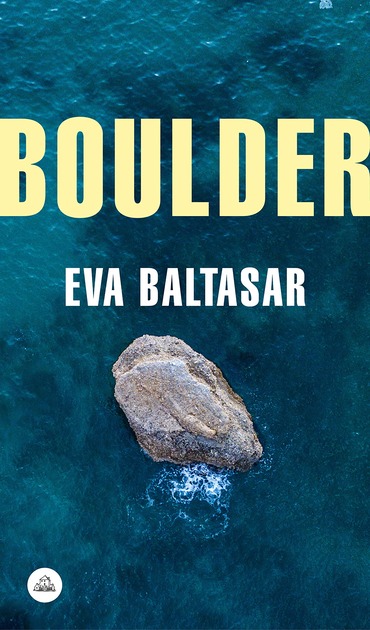
This book was such a revelation. I’ve read many books about motherhood, about fatherhood and so on. But I have never read a book about motherhood from the perspective of a woman who reluctantly agrees to her partner, another woman, getting pregnant and becoming a mother.
This is, in a nutshell, the conflict of the story. The main character, nicknamed Boulder by her lover, Samsa, has no interest in becoming a parent. But after falling violently in love with Samsa while working as a cook in a merchant ship in the coast of Chile she follows her to her native Iceland, leaving her adored nomadic lifestyle to settle. The relationship between Samsa and Boulder is marked by the strong desire they feel for each other and the way the manage to sustain their passion for almost a decade. But it gets to a point in which Samsa, after turning forty, wants to become a mother. Boulder doesn’t want to. But she doesn’t want to lose Samsa either, so she pretends to agree. And then she has to observe – more or less horrified – the changes in the body of her partner as she grows pregnant, the changes in behaviour and desire. She has to finally accept that her relationship with Samsa has mutated and can’t ever be the same after the baby is born. Of course, she’s devastated.
Here Baltasar’s poetic language is even stronger and more lucid than in Permafrost. This is one of the most erotic novels I’ve read in a long time – its exploration of desire and longing flourishes in the bleak and frosted landscape of the Icelandic tundra and the violence of the seas.
‘Nos pasamos toda la noche en ello. No la follo, me afilo con ella. La bebo como si me hubiese educado para el desierto. La trago como si tragase espadas, con un esmero vital y muy despacio. Las horas se superponen unas sobre otras y nos tapan… La beso, la beso. Beso el cabello que le cae sobre los ojos llenándolos de una luz rubia y extraña. Beso el cuello tenso, la espalda exquisita, los pezones planos y anestesiados después de tanta noche. Cierro sus ojos y beso lo azul besándole la piel que lo trasluce. Chupo su lengua exhausta y extranjera. Mis besos son minas que planto con inconsistencia, como si cantara, sabiendo que cuando vuelva a hacerlo explotarán, mutilarán, socavarán cuerpos y canteras…La abrazo como los locos abrazan un credo o se cuelgan de los árboles.’ (p. 151)
‘We spent all night at it. I don’t fuck her, I file myself on her. I drink her as if I’d been brought up in the desert. I swallow her as if I was swallowing swords, with vital care, and very, very slowly. Hours super impose on each other, covering us… I kiss her, I kiss her. I kiss the hair that falls on her eyes filling them up with a strange blonde light. I kiss her tense neck, her exquisite back, her flat nipples, numb after so much night. I close her eyes and kiss that blue under her translucent skin. I lick her exhausted, foreign tongue. My kisses are land mines that I place inconsistently, as if I was singing, knowing that when I go back to them they’ll explode, mutilate, carve out bodies and quarries… I embrace her as mad people embrace a creed or hang themselves from trees.’ (p. 151, my translation)
Eva Baltasar
The ending is not predictable either (again, spoilers ahead) Boulder can’t become the mother Samsa wants her to be but she’s, much to her own frustration, fascinated with the baby, and she loves this creature too to the point that even though the two women end up separating (with Boulder returning to her more nomadic lifestyle) they still share custody of the little one.
‘Veo a Tinna cuatro o cinco días al mes y con eso me basta. Es cierto, me basta. No necesito ejercer de madre, al menos no de la forma en que Samsa entiende que es ser madre. No me preocupa la gran red de intendencia que captura a Tinna, sólo me interesa estar con ella, tratarla. A Samsa le parece perfecto. Mi elección confirma el sentido de su causa. La miro y veo a una mujer que ha subrogado su propia valía al bienestar de una criatura. Es la diosa de las buenas decisiones, lo organiza todo. Tinna es su arcilla, su figurita, tan pequeña que le cabe en las manos. La vida de una madre puede ser eso: la lengua que lame y no se cansa nunca. Samsa es útil, es amorosa, es práctica. Se ha convertido en un norte. Tinna la quiere con un amor consolidado por la convivencia. La prefiere a ella y eso me hace sentir bien. Siento que me salva.’ (pp. 232-233)
‘I see Tinna four or five days a month and that’s enough. It’s true, that’s enough. I don’t need to be a mother, at least not like Samsa understands it. I’m not invested in that wide network of dependance to trap Tinna, I’m only interested in being with her, spend time with her. Samsa thinks this is perfect. My choice confirms her own cause. I look at Samsa and I see a woman who has surrendered her own value to the comfort of a creature. She’s the goddess of the good choices, she organises everything. Tinna is her clay, her little figurine, so small that she fits in her hands. The life of a mother can be like that: the tongue that licks and never gets tired. Samsa is useful, she’s loving and practical. She’s transformed into a north. Tinna loves her with a love that has been consolidated through cohabitation. Tinna prefers her, and that makes me feel good. It saves me.’ (pp. 232-233, my translation)
Eva Baltasar
Mamut by Eva Baltasar

This was the most violently and visceral novel from the trilogy, and the hardest to read as well, but I have to admit, I still consider it brilliant.
Are you aware of this recent tendency to glorify life in the countryside, with everything being as natural and organic as possible? Of being the perfect homestead mother? Or a cottagecore fairy? Well, this novel is in itself a response to all of that, and a dark one at it.
The main character in this book is a lesbian woman in her early twenties who wants to become a mother by herself, but, naturally, finds it quite challenging. She’s also quite tired of life in Barcelona, of all the shitty jobs she has to do to survive, of all the instability, the cruelty and disdain she suffers from her employers, all to earn just barely enough to survive paying astronomical prices for food and rent. So she does what so many of us have fantasised with at some point: she packs her things and moves to a recondite rural area in Cataluña.
Now, you’d imagine than from then on she starts discovering herself and how bountiful life in nature can be. Well, no. To start with, the only house she can afford to rent is an old thing, basically a ruin, almost inaccesible, which doesn’t have have power (it does have water, though, thankfully). Her only neighbour is an old and severe shepherd who takes care of sheep and later on kills them to feed on them and make money out of them. And you may think now, well but does she find in him a mentor of sorts, an unlikely friend?
No. This is not that kind of novel. The narrator does find pleasure in realising she needs almost nothing to survive (for example, she’s elated when she discovers she can use the same soap she uses to clean dishes to wash her body and hair, or when she discovers she only needs water and flour to make some bread). But she still needs so money, so she picks some jigs here and there, including being the shepherd’s cleaning lady and eventually asking him for money in exchange of sex (to earn more money but, also, secretly, to fulfil her dream of getting pregnant).
Life in the countryside is violent and dirty. One of the hardest scenes for me to read (spoilers ahead) features the narrator having to deal with a plague of old cats that start roaming around her house, peeing everywhere and destroying her things. These are cats abandoned by people from the city who can’t be bothered with taking care of them anymore now they are old and need some extra care (and money, I suppose). Our narrator has tried to escape from the evilness and depravity of the big metropolis, but it still finds her. So she has to get rid of these cats. The shepherd shows her how (basically, whacking them in the head). This was very hard to read, I can’t cope with animal violence, least of all violence against cats. But by trying to avoid this crude violence the narrator manages to find an even crueller method that I won’t describe here. I have to admit, I lost almost all empathy for the characters at this point. I was almost hoping things would end up really bad for her and the shepherd.
And they did. The narrator ends up pregnant and having a child, but realises, after all, that she doesn’t really want her (the baby), so she gives her up for adoption and comes back to her ruined house in the middle of nowhere with the old, creepy shepherd as an only neighbour. In her search for an ideal life she’s turned into a monster.
‘Ceno sopa de arroz y bebo agua del grifo. No amaso el pan ni me lavo. El corte cicatriza y parece la firma de un niño. He tenido en brazos un gran interrogante. A mi criatura y el formidable pavor de estar mirando a los ojos de un animalillo dotado de dos colmillos. No hay vida deseable. He cometido un crimen. La vida es el territorio de la multitud, por eso me he desentendido del crimen. Fuera de mí, no hay nada mío. Ordeno que todo lo que ha sido mío sea de la vida, que busque y halle su camino en la inhumana y cruda vida, porque ya no es mío. Que sepa estar alerta cuando, a media noche, la vida me mande a sus lanceros.’ (p. 318)
‘I eat rice soup for dinner and drink water from the tap. I don’t knead bread or wash myself. The cut that is starting to scar seems a child’s signature. I’ve had a great question in my arms. My creature, and the terrible fear of looking at a little animal with two fangs. There is no desiring life. I’ve committed a crime. Life is the crowd’s territory, that’s why I have decided not to be hold accountable for my crime. Outside of myself there’s nothing that’s mine. I demand that everything that was mine is now given to life, I demand that it searches for its way and finds it in this inhuman, raw life, because whatever was mine once, is not mine anymore. I wish for everything that was mine to be alert at midnight, when life sends its lancers my way.’ (p. 138, my translation)
Eva Baltasar
 Inés G. Labarta
One thought on “A thought-provoking darkness: January 2024 Reading Log”