Genders and genres: June 2023 Reading Log

Book Review, Books, Crime Fiction, Horror, Literary Fiction, Queer Literature, Science-Fiction, Speculative Fiction

One Last Stop by Casey McQuiston

This is not at all the kind of book I’d normally gravitate towards since romance is one of the genres I read less of (to put it generously). But because this was one my book club’s pick of the month and I decided to go with it. And, spoiler alert, I was pleasantly surprised. 

This is the book I would have loved to read when I was a teenager. Honestly. It would have saved me lots of heartache to see more positive queer relationships portrayed in stories back then. You have to understand that during my teenage years in Spain the only queer couple I read about was Louis and Lestat in Interview with the Vampire (a novel that I loved at the time, but that’s another story) or the turbulent gay relationships in Lost Souls and Drawing Blood by Billy Martin. I still remember the first time I realised I was queer – and I thought, fuck. I had a lot of internalised homophobia. I could find some books abut gay men, but women? It was almost as if we didn’t really exist.

So I think it’s very important that young adults can read fiction like this, where the main character, August, can fall in love with a charismatic older girl, Jane, she meets in the New York’s underground, and it’s natural, and it’s fine, and is not even the point of the story. The point of the story, actually, is to show August’s coming of age journey in New York (while she tries to finish university an decide what she wants to do with her life, hello being twenty-three years old). The point of the story is also a bizarre sci-fi twist that includes some time-travelling theory and which definitely didn’t make sense (even for someone like me who doesn’t always get all of the science). But you go with it because by the time this comes up in the plot you’re already invested in the characters.

Finding comfort in darkness: May 2023 Reading Log

Book Review, Books, Horror, Literary Fiction, Queer Literature, Speculative Fiction, Speculative historical fiction

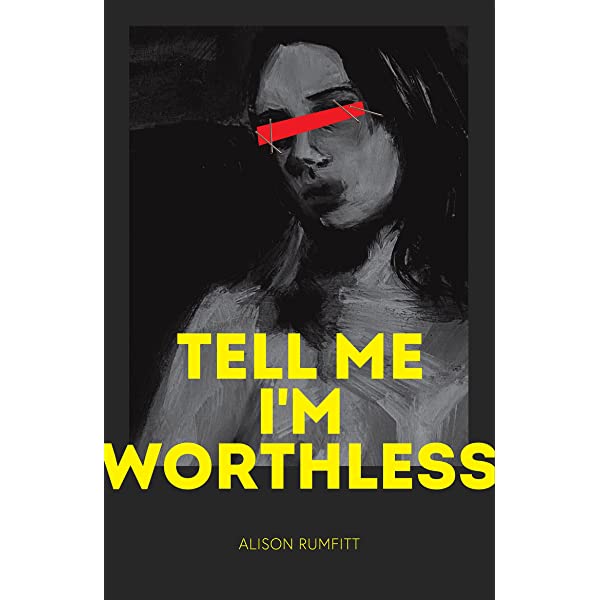
Tell Me I’m Worthless by Alison Rumfitt

I came across this book by chance thanks to a horror reading book club I joined last year (thanks Jess!) and it was such a wonderful discovery. This is a twisted, experimental, beautifully written novel I couldn’t put down and finished in a couple of days. An interesting take of the idea of the hunted house that links a decadent (formerly majestic) mansion near Brighton with a rotten version of dangerous nationalism – the kind of nationalism that feeds on dark made-up fantasies that justify things like xenophobia, racism, violence and colonialism.

The story is told (mainly) through the points of view of its two main characters – Alice, a trans woman, and Ila, a second generation immigrant queer woman who used to be in a relationship with Alice which ended in an extremely traumatic way.

This book makes very interesting links between transphobia and xenophobic nationalism. If gender/nationality are social constructs and justified by powerful (yet, in many cases, fictional) narratives, what happens when these narratives use the hatred of the other to create a sense of self and of community?

Enlightment: April 2023 Reading Log

Book Review, Fantasy, Horror, Literary Fiction, Speculative Fiction, Speculative historical fiction

Small things like these by Claire Keegan

This is a novella, so a quick read, yet it left a big impression on me and I’m still thinking about it. Set in Ireland in 1985 it follows Bill Furlong, a coal merchant in a small town where everyone knows each other. The day before Christmas he goes to the nearby convent to make a delivery and finds something in the coal bunker that shouldn’t be there. Hence, he’s faced with a dangerous moral decision – to speak up against the nuns, who are very powerful members of the community or keep living his life as quietly as he’s used to.

This dilemma is a powerful one – to tell the truth and stand up for others often requires a sacrifice that not many of us are willing to make. Being good and decent can also mean paying a high price. It’s easy to empathise with Bill from the very beginning because he’s a hard-working man with the best intentions. He has an interesting upbringing many would have frowned upon back in that time – his mother had him when she was sixteen years old and while working as a maid for Mrs Wilson the richest woman in town; he doesn’t know who his father is. Against all odds, Mrs Wilson lets mother and baby stay in her household and acts as a sort of kind relative towards them both. As an adult, Bill has a job, a wife, and five daughters. All of these are important details that will foreshadow the protagonist’s final decision.

A month of magic and dispair: March 2023 Reading log

Book Review, Books, Fantasy, Horror, Literary Fiction, Queer Literature, Speculative Fiction
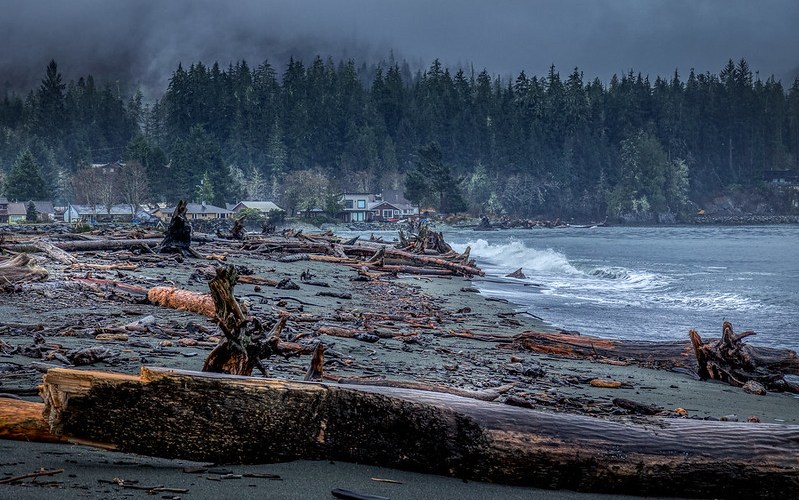
Photo credits: Neil Rolph

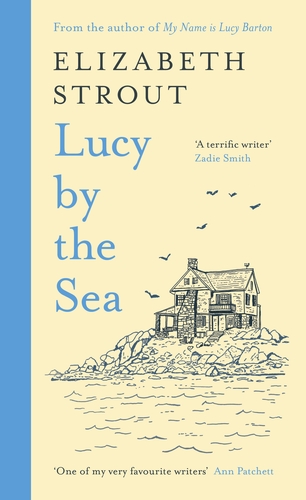
Lucy by the Sea by Elizabeth Strout

“What is it like to be you? I need to say: This is the question that has made me a writer; always that deep desire to know what it feels like to be a different person.”

Elizabeth Strout

When I used to work in a bookshop, Elizabeth Strout was an author that many of my University friends came for. They’d get every book Strout published, telling me how much they adored her writing. I remember shelving those same books. The covers didn’t seem particularly attractive. When I read the blurbs I wasn’t especially inspired either. Once we got a review copy of Olive, Again and instead of reading it I gave it to one of these friends, who was very, very happy.

Fast forward to March 2023 – I saw Lucy by the Sea in the library. I picked the book just to try and see but very much doubted it was going to be my thing. Where to start? Strout is one of those authors that manage to imbue a certain hypnotic quality to their writing that traps you, no matter how interested you really are in the characters or the plot. She’s similar to Haruki Murakami and Sally Rooney in that regard. Especially to Sally Rooney, even though she writes about a demographic that’s in their sixties and seventies, rather than late twenties and thirties (I suspect Rooney’s characters may grow with her as she keeps writing them, though?)

A fair share of horrors: February 2023 reading log

Book Review, Books, Horror, Literary Fiction
Photo credits: Jacques Peltre

Women Talking by Miriam Toews

“No, Ernie, says Agata, there’s no plot, we’re only women talking.”

Miriam Toews

I’m currently working on a novel that features a religious community, so a writer friend of mine recommended I read this book. She told me it was based on the real case of a Mennonite community in which women of all ages were raped in their sleep by some men from the same community who were using an animal anaesthetic to render them unconscious. Their complaints were dismissed by the elders – who went as far as to suggest the women were being attacked by demons – until the truth was revealed.

Toews’ novel focuses on the aftermath of these traumatic events. A group of women meet at a barn to discuss what they are going to do next. The options are to stay and forgive the men, to stay and fight back, or to leave the community. The story is narrated by August, the only man allowed in the barn with these women, who’s taking the minutes of the meeting because none of the women knows how to read or write.

But… where are the murders?: January 2023 Reading Log

Book Review, Books, Literary Fiction, Queer Literature, Speculative Fiction
Photo credits: Cuba Gallery

We Can Do Better Than This: 35 Voices on the Future of LGTBQ+ Rights, edited by Amelia Abraham

I read Amelia Abraham’s Queer Intentions last year and really enjoyed it. Her writing style is very engaging and she covered many interesting LGTBQ+ topics that I wasn’t aware of (I found the chapter on drag really fascinating, for example). We Can Do Better Than This contains essays by thirty-five different writers, artists and LGTBQ+ advocates. To fit in so many essays they are – understandably – all relatively short which is all in all a good idea to include a vast array of perspectives. Some essays, written by authors from countries like Nigeria or Bangladesh, where being gay is illegal, are particularly heartbreaking.