

Never Whistle At Night edited by Shane Hawk and Theodore C. Van Alst Jr.

This was a highly anticipated collection for me – as soon as I knew it existed I went to get a copy.
In this book, indigenous authors use elements of their own cultural background to revisit and reinvent many tropes and archetypes commonly found in horror fiction.
As this is an anthology by many authors, the tones, approaches and styles vary enormously from story to story. In fact, one of the best things about this collection is that it’s allowed me to discover writers I’m now very curious about and would love to read more from in the future. Here there is a short list of the stories I enjoyed the most:
‘Navajos Don’t Wear Elk Teeth’ by Conley Lyons – it deals with the initially very subtle fear of having a relative stranger (in this case, a one-night stand) invade the privacy of a home, but more broadly covers themes around homophobia and racism in a relationship.
‘Quantum’ by Nick Medina – utterly disturbing. It is the story of a mother who has two sons in quick succession and decides to ignore the first one because he doesn’t have ‘enough’ indigenous blood to qualify as a tribal member.
‘Heart-Shaped Clock’ by Kelli Jo Ford – beautifully written (I loved the style so much I wish this had been a novel). A man who has committed some violent acts tries to regain a place back in his family and community despite all that’s against him.
‘Scariest. Story. Ever.‘ by Richard Van Camp – chilling and so, so funny at the same time. I love horror which is also comedic and this story kept me on my toes until the end (which didn’t disappoint).
‘The Longest Street in the World’ by Theodore C. Van Alst. Jr. – the dialogue here was witty and hilarious. It reminded me a bit of a film by the Cohen Brothers. Another story combining horror with the absurd and the comedic and a strong sense of setting.
What many of these stories have in common is how a lot of the horror featured here is not necessarily connected to the supernatural but to real-life horrors indigenous communities have suffered such as genocide, racism and discrimination. The stories that were harder to read dealt with these issues directly, a good reminder that the worst horror is often based on very real human acts.
The Silence Factory by Bridget Collins
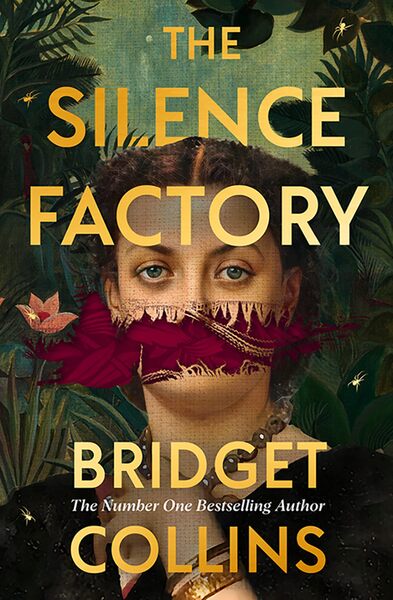
I’ve never read anything by Bridget Collins before but I’ve heard really good things about this author. I usually love a good gothic tale and the premise of this book seemed intriguing. That said, it was a bit of a disappointment for me because even though I tried twice I ended up stopping this book before finishing it (despite the fact that I had less of a third left).
This is by no means the book’s fault. It was well written and the story was good enough. It just wasn’t for me at this time.
The premise is enticing – in the earlier nineteenth century, a rich English couple travels to Greece, where they discover a breed of spiders that spin silk with supernatural qualities. These include the ability to either amplify sound or to completely eradicate it. The novel follows this timeline (focusing on Sophia, the wife, constantly suffocating under the demanding and controlling presence of her husband, who also decides to claim her scientific discoveries about the spider as his own) and a second timeline a few decades later.
The second timeline, set a few decades later, – which is the main one in the story – focuses on Henry, a widower and employer in a shop which specialises in hearing aids. There he gets to meet Sir Edward, Sophia’s descendent, who is looking for ways of helping his deaf daughter.
Wanting to help Sir Edward – and also infatuated with him – Henry travels to the south of England, to Sir Edward’s state, where he also has a factory in which he produces the special silk – which, because of its supernatural qualities, is permanently affecting not only those who work in the mills but the whole town. With sounds constantly being amplified and distorted, people suffer from vertigo, deafness and much worse – yet for Sir Edward this is just the price to pay for industrial advancement.
I think one of the things that personally made me not love this book as much as I should have is that I always knew who the characters were and what they would do before they did. A few spoilers ahead:
The relationship between Henry and Sir Edward never rang true to me. I wasn’t convinced or moved by it. And, indeed, Sir Edward’s intentions were so clearly evil from the very beginning that it seemed hard to me to believe that Henry would still have a high opinion of him even as some key events of the plot unfolded. I knew the twist would come when Henry finally realised that Sir Edward was far from an altruistic person, but it was making me mad that he was taking so long.
The relationship between Sophia (Sir Edward’s ancestor and the discoverer of the spiders) and her husband was also quite predictable. He was a controlling abuser and she suffered in silence. And yet I was waiting for something else about their dynamic or her inner world. Why had she married him in the first place? Who was she, apart from his wife?
All the other twists in the story were also equally predictable to me. I loved the idea of the spiders and the silk brought to England as a metaphor for the way colonialism works – how Sophia and her husband took something they didn’t understand or respected and that wasn’t theirs and brought it to their own country to make a profit of it – making workers in their own country miserable in the process. Many have to suffer and die so a few can have a handful of nice things they don’t even appreciate.
I’d say this is an interesting book and I’d recommend it nonetheless.
Creation Lake by Rachel Kushner
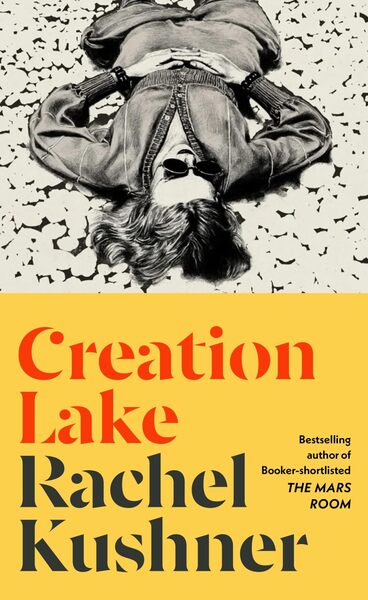
I was asked to read this book to write a review for it in The Conversation that you can check out here (since it had been shortlisted for the Booker Prize). I don’t normally follow this prize – I had to, when I was a bookseller – or normally go above and beyond to read the longlist or the shortlist. But Creation Lake seemed interesting to me because of its dual timeline narrative – set in contemporary France but reflecting also on primitive times and the Neanderthals – so I approached it with curiosity.
This book was a very easy read because of its extremely short chapters – sometimes just a couple of pages long. When I see books written like this – in vignettes or small composite sections – I wonder if this is the impact social media and the Internet is having on our writing. Perhaps sometimes it feels difficult to write (and even read) for a long period and so this is how literature is changing these days?
This is not a criticism of the format in any way – as I said, it’s one of the things I loved the most about it and also why I finished it so fast (I read this book in three or four days).
The main character, Sadie, is an American woman in her thirties, a spy tasked with infiltrating a potential Eco-terrorist organisation in the south of France which is said to be sabotaging the government works as they try to bring high-speed train lines to this rural area.
To learn about this organisation the narrator gets access to the email account of his current leader and, thanks to this, she starts reading the emails sent to him by his mentor, Bruno Lacombe, a man so keen on going back to the natural way of living he currently resides in a cave and believes following the Neanderthals’ habits will be pretty much the cure for all of humanity’s ailments.
So, as much Sadie tries to convince us, the readers, that she actually doesn’t really care about any of this and that she has no qualms about doing very questionable things for the right amount of money, slowly but surely, Lacombe’s words start making an impact on her.
I enjoyed reading a book set in a place that seemed familiar to me, culturally and socially speaking. Now, I’m obviously not French, but I feel Spain and France share certain commonalities (Catholic culture, we have some similar landscapes and sensitivities and so on). It was a tad disappointing to discover that the apparent utopian community Sadie infiltrates wasn’t all that utopian after all – it was led by a bunch of white middle-class men who became annoying very quickly. It was also sexist (surprise, surprise) ageist and racist. It made me a bit sad because it felt realistic in a way (considering again who the founders were) and yet I wish some books offered perhaps other alternatives to the utopia/but it’s actually a dystopia trope.
Bruno Lacombe’s emails and his reflections on the Neanderthals were some of my favourite parts of the book. I learned a lot of things about history (primitive history, French history and beyond) I didn’t know before (even though I wasn’t ultimately convinced to go and live in a cave… neither was Sadie). A para-social relationship of shorts develops between these two characters as Sadie, who is someone who, very consciously, and also because of her job, never gets close to other people, develops a liking to Lacombe and even wishes she could meet him and have a real conversation with him. This unexpected one-sided relationship was another of my favourite things in the novel.
The ending – expected and unexpected at the same time. For a book that seems rather pessimistic when it comes todepicting humans, it did end on a somehow hopeful note which I appreciated.
All in all, this is a book that I ended up enjoying quite a lot. Its experimental mixture of philosophy, history and thriller worked very well for me.
Homebody by Theo Parish

I was very thrilled to find in my local library a graphic novel about the non-binary experience, written as well by an English author. The drawing style was cute and very enjoyable. It was structured in an interesting manner – apparently, this graphic novel originated in a short comic/meditation that the author shared on social media.
We get a version of this at the beginning – a reflection about the relationship between our identity and the body we inhabit and how important is to find a balance in between that feels right to us (instead of giving in to the societal pressures of how we should look according to the gender we are assigned a birth).
My favourite part of the story was the little autobiographical sections – when Parish tells us about their experiences growing up and how they realised that they are non-binary as a young adult.
This was a very sweet, heart-warming piece that can easily be read in an hour o two.
Apocalypse Baby by Virginie Despentes

Despentes has written one of my favourite books on gender and feminism ever – King Kong Theory – but since I discovered she’s also a fiction author (and a good one at that) I was keen to read one of her most famous books.
Ah. Despentes is certainly an author who makes me wish that I had pursued French in secondary school (I did two years of it, found it boring, and changed to Latin and Photography). I’m reading her translated into Spanish (because I think French is much more similar to Spanish grammatically speaking, so I’m hoping the translation is closer to the source and also because, quite honestly, I’m a bit weary of English translations). And yet. You can tell that Despentes uses a lot of vernacular, informal language that, in the Spanish translation, was either absent or written in a way that didn’t quite ring true.
Apocalypse Baby follows Lucie, a private detective, not very experienced, who is tasked with following Valentine, the fifteen-year-old rebellious daughter of a wealthy Parisian family. After Valentine goes missing, her grandmother is livid and pretty much orders Lucie to find her. Worried that she may not be able to, Lucie decides to hire the help of the Hyena, another private investigator who, as you can imagine by her nickname, is known for her not very orthodox (but very successful) methods. The two women embark on a road trip following Valentine’s tracks from Paris to Barcelona.
I loved this book. It had me guessing all throughout. Also, the Hyena is such a great character. Violent, funny, sometimes sweet, very gay. I’d read a whole collection of crime novels with her as a main character.
The novel also has a polyphonic quality to it – even though Lucie is the main narrator, the one who witnesses most of what’s happening, we also get chapters narrated by other characters such as Valentine, her estranged mother, Valentine’s cousin her father, the Hyenna and Valentine’s stepmother.
As the story advances things start being revealed – and Despentes keeps subverting our expectations. There is also a very sweet romantic lesbian subplot (and queer awakening) for our dear Lucy.
The ending, however. I was not prepared for it, I didn’t see it coming and it made quite the impression on me. I remember I finished this book at night, I was in bed, and when I closed it, I felt like I couldn’t go to bed. I needed to talk to someone about it, pity that no one I know has read this book (yet). I won’t spoil the ending for anyone here, as I think it’s probably the best thing about the book.
All in all, Despentes is an author that I discovered only at the end of 2023 but who is quickly becoming one of my literary crushes (alongside Mariana Enríquez, Olivia Laing, Ted Chiang, China Miéville…) I’ll keep reading more of her on the next years I hope!
 Inés G. Labarta
One thought on “Indigenous horror and a certain French flavour: November 2024 Reading Log”