
Tell Me I’m Worthless by Alison Rumfitt
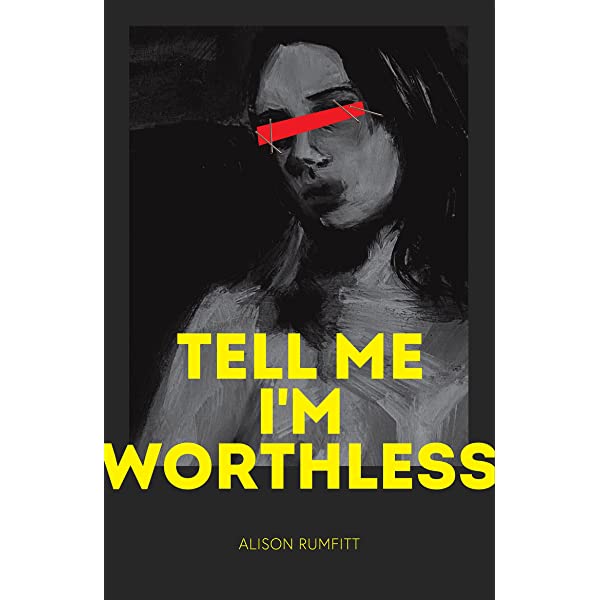
I came across this book by chance thanks to a horror reading book club I joined last year (thanks Jess!) and it was such a wonderful discovery. This is a twisted, experimental, beautifully written novel I couldn’t put down and finished in a couple of days. An interesting take of the idea of the hunted house that links a decadent (formerly majestic) mansion near Brighton with a rotten version of dangerous nationalism – the kind of nationalism that feeds on dark made-up fantasies that justify things like xenophobia, racism, violence and colonialism.
The story is told (mainly) through the points of view of its two main characters – Alice, a trans woman, and Ila, a second generation immigrant queer woman who used to be in a relationship with Alice which ended in an extremely traumatic way.
This book makes very interesting links between transphobia and xenophobic nationalism. If gender/nationality are social constructs and justified by powerful (yet, in many cases, fictional) narratives, what happens when these narratives use the hatred of the other to create a sense of self and of community?
As expected because of its genre, this book has some hard scenes to read. Sometimes the horrors are very much real – harassment, being in an abusive relationship – other times legends seep in to underline darker narratives around colonialism and racism in past and present Britain. At times this book reminded me of the also beautifully written antifascist horror of Gary Budden’s short story collection Hollow Shores.
At some point in the narrative, Rumfitt’s does away with layout and formatting to write the most important plot reveal – a memory both main characters have been trying to repress until then but which has changed them both in irreversible ways. I thought the experimentation in this chapter worked very well and was a great homage to other horror books like House of Leaves by Mark Z. Danielewski.
This is one of the most original contemporary horror pieces I have read in a while, and it is very refreshing to see authors that use genre to explore the darkest side of fascism and fixed ideas about gender. This is a twisted, complex story I won’t forget.
Outlawed by Anna North
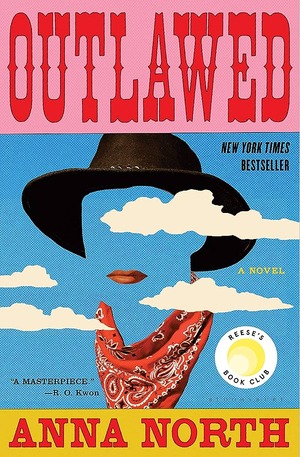
I started writing a historical fiction novel seriously last year, born from an idea I had back in 2007 or 2008 (AKA, ages ago). Through the writing of this first draft I discovered the novel may actually be more of a speculative historical fiction piece or even – who would have said! – a sort of western. I have a bit of a complicated relationship with westerns. A part of me loves them (especially because their images of vast landscapes) and another part of me hates them with passion (because I often find the plots bland, with a clear absence of female characters, queer characters and, of course, Indigenous characters). I have been in the lookout for a western narrative that does things a bit differently and Outlawed seemed to be all that I was craving for – a dystopian piece set in an alternative version of the States which follows a female main character joining a queer gang of outlaws.
The first line of this book is pretty good, and it definitely hooked me in:
In the year of our Lord 1894, I became an outlaw.
Anna North
In this alternative version of the States, fertility has become society’s main issue. Women are brought up to become mothers, and if, once married, they fail to get pregnant, they are thrown out from their communities and accused of being witches. This is the destiny of our main character, Ada, who becomes very disenchanted with the idea of womanhood as she’s forced to abandon her family and become a nun because she can’t give her husband a baby after four years of marriage. From then on, Ada becomes obsessed with the biology of the female reproductive system – trying to find an explanation for why some women seem able to have children while others can’t. Her quest takes her out of the convent and through many varied adventures in which she’ll encounter a group of infertile women who live in the dessert and support themselves as outlaws – living a life that defies many of the notions around gender Ada has believed up until this point.
The premise of the book is great, but somehow the result ended up being a bit bland for me. First of all, I wished the author had explored this dystopian world a bit more. For example, how Christian religion has evolved in particular ways to strengthen the position of mothers and at the same time condemn those women who can’t conceive (even if they want to). I also wanted more about the outlaws , their ways of living and their adventures. They were secondary characters and to a point it seemed that their presence in the plot was required only to facilitate Ada’s personal evolution. Finally, the plot could have been such a great epic and instead… well, it wasn’t. It was quite simple, actually, and ended all of a sudden when I was starting to warm up to the different characters.
The Animals in That Country by Laura Jean McKay

I grabbed this book from the library because it was in the horror section and felt curious to read something with a dingo as one of the main characters. The premise (conceived before Covid-19) is also an interesting one: a strange epidemic appears in Australia – when humans get infected they get cold symptoms… and they start to be able to communicate with animals. They first gain an understanding of mammals (the animals more similar to us) and as the illness degenerates they move on to birds, reptiles and insects until they go completely mad.
The main character in this book is Jean, a semi-retired grandma who still works in a zoo. She’s a bit reckless, has a dark sense of humor and struggles with alcoholism and dotes on her only granddaughter. Jean is one of those unreliable, flawed characters one can’t avoid rooting for because she may be unlikeable a lot of the time and yet we all have our unlikeable times and we all understand about inner-demons, and sadness, and fear of loneliness. During the story she embarks on a quest to save her granddaughter who has been kidnapped by her dad – Jean’s son. She travels through a dystopic Australia ravished by the illness accompanied by her favorite animal at the zoo – mercurial dingo Sue.
One of the things I enjoyed the most about this book is how Laura Jean McKay, the author, writes animal speech. I once had to tackle a similar issue – I have a speaking cow in a novel I’ll be publishing soon, a novel that belongs also to the speculative genre and was, like this one, intended for an adult audience. Because animals often just talk in children’s books or Aesop’s fables, it is very difficult to give them a speech that doesn’t sound silly, patronising, comical, forced… or too Disney. McKay takes the experimental approach and writes animals’ voices in italics using a fragmented stream of consciousness and very deliberate vocabulary choices. It creates an eerie yet strangely believable effect.
This is a book that reflects on the place humans have in the ecosystem of this planet and looks for our most primal parts that most of us work so hard to hide and constrain. It’s also a commentary on nature – and how we have distanced ourselves from it to commit terrible acts against other life forms. This wasn’t a pleasant read, but that’s the point of horror. I enjoyed this brave, original piece of work and I can only be sad that pandemic/epidemic literature feels a bit tiring after Covid-19.
Home Fire by Kamila Shamsie

I’d wanted to read this novel for a long time and finally got around to it. The writing is flawless from page one and I was immediately absorbed by the story and its characters. The plot mainly set in the UK, a country I’ve been living in for nine years now. It focuses on specific anxieties around belonging, migration and terrorism and it all feels very familiar if you have been living in this country for the past decade or so.
This year, during a Creative Writing seminar I was teaching, we ended up talking about British teenagers who get brainwashed into joining terrorist groups outside the country and how the government decided to take their citizenship away, even after they tried to go back to the UK having suffered terrible abuse and trauma at the hands of these terrorist groups. To me, the debate has always been clear, if you don’t take the citizenship away from a serial killer or someone who has committed genocide, why would you do it in this case? If someone has done wrong sure, they should be punished, and if they are a danger to others they should be locked in. But taking away citizenship from someone born in a country? That’s why I was so surprised to learn that many of my students were unsympathetic to this and thought that once a terrorist, always a terrorist, and if a country is kind enough to give your ancestors a nationality you should cherish it and be your best self (which of course it’s an argument that conveniently ignores things like colonialism).
Home Fire is the book I now know to recommend to my students if this debate ever arises again in a seminar. It’s a modern retelling of the Greek play Antigone (I didn’t know this before reading and I got to three quarters of the book before I realised it). It follows the story of three siblings whose parents were born in Pakistan and emigrated to the UK. One of the them leaves the UK to join a terrorist group and his family stays in the country having to live with effects of that terrible decision – which includes a constant scrutiny from the government.
There are questions about colonialism here, as the main characters’ family emigrates to the UK because their own country was colonised by the British on the first instance. This book also dwells on the idea of second and third generation immigrants who become as critical as they can of other immigrants. For example, one of the most important characters in then novel is the (fictional) Home Secretary, Karamat Lone, who is British but from Pakistani descent, and turns out to be one of the least empathetic figures in the plot. As an immigrant myself, I’ve always been so puzzled to receive xenophobic and anti-immigrant comments from other immigrants… wouldn’t they be the ones who should understand the struggle best? Well, not always…
Like the Sophocles’ play, Home Fire is narrated in five different acts told from the point of view of five different characters. The relationship between the three siblings – tiwns Aneeka and Parvaiz and their elder sister Isma – is the most interesting one. The ending is terrible, as one would expect from a tragedy, casting an interesting commentary on the media game and how it chooses who are the villains and who are the heroes in every piece of news.
A good, timely piece, thought-provoking and brave.
The Sentence by Louise Erdrich
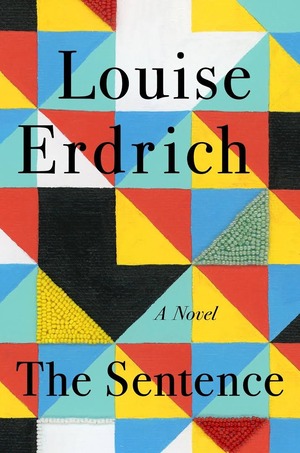
When I was in Madrid this past April, I visited one of my favourite bookshops there, the Libreria de Mujeres. Talking to one of the booksellers she recommended this book and she said it came packed with very good reading lists (and in fact there are actual reading lists at the end that I took photos of when I finished).
This is one of these novels one enjoys because it feels as comforting as a cup of warm tea on a cold, rainy day. First of all, most of it is set on a bookshop. Second of all, its clueless yet adorable narrator, Tookie, feels like a friend all throughout the story. Don’t be fooled, though. This book has its fair share of drama and darkness – engaging with contemporary events from 2020, including police, racism and the rise of Covid-19. Yet, the characters will find respite in books just like Tookie does at the beginning when she goes to prison for seven years (for a crime she committed without knowing she was doing so) and finds out that books help her come to terms with her sentence.
The Sentence has a touch of magic realism – the catalyst for the main plot is the apparition of a ghost, a former (dead) customer from the independent bookshop in Minneapolis Tookie works at. Flora is one of those white people who believe they have an Indigenous ancestor – this being the main reason why she used to frequent the bookshop, Indigenous-owned, in the first place. The problem is, Tookie can’t understand why she keeps coming back even after death.
The novel starts with what seems to be a supernatural haunting but soon enough the real world becomes even scarier: first with the arrival of Covid-19, the murder of George Floyd and the subsequent demonstrations against police violence in the streets. All of this mixed with lots of book recommendations and reading lists because Tookie, like her customers, uses stories to make sense of the world she lives in.
This novel was deliciously written. I loved Tookie from the very first pages – she can clumsy, oblivious and naïve but she’s also kind, funny, and fiercely protective of her chosen family.
Also, as someone who was once a bookseller it was really funny to see how Erdrich described the bookshop – which, apparently, it’s based on a real bookshop Erdrich owns in Minneapolis; she’s a character in her novel too, the elegant, mostly absent bookshop’s owner, ‘Louise’. A lot of the things mentioned – battles amongst the bookseller on how things get organised and decorated around the space, quirky customers and even a hunting are things that rang true to me. And, let’s not forget all the book recommendations and the curated reading lists at the end of the novel which offer so many resources and inspiration. This is a book for book lovers.
“Nothing makes Penstemon happier than handing a favorite book to someone who wants to read it. I’m the same. I suppose you could say this delights us although ‘delight’ is a word I rarely use. Delight seems insubstantial; happiness feels more grounded; ecstasy is what I shoot for; satisfaction is hardest to attain.”
Louise Erdrich
Sea of Tranquility by Emily St John Mandel
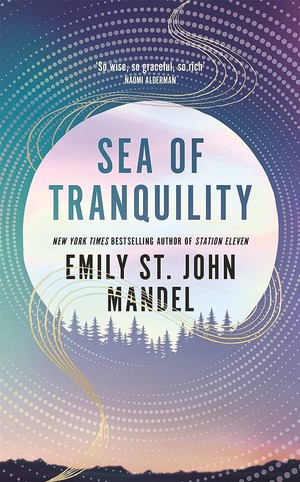
Station Eleven, by the same author, is one of my favourite post-apocalyptic dystopias. There’s something in Mandel’s writing that I adore. She belongs to my personal category of ‘hypnotic’ writers. I can read anything she writes and I know I will enjoy it because the prose will entrance me. This was a very short novel that I started reading on a plane (have I said how much I dislike planes?) trying to forget that I was flying across the sky on a particularly small tin (this plane was indeed tiny, which only made it scarier to me). Immediately I was transported to one my favourite places in the whole world: Vancouver Island, which is where the first part of this book is set.
I’m a fan of polyphonic novels that mix different characters and timelines (which is why I love David Mitchell) so I delighted in paying attention to every single detail knowing that it might become important in the wider architecture of the book. I was pleased to meet some characters from Mandel’s previous novel The Glass Hotel which was a nice surprise – I like it when authors start writing in a sort of universe they have created, where plots and characters might collide (like Charles de Lint did with all his Newford books). There is also a character who is a writer of post-apocalyptic books on tour that reminded me a bit of the author herself. (It’s funny when authors seem to reach a stage in which they start writing themselves in their fiction… I certainly felt something similar when I read a bout the successful author character in Sally Rooney’s Wonderful world, where are you?) There’s also a fare share of pandemic themes in this novel, which I suppose it’s something it has in common with The Sentence. Although it seems that Mandel has always had an interest in pandemics anyways.
Sea of Tranquility is short and eerie and strange and delicate like a small sweet one needs to enjoy with care, not to be consumed too fast. It takes you through a series of desolate landscapes like the vast woods in Vancouver Island or a colony in the Moon. There’s a bit of sci-fi (multiverse theory, time travelling) but ultimately this is a novel about atmosphere and character. Plot-wise it wasn’t at complex as it seemed at the beginning and it definitely doesn’t have the width of works like Station Eleven. Yet I enjoyed it a lot, especially because of the settings it inspired in my imagination.
 Inés G. Labarta